
Title

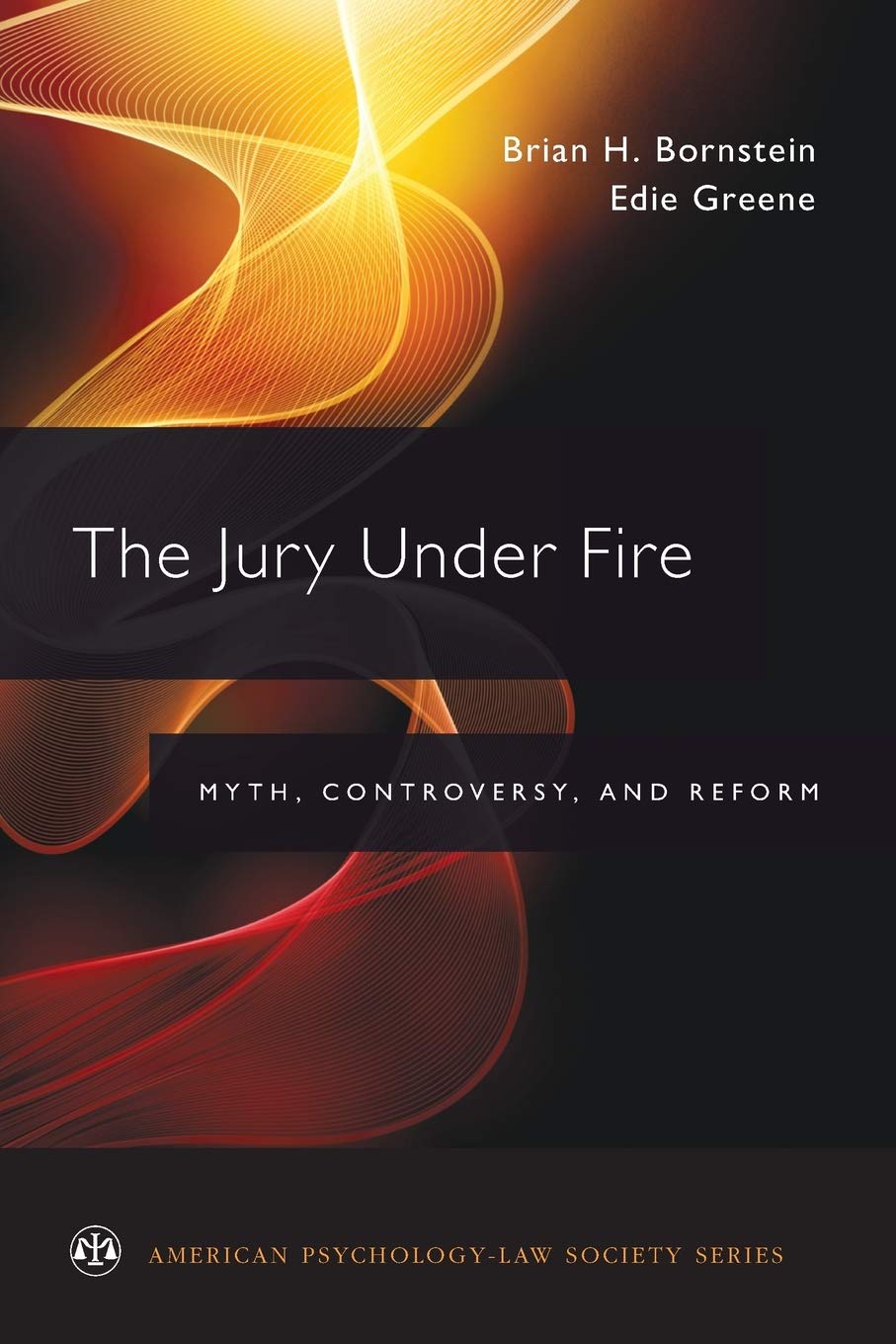
The Jury Under Fire: Myth, Controversy, and Reform (American PsychologyLaw Society Series),Used
Sold by Ergodebooks, an authorized reseller.
Returns accepted within 30 days | support@ergodebooks.com
Shipping Information
- Free Standard Shipping — United States only
- Processing Time: 3–5 business days
- Estimated Delivery: 6–10 business days after dispatch
- Double-boxed, fully insured & discreetly packaged
- Tracking number sent via email once dispatched
Returns & Refund
Returns accepted within 30 days of delivery.
Damaged or Defective Item
Free return shipping + replacement or full refund
Wrong Item Received
Free return shipping + replacement or full refund
Change of Mind
Return shipping at customer's expense · 25% restocking fee applies
Payment Option

Although the jury is often referred to as one of the bulwarks of the American justice system, it regularly comes under attack. Recent changes to trial procedures, such as reducing jury size, allowing nonunanimous verdicts, and rewriting jury instructions in plain English, were designed to promote greater efficiency and adherence to the law. Other changes, such as capping damages and replacing jurors with judges as arbiters in complex trials, seem designed to restrict the role of laypeople in trial outcomes. Whether these innovations are implemented to facilitate the administration of justice or due to the belief that juries have excessive power and make irrational decisions, they raise a host of questions about their effects on juries' judgments and about justice. Policymakers sometimes make incorrect assumptions about jury behavior, with the result that some reform efforts have had surprising and unintended consequences.The Jury Under Fire reviews a number of controversial beliefs about juries as well as the implications of these views for jury reform. It reviews uptodate research on both criminal and civil juries that uses a variety of research methodologies: simulations, archival analyses, field studies, and juror interviews. Each chapter focuses on a mistaken assumption or myth about jurors or juries, critiques these myths, and then uses social science research findings to suggest appropriate reforms. Chapters discuss the experience of serving as a juror; jury selection and jury size; and the impact of evidence from eyewitnesses, experts, confessions, and juvenile offenders. The book also covers the process of deciding damages and punishment and the role of emotions in jurors' decision making, and it compares jurors' and judges' decisions. Finally, it reviews a broad range of efforts to reform the jury, including the most promising reforms that have a solid backing in research. Featuring highly visible trials to illustrate key points, The Jury Under Fire will interest researchers in psychology and the law, practicing attorneys, and policymakers, as well as students and trainees in these areas.
⚠️ WARNING (California Proposition 65):
This product may contain chemicals known to the State of California to cause cancer, birth defects, or other reproductive harm.
For more information, please visit www.P65Warnings.ca.gov.
- Q: How many pages does the book have? A: This book has four hundred eighteen pages. It provides an in-depth examination of jury myths and reforms in the American justice system.
- Q: What is the binding type of this book? A: The binding type is paperback. This makes the book lightweight and flexible for easy handling.
- Q: What are the dimensions of the book? A: The dimensions are six point fourteen inches in length, zero point ninety-four inches in width, and nine point twenty-five inches in height. These dimensions make it a convenient size for reading and carrying.
- Q: Who is the author of this book? A: The author is Brian H. Bornstein. He specializes in the intersection of psychology and law, providing valuable insights in this publication.
- Q: What genre does this book belong to? A: This book belongs to the Forensic Psychology genre. It addresses critical issues related to juries and the justice system.
- Q: Is this book suitable for students studying law? A: Yes, this book is suitable for law students. It offers comprehensive research and insights relevant to legal studies and jury reform.
- Q: What topics are covered in the book? A: The book covers topics such as jury selection, juror experiences, and the impact of evidence on juries. It critiques common myths about juries and suggests reforms based on research.
- Q: Can this book help policymakers understand jury behavior? A: Yes, it provides valuable research findings that can assist policymakers in making informed decisions regarding jury reform.
- Q: Is there a focus on emotional decision-making in juries? A: Yes, the book discusses the role of emotions in jurors' decision-making processes. This is crucial for understanding jury dynamics.
- Q: Are there any case studies included in the book? A: Yes, the book features highly visible trials to illustrate key points and findings. These case studies enhance the understanding of the discussed topics.
- Q: What kind of research methodologies are used in this book? A: The book uses a variety of research methodologies including simulations, field studies, and juror interviews. This diverse approach enriches the analysis.
- Q: Does the book suggest reforms for jury processes? A: Yes, it suggests various reforms based on social science research findings. These reforms aim to improve jury effectiveness and fairness.
- Q: Is this book appropriate for practicing attorneys? A: Yes, practicing attorneys will find this book beneficial. It offers insights into jury behavior that can inform legal strategies.
- Q: What is the publication year of this book? A: The publication year is not specified in the details. However, it is part of the American Psychology-Law Society Series, indicating its relevance in the field.
- Q: What are the implications of jury size changes discussed in the book? A: The book critiques the implications of changes in jury size, such as reduced jury numbers and non-unanimous verdicts. It raises questions about their impact on justice.