
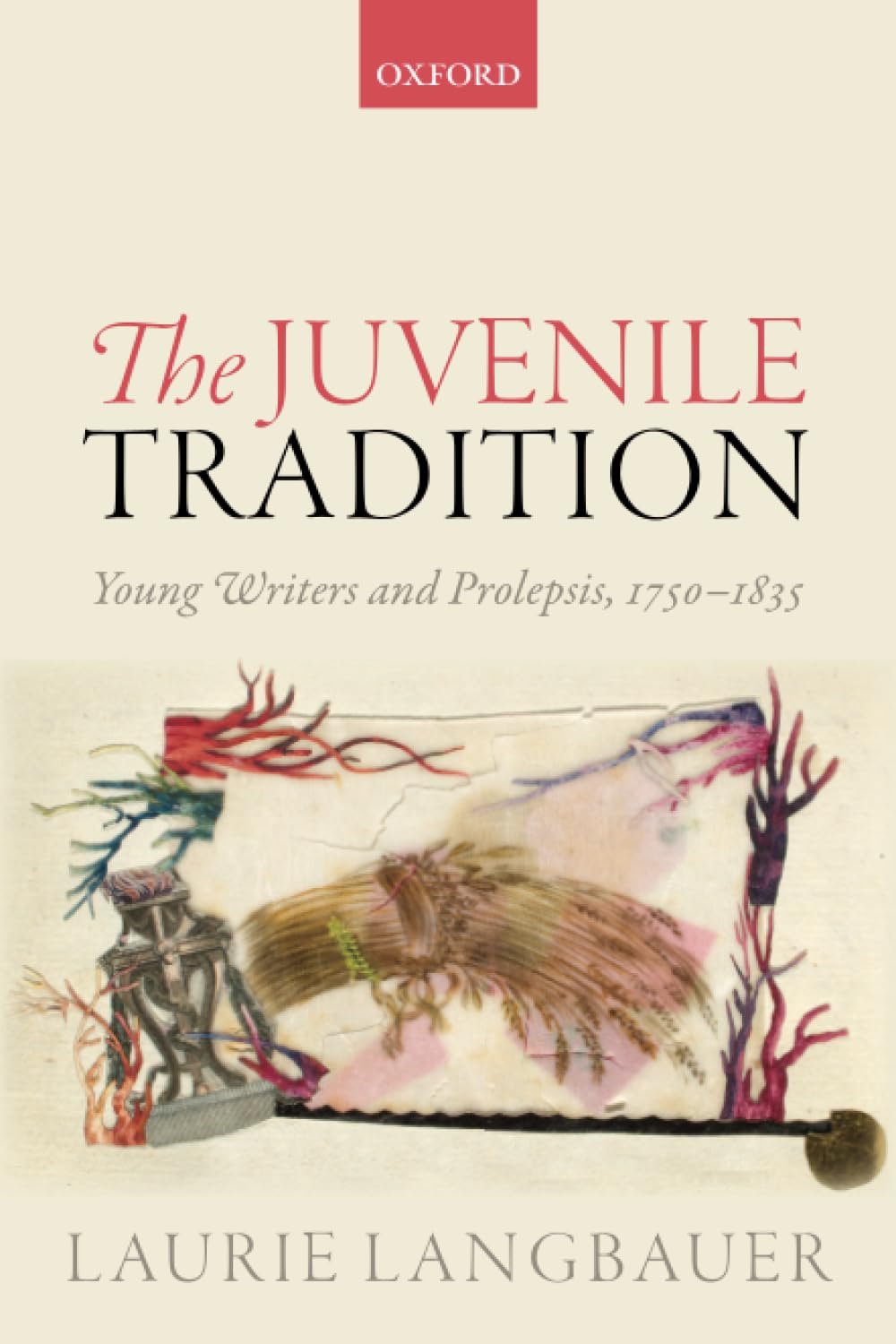
Title
The Juvenile Tradition: Young Writers and Prolepsis, 17501835,Used
Sold by Ergodebooks, an authorized reseller.
Returns accepted within 30 days | support@ergodebooks.com
Shipping Information
- Free Standard Shipping — United States only
- Processing Time: 3–5 business days
- Estimated Delivery: 6–10 business days after dispatch
- Double-boxed, fully insured & discreetly packaged
- Tracking number sent via email once dispatched
Returns & Refund
Returns accepted within 30 days of delivery.
Damaged or Defective Item
Free return shipping + replacement or full refund
Wrong Item Received
Free return shipping + replacement or full refund
Change of Mind
Return shipping at customer's expense · 25% restocking fee applies
Payment Option

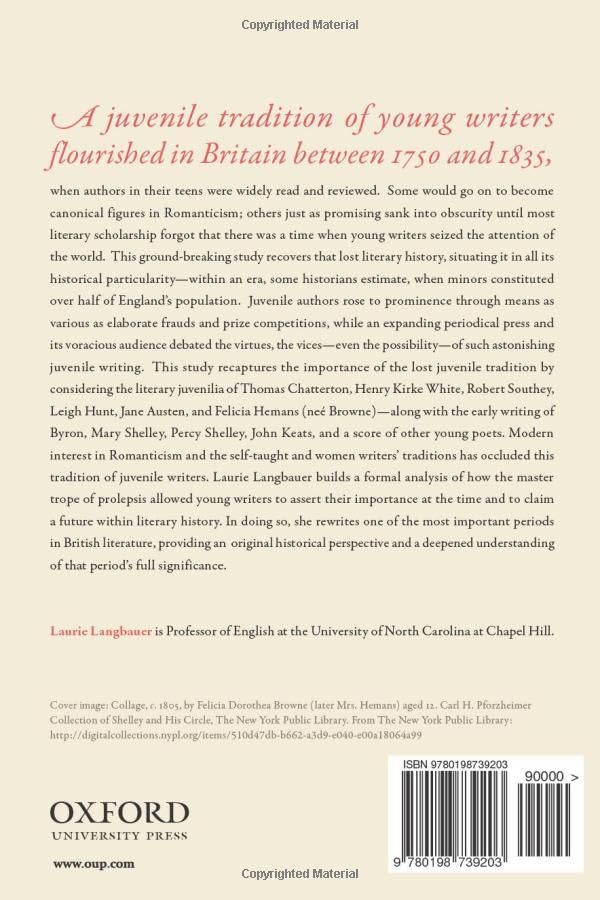
A juvenile tradition of young writers flourished in Britain between 1750 and 1835. Canonical Romantic poets as well as nowunknown youthful writers published as teenagers. These teenage writers reflected on their literary juvenilia by using the trope of prolepsis to assert their writing as a literary tradition. Precocious writing, child prodigies, and early genius had been topics of interest since the eighteenth century. Child authorsgirl poets and boy poets, schoolboy writers and undergraduate writers, juvenile authors of all kindsfound new publication opportunities because of major shifts in the periodical press, publishing, and education. School magazines and popular juvenile magazines that awarded prizes to child writers all made youthful authorship more visible. Some historians estimate that minors (children and teens) comprised over half the population at the beginning of the nineteenth century. Modern interest in Romanticism, and the selftaught and women writers' traditions, has occluded the tradition of juvenile writers. This first fulllength study to recover the late eighteenth and early nineteenthcentury juvenile tradition draws on the history of childhood and child studies, along with reception study and audience history. It considers the literary juvenilia of Thomas Chatterton, Henry Kirke White, Robert Southey, Leigh Hunt, Jane Austen, and Felicia Hemans (then Felicia Dorothea Browne)along with the childhood writing of Byron, Mary Shelley, Percy Shelley, and John Keatsand a score of other young poets"infant bards"no longer familiar today. Recovering juvenility recasts literary history. Adolescent writers, acting proleptically, ignored the assumptions of childhood development and the disparagement of supposedly immature writing.
⚠️ WARNING (California Proposition 65):
This product may contain chemicals known to the State of California to cause cancer, birth defects, or other reproductive harm.
For more information, please visit www.P65Warnings.ca.gov.