
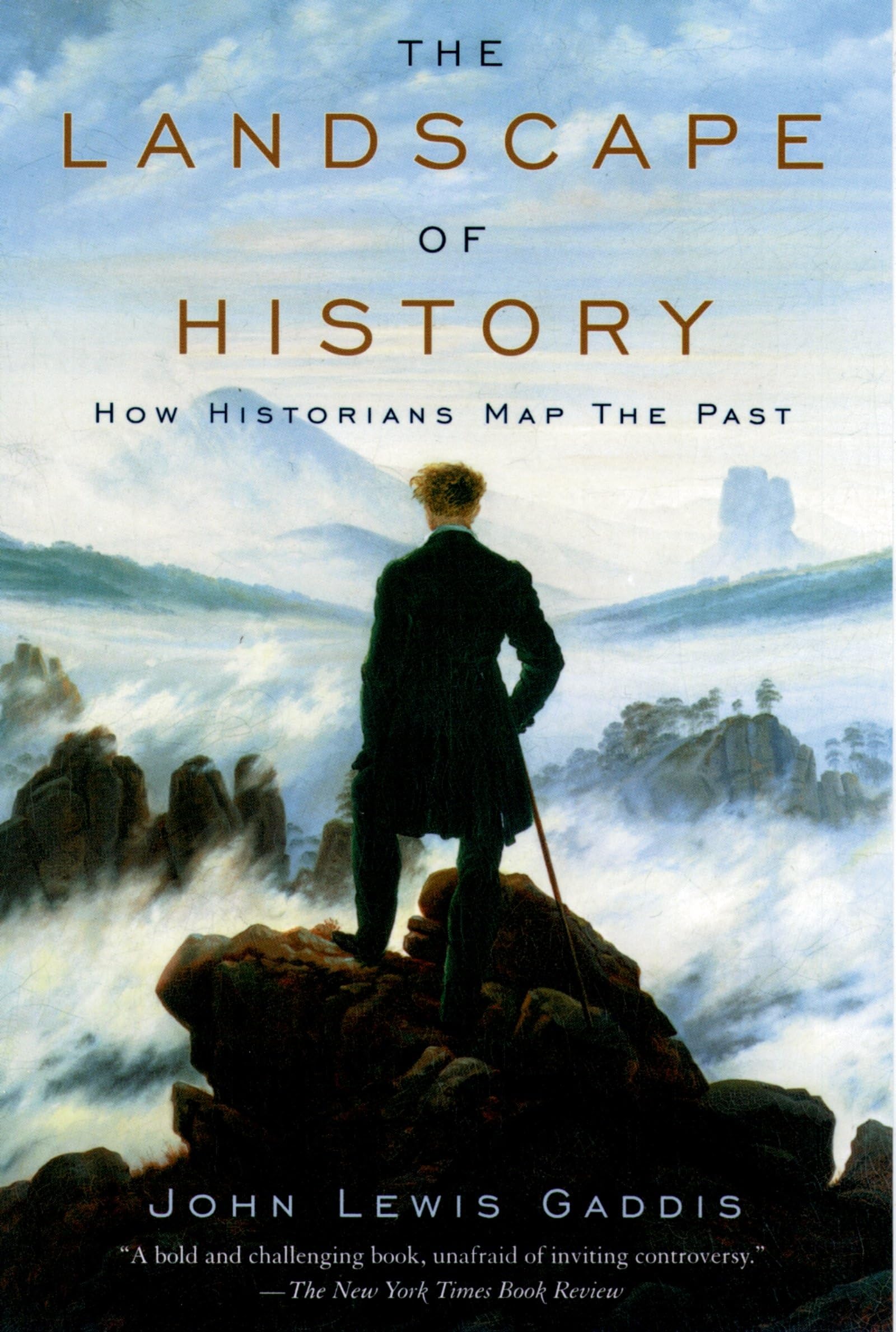
Title
The Landscape Of History: How Historians Map The Past,New
Sold by Ergodebooks, an authorized reseller.
Returns accepted within 30 days | support@ergodebooks.com
Shipping Information
- Free Standard Shipping — United States only
- Processing Time: 3–5 business days
- Estimated Delivery: 6–10 business days after dispatch
- Double-boxed, fully insured & discreetly packaged
- Tracking number sent via email once dispatched
Returns & Refund
Returns accepted within 30 days of delivery.
Damaged or Defective Item
Free return shipping + replacement or full refund
Wrong Item Received
Free return shipping + replacement or full refund
Change of Mind
Return shipping at customer's expense · 25% restocking fee applies
Payment Option

What Is History And Why Should We Study It? Is There Such A Thing As Historical Truth? Is History A Science? One Of The Most Accomplished Historians At Work Today, John Lewis Gaddis, Answers These And Other Questions In This Short, Witty, And Humane Book. The Landscape Of History Provides A Searching Look At The Historian'S Craft, As Well As A Strong Argument For Why A Historical Consciousness Should Matter To Us Today.Gaddis Points Out That While The Historical Method Is More Sophisticated Than Most Historians Realize, It Doesn'T Require Unintelligible Prose To Explain. Like Cartographers Mapping Landscapes, Historians Represent What They Can Never Replicate. In Doing So, They Combine The Techniques Of Artists, Geologists, Paleontologists, And Evolutionary Biologists. Their Approaches Parallel, In Intriguing Ways, The New Sciences Of Chaos, Complexity, And Criticality. They Don'T Much Resemble What Happens In The Social Sciences, Where The Pursuit Of Independent Variables Functioning With Static Systems Seems Increasingly Divorced From The World As We Know It. So Who'S Really Being Scientific And Who Isn'T? This Question Too Is One Gaddis Explores, In Ways That Are Certain To Spark Interdisciplinary Controversy.Written In The Tradition Of Marc Bloch And E.H. Carr, The Landscape Of History Is At Once An Engaging Introduction To The Historical Method For Beginners, A Powerful Reaffirmation Of It For Practitioners, A Startling Challenge To Social Scientists, And An Effective Skewering Of Postmodernist Claims That We Can'T Know Anything At All About The Past. It Will Be Essential Reading For Anyone Who Reads, Writes, Teaches, Or Cares About History.
⚠️ WARNING (California Proposition 65):
This product may contain chemicals known to the State of California to cause cancer, birth defects, or other reproductive harm.
For more information, please visit www.P65Warnings.ca.gov.
- Q: How many pages does the book have? A: The book has two hundred eight pages. This length offers a comprehensive exploration of historical methodology by John Lewis Gaddis.
- Q: What is the binding type of the book? A: The book is paperback bound. This makes it lightweight and easy to handle for reading.
- Q: What are the dimensions of the book? A: The dimensions of the book are seven point nine one inches in length, zero point five one inches in width, and five point three one inches in height. These dimensions make it a portable choice for readers.
- Q: How do I approach reading this book? A: To read this book, simply start from the beginning and follow through to the end. It is structured to provide insights into historical methods and discussions.
- Q: Is this book suitable for beginners in history? A: Yes, the book is suitable for beginners. It offers an engaging introduction to historical methods, making it accessible for new readers.
- Q: What age group is this book suitable for? A: This book is suitable for adult readers and older teens interested in history. It tackles complex themes but is written in an accessible manner.
- Q: How should I store this book? A: Store this book upright on a shelf or in a bookcase. Keep it away from direct sunlight and moisture to preserve its condition.
- Q: Can I clean the book if it gets dirty? A: Yes, you can gently clean the cover with a soft, dry cloth. Avoid using water or cleaning solutions to prevent damage.
- Q: Does this book contain any sensitive content? A: No, the book does not contain explicit sensitive content. It discusses historical themes in a scholarly and thoughtful manner.
- Q: How does this book compare to other history texts? A: This book stands out for its engaging writing style and interdisciplinary approach, unlike many traditional history texts that may be more rigid.
- Q: Is this book recommended for social science students? A: Yes, this book is recommended for social science students. It challenges conventional social science methods and offers a unique perspective on historical inquiry.
- Q: What makes this book different from other historical works? A: This book differentiates itself by blending artistic and scientific approaches to history, offering a fresh viewpoint on how to understand the past.
- Q: What if the book arrives damaged? A: If the book arrives damaged, contact the seller for a replacement or refund. Most sellers have a return policy for damaged items.
- Q: Does this book have a return policy? A: Yes, most sellers offer a return policy. Check the specific seller's terms for detailed information regarding returns.
- Q: What should I do if I have questions while reading the book? A: If you have questions while reading, consider joining a reading group or forum. Engaging with others can enhance your understanding of the material.