If you have any questions, you are always welcome to contact us. We'll get back to you as soon as possible, withing 24 hours on weekdays.
Customer service
All questions about your order, return and delivery must be sent to our customer service team by e-mail at yourstore@yourdomain.com
Sale & Press
If you are interested in selling our products, need more information about our brand or wish to make a collaboration, please contact us at press@yourdomain.com
Help
If you have any questions, you are always welcome to contact us. We'll get back to you as soon as possible, withing 24 hours on weekdays.
Customer service
All questions about your order, return and delivery must be sent to our customer service team by e-mail at yourstore@yourdomain.com
Sale & Press
If you are interested in selling our products, need more information about our brand or wish to make a collaboration, please contact us at press@yourdomain.com
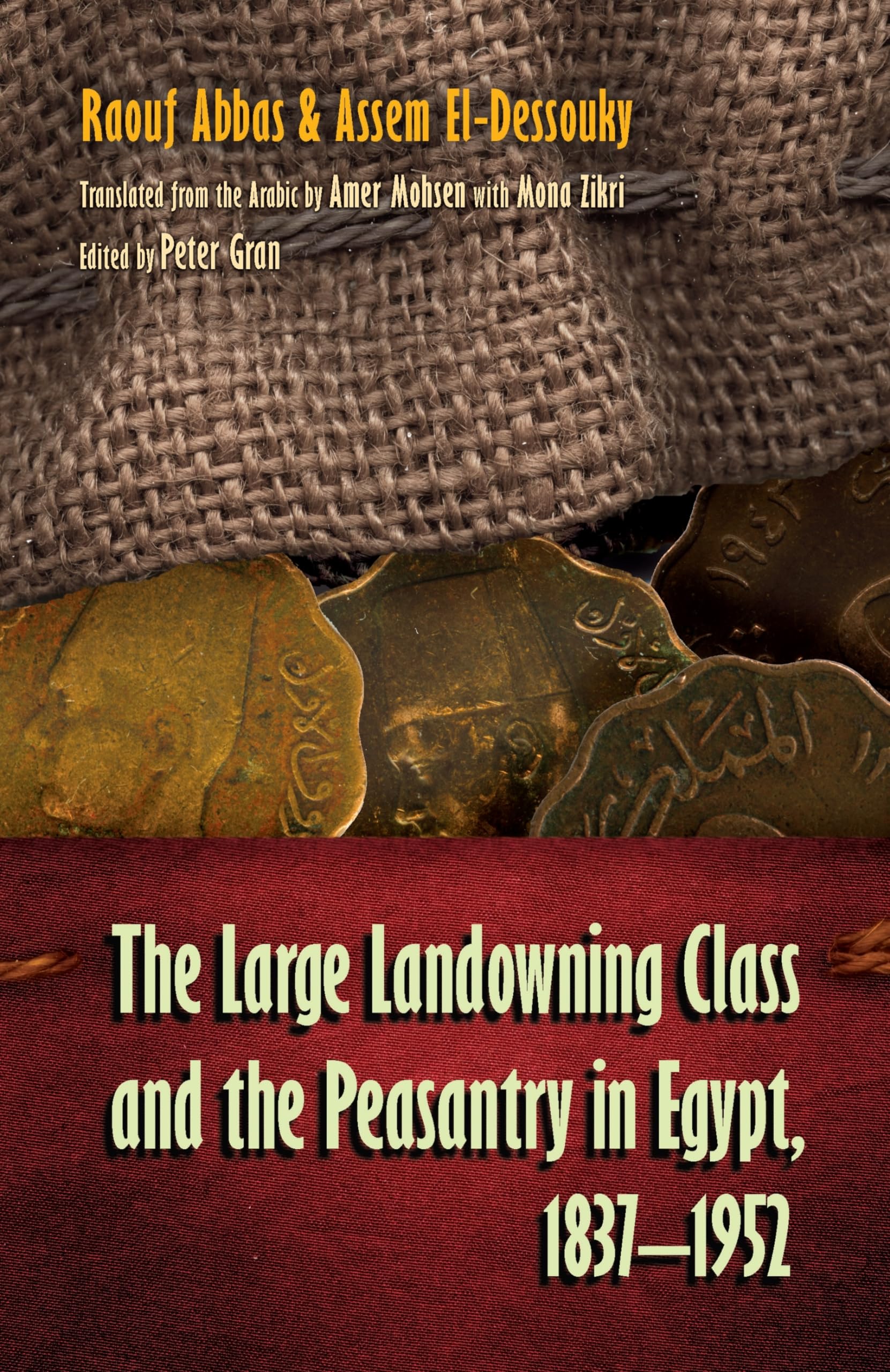
In Egypt, the landowning class first arose in the early part of the nineteenth century from land grants given to extended family members and friends of the ruler Muhammad Ali. The development of capitalism and, with it, the evolution of law and social practice allowed these land grants gradually to take on the attributes of private property, a process that culminated in 1891 in land becaming a form of property like any other. From these developments a class of large landowners emerged and began to defend their interests, both economic and political. In two seminal Arabic works published in the 1970s, the authors Abbas and ElDessouky traced the formation of this class, exploring the multiple factors that influenced the rise and power of landowners. Combined into one volume and translated into English for the first time, this book offers a comprehensive analysis of landownership and its effects on Egyptian society. The authors draw from extensive archival sources, successfully integrating in their work the competing forces of the state, the landlords, and the peasants. By moving beyond much of the familiar scholarship on landholders, this book presents a new interpretation of Egyptian politics and society.
⚠️ WARNING (California Proposition 65):
This product may contain chemicals known to the State of California to cause cancer,
birth defects, or other reproductive harm.
For MAP (Minimum Advertised Price) violations and Intellectual Property (IP) or Trademark concerns, please contact:
support@ergodebooks.com
⚠️ California Proposition 65 Warning: Some products sold on this website may expose you to chemicals known to the State of California to cause cancer, birth defects, or other reproductive harm. For more information, visit www.P65Warnings.ca.gov.