
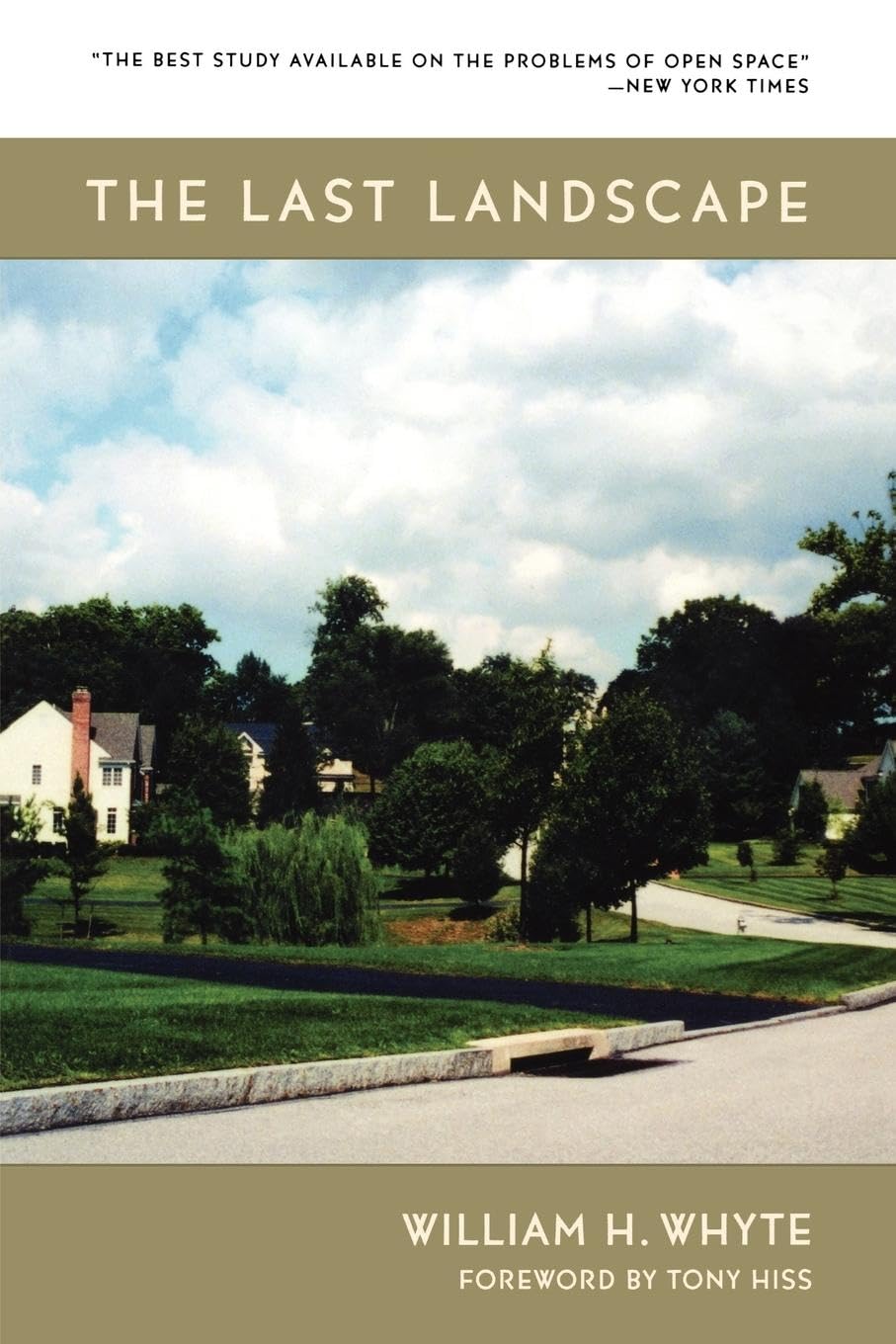
Title
The Last Landscape,New
Sold by Ergodebooks, an authorized reseller.
Returns accepted within 30 days | support@ergodebooks.com
Shipping Information
- Free Standard Shipping — United States only
- Processing Time: 3–5 business days
- Estimated Delivery: 6–10 business days after dispatch
- Double-boxed, fully insured & discreetly packaged
- Tracking number sent via email once dispatched
Returns & Refund
Returns accepted within 30 days of delivery.
Damaged or Defective Item
Free return shipping + replacement or full refund
Wrong Item Received
Free return shipping + replacement or full refund
Change of Mind
Return shipping at customer's expense · 25% restocking fee applies
Payment Option

The Remaining Corner Of An Old Farm, Unclaimed By Developers. The Brook Squeezed Between Housing Plans. Abandoned Railroad Lines. The Stand Of Woods Along An Expanded Highway. These Are The Outposts Of What Was Once A Larger Pattern Of Forests And Farms, The 'Last Landscape.' According To William H. Whyte, The Place To Work Out The Problems Of Our Metropolitan Areas Is Within Those Areas, Not Outside Them. The Age Of Unchecked Expansion Without Consequence Is Over, But Where There Is Waste And Neglect There Is Opportunity. Our Cities And Suburbs Are Not Jammed; They Just Look That Way. There Are In Fact Plenty Of Ways To Use This Existing Space To The Benefit Of The Community, And The Last Landscape Provides A Practical And Timeless Framework For Making Informed Decisions About Its Use.Called 'The Best Study Available On The Problems Of Open Space' By The New York Times When It First Appeared In 1968, The Last Landscape Introduced Many Cornerstone Ideas For Land Conservation, Urging All Of Us To Make Better Use Of The Land That Has Survived Amid Suburban Sprawl. Whyte'S Pioneering Work On Easements Led To The Passage Of Major Open Space Statutes In Many States, And His Argument For Using And Linking Green Spaces, However Small The Areas May Be, Is A Recommendation That Has More Currency Today Than Ever Before.
⚠️ WARNING (California Proposition 65):
This product may contain chemicals known to the State of California to cause cancer, birth defects, or other reproductive harm.
For more information, please visit www.P65Warnings.ca.gov.
- Q: How many pages does 'The Last Landscape' have? A: This book contains three hundred ninety-two pages. It provides a comprehensive exploration of urban and land use planning.
- Q: What is the binding type of 'The Last Landscape'? A: The binding type is paperback. This makes it lightweight and easy to handle for reading.
- Q: What are the dimensions of 'The Last Landscape'? A: The dimensions are six inches in length, one point twenty-six inches in width, and nine point zero two inches in height. These measurements make it a standard size for books.
- Q: Who is the author of 'The Last Landscape'? A: The author is William H. Whyte. He is known for his significant contributions to urban planning and land conservation.
- Q: What is the main theme of 'The Last Landscape'? A: The main theme revolves around land conservation amid urban sprawl. It emphasizes the importance of making better use of existing open spaces.
- Q: Is 'The Last Landscape' suitable for academic use? A: Yes, it is suitable for academic use. The book is highly regarded in urban planning studies and is often referenced in related curricula.
- Q: How can I apply the concepts from 'The Last Landscape'? A: You can apply the concepts by assessing local land use and identifying opportunities for conservation and community benefit. This framework helps inform better urban planning decisions.
- Q: Is 'The Last Landscape' appropriate for beginners in urban planning? A: Yes, it is appropriate for beginners. The book introduces foundational ideas in a clear and accessible manner.
- Q: Can I use 'The Last Landscape' for professional development? A: Yes, it is useful for professional development. The insights provided can enhance understanding of land use challenges and opportunities.
- Q: How should I store 'The Last Landscape' to keep it in good condition? A: Store it in a cool, dry place away from direct sunlight. This will help preserve the book's quality over time.
- Q: What is the best way to care for 'The Last Landscape'? A: Handle it carefully and keep it clean. Avoid exposing it to moisture to maintain its condition.
- Q: What if 'The Last Landscape' arrives damaged? A: If it arrives damaged, contact the seller for return or exchange options. Most sellers have policies in place for such issues.
- Q: Does 'The Last Landscape' come with a warranty? A: No, books typically do not come with a warranty. However, check the seller's return policy for specific terms.
- Q: Is there a digital version of 'The Last Landscape' available? A: Currently, there is no mention of a digital version. The book is primarily available in paperback format.