
Title
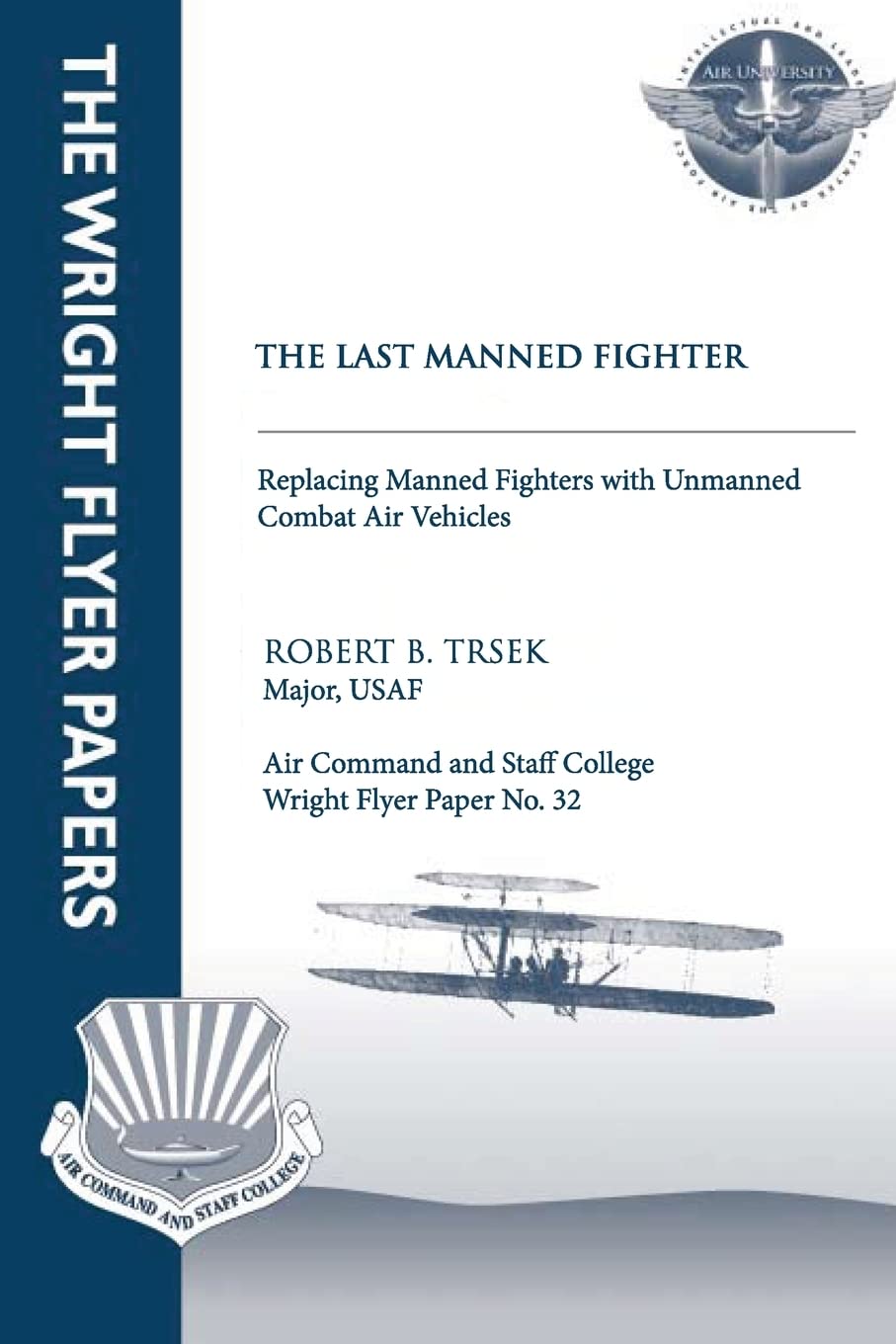
The Last Manned Fighter Replacing Manned Fighters With Unmanned Combat Air Vehicles: Wright Flyer Paper No. 32
Sold by Ergodebooks, an authorized reseller.
Returns accepted within 30 days | support@ergodebooks.com
Shipping Information
- Free Standard Shipping — United States only
- Processing Time: 3–5 business days
- Estimated Delivery: 6–10 business days after dispatch
- Double-boxed, fully insured & discreetly packaged
- Tracking number sent via email once dispatched
Returns & Refund
Returns accepted within 30 days of delivery.
Damaged or Defective Item
Free return shipping + replacement or full refund
Wrong Item Received
Free return shipping + replacement or full refund
Change of Mind
Return shipping at customer's expense · 25% restocking fee applies
Payment Option

This Paper Addresses The Question, Can And Should The Air Force Pursue An Unmanned Multirole Fighter To Replace Manned Systems? Unmanned Aircraft Systems Have Demonstrated Enormous Intelligence, Surveillance, And Reconnaissance (Isr) Capabilities In Both Flexibility And Persistence. Current And Emerging Technology May Permit Unmanned Fighters To Replace Conventional Multirole Aircraft In The Face Of High Endurance Missions, Evolving Threat Systems, And Political Pressure To Preserve Human Life. This Research Is Framed In The Context Of A Specialized Weapon In Military Aviation: An Unmanned Multirole Fighter Capable Of Replacing Manned Systems And Their Respective Missions. This Paper Gives A Brief History Of Unmanned Aerial Vehicles And Their Employment As Weapons To Demonstrate The Evolution From Isr Platform To Unmanned Combat Air Vehicle And Then Evolves Into Two Main Sections Of ?An We?And ?Hould We?Pursue This Avenue Of Development. The Primary Means Of Answering The Research Question Is Both Technical And Philosophical. Before Being Able To Answer If The Air Force Should Pursue An Unmanned Fighter, It Is Necessary To Determine If It Is Technically Feasible For Such A System. A Methodical Analysis Of Mission Subsets And Common Tasks That Fighters Currently Perform And How Those Tasks Might Be Performed In An Unmanned Vehicle Are Examined To Substantiate Technical Capability. Inherent To This Discussion Are The Obvious Questions Of Remote Piloting Versus Autonomous Operations, Command And Control, And Weaknesses That May Be Presented To An Adversary. Modern Media, Political Costs Of Human Life, Single Points Of Failure, Command And Control, And Monetary Costs Are Then Addressed To Develop The Subjective Main Point Of Pursuing Acquisition. The Range And Endurance Of Unmanned Combat Air Vehicle (Ucav) Fighters Offer Persistence And Attractive Options In A World Of Growing Antiaccess Strategies. They Offer Advantages In Performance, Altitude, And Employment Without The Limitations Of Human Physiology. Ucav Fighters Vi Deny The Political Use Of Prisoners Of War By Our Adversaries And Preserve The Tactical Knowledge Of Our Pilots At Home. The Research Finds There Are No Technological Barriers That Prohibit The Design And Use Of Ucav Fighters On A Large Scale. There Are Anticipated Limitations In Bandwidth And Concern For Performance During Withinvisualrange Maneuvering If Manintheloop Is The Solution To Command And Control. Ultimately, Ucav Fighters Are Not A Panacea But Offer The Presence Of Force In A Threat Environment That 20 Years From Now Will Be Extremely Lethal. The Costs And Risks Associated With Ucav Fighters Are Significant But Surmountable. The Single Point Of Failure May Be In Our Command And Control Through The Radio Frequency Spectrum. Autonomy Provides A Solution But Is Incompatible With Us Ascription To The Law Of Armed Conflict And Its Mandates. If Sufficient Bandwidth Can Be Secured And The Control Of Remote Vehicles Can Be Assured, There Are Immense Dollar And Political Costs To Be Saved In Their Employment. In The Context Of Future Threat Systems And Antiaccess Strategies, The Air Force Would Be Foolish Not To Pursue Ucav Fighter Technology.
⚠️ WARNING (California Proposition 65):
This product may contain chemicals known to the State of California to cause cancer, birth defects, or other reproductive harm.
For more information, please visit www.P65Warnings.ca.gov.
- Q: What is the length, width, and height of the book? A: The book measures six inches in length, zero point twelve inches in width, and nine point zero two inches in height.
- Q: How many pages does this book contain? A: This book contains forty-six pages, providing a concise exploration of its subject matter.
- Q: What type of binding does this book have? A: This book features a paperback binding, making it lightweight and easy to handle.
- Q: Who is the author of this book? A: The author of this book is Major Robert B. Trsek, providing an expert perspective on the topic.
- Q: Is this book suitable for beginners in aviation? A: Yes, this book is suitable for beginners as it presents complex ideas in an accessible manner.
- Q: What themes are covered in the book? A: The book covers themes of unmanned combat air vehicles, military strategy, and the evolution of aviation technology.
- Q: How should I store this book to keep it in good condition? A: Store this book in a cool, dry place away from direct sunlight to maintain its quality.
- Q: Can I read this book if I am not familiar with military aviation? A: Yes, the book is written to be accessible even for readers unfamiliar with military aviation.
- Q: What safety measures are discussed in the book regarding UAVs? A: The book discusses safety measures related to command and control, autonomy, and the risks of operating unmanned vehicles.
- Q: What if my book arrives damaged? A: If your book arrives damaged, you can contact customer support for assistance with returns or exchanges.
- Q: Is there a warranty on this book? A: Books typically do not come with a warranty, but you can check the return policy for any issues.
- Q: How do I clean this book if it gets dirty? A: To clean this book, gently wipe the cover with a damp cloth, avoiding excess moisture.
- Q: Are there any technical specifications mentioned in the book? A: Yes, the book discusses technical specifications related to unmanned combat air vehicles and their operational capabilities.
- Q: What are the main arguments made in the book regarding unmanned fighters? A: The book argues that there are no significant technological barriers to developing unmanned fighters, emphasizing their advantages.
- Q: How does this book compare to other aviation literature? A: This book offers a unique perspective by focusing on unmanned systems, setting it apart from traditional aviation literature.
- Q: What should I do if I have trouble accessing the content? A: If you have trouble accessing the content, please ensure you have the correct format or contact support for guidance.