
Title
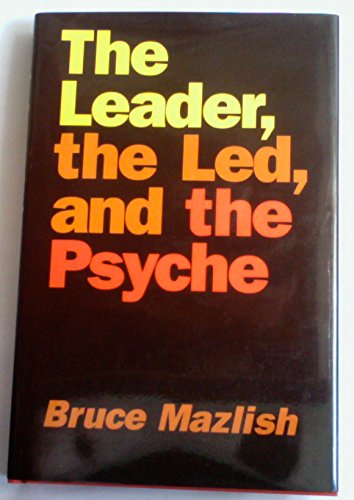
The Leader, The Led, And The Psyche: Essays In Psychohistory,Used
Sold by Ergodebooks, an authorized reseller.
Returns accepted within 30 days | support@ergodebooks.com
Shipping Information
- Free Standard Shipping — United States only
- Processing Time: 3–5 business days
- Estimated Delivery: 6–10 business days after dispatch
- Double-boxed, fully insured & discreetly packaged
- Tracking number sent via email once dispatched
Returns & Refund
Returns accepted within 30 days of delivery.
Damaged or Defective Item
Free return shipping + replacement or full refund
Wrong Item Received
Free return shipping + replacement or full refund
Change of Mind
Return shipping at customer's expense · 25% restocking fee applies
Payment Option

In this book of absorbing stories, Bruce Mazlish illuminates the lives of intellectual and political leaders with the penetrating light of psychohistory and in doing so illuminates our own lives as well. A pioneer in this field, Mazlish demonstrates that study of the origins of leaderstheir personal historycan help us understand their work, and that only in a study of their context, can we grasp their impact on events.Mazlish brings the insights of psychoanalysis to bear on a wide spectrum of leaders, beginning with those who created the theories of psychoanalysis: Darwin, who began to uncover the story of the human species; Freud, whose theory of individual behavior was rooted in Darwin's evolutionary biology; and Nietzsche, whose philosophy can be seen as a precursor to Freud. He studies intellectual leaders whose work stimulated political change: Marx, who inspired a revolution and 'a great secular religion'; Thoreau, who fantasized independence within a dependent life; Jevons, whose economic theories reflected a private tension between ambition and duty; and Weber, a man of reason and passion, whose theories emerged from personal traumas.A section on political leadership examines polar opposites: the raging mystic but opportunist Khomeini; and Orwell, whose hatred for totalitarianism was less fierce than his passive fear. A final section on the psychohistory of groups focuses on the United States, exploring the polarities of American life, its lightdark dichotomies. Mazlish finds that these ambivalences explain 'the American psyche'from the Puritan's melancholy conscience and Washington's sense of parental betrayal that compelled a break with the fathermother country to Nixon's uncritical selfrighteousness and his conviction of being always under attack.
⚠️ WARNING (California Proposition 65):
This product may contain chemicals known to the State of California to cause cancer, birth defects, or other reproductive harm.
For more information, please visit www.P65Warnings.ca.gov.