If you have any questions, you are always welcome to contact us. We'll get back to you as soon as possible, withing 24 hours on weekdays.
Customer service
All questions about your order, return and delivery must be sent to our customer service team by e-mail at yourstore@yourdomain.com
Sale & Press
If you are interested in selling our products, need more information about our brand or wish to make a collaboration, please contact us at press@yourdomain.com
Help
If you have any questions, you are always welcome to contact us. We'll get back to you as soon as possible, withing 24 hours on weekdays.
Customer service
All questions about your order, return and delivery must be sent to our customer service team by e-mail at yourstore@yourdomain.com
Sale & Press
If you are interested in selling our products, need more information about our brand or wish to make a collaboration, please contact us at press@yourdomain.com
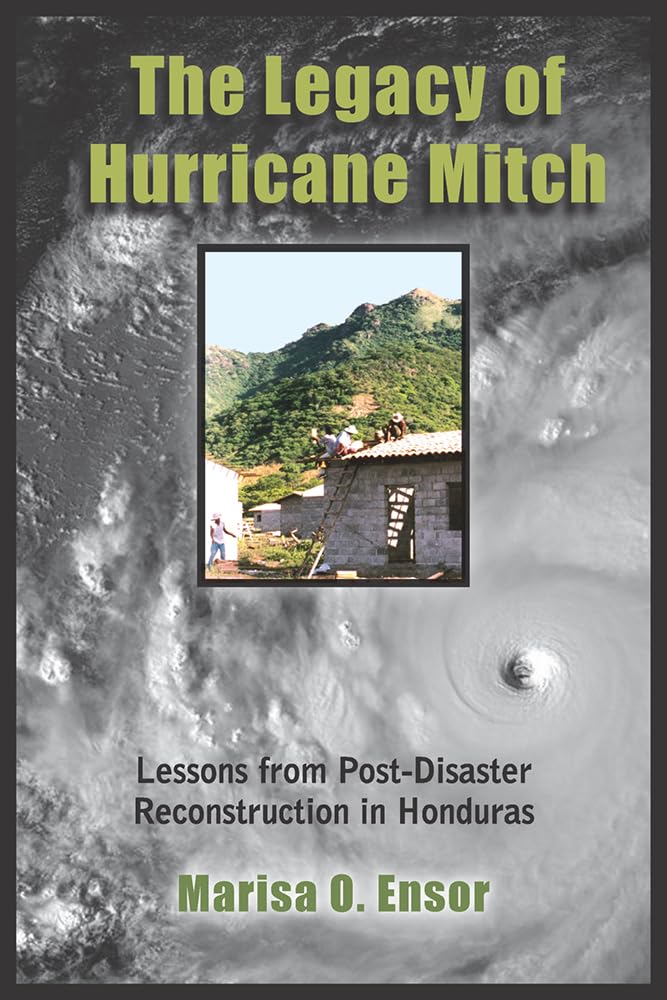
Around the world disaster vulnerability is on the rise. The incidence and intensity of disasters have increased in recent decades with lives being shattered and resources being destroyed across broad geographic regions each year.As it swept across the Honduran landscape, the exceptional size, power and duration of Hurricane Mitch abruptly and brutally altered the already diminished economic, social, and environmental conditions of the population. In the aftermath of the disaster a group of seven socioenvironmental scientists set out to investigate the root causes of the heightened vulnerability that characterized preMitch Honduras, the impact of the catastrophe on the local society, and the subsequent recovery efforts. Edited by Marisa O. Ensor, this volume presents the findings of their investigation.The Legacy of Hurricane Mitch offers a comprehensive analysis of the immediate and longterm consequences of Hurricane Mitch in Honduras. Based on longitudinal ethnographic fieldwork and environmental assessments, this volume illustrates the importance of adopting an approach to disaster research and practice that places natural trigger events within their political, cultural, and socioeconomic contexts. The contributors make a compelling case against postdisaster recovery efforts that limit themselves to alleviating the symptoms, rather than confronting the root causes of the vulnerability that prefigured the disaster.
⚠️ WARNING (California Proposition 65):
This product may contain chemicals known to the State of California to cause cancer,
birth defects, or other reproductive harm.
For MAP (Minimum Advertised Price) violations and Intellectual Property (IP) or Trademark concerns, please contact:
support@ergodebooks.com
⚠️ California Proposition 65 Warning: Some products sold on this website may expose you to chemicals known to the State of California to cause cancer, birth defects, or other reproductive harm. For more information, visit www.P65Warnings.ca.gov.