If you have any questions, you are always welcome to contact us. We'll get back to you as soon as possible, withing 24 hours on weekdays.
Customer service
All questions about your order, return and delivery must be sent to our customer service team by e-mail at yourstore@yourdomain.com
Sale & Press
If you are interested in selling our products, need more information about our brand or wish to make a collaboration, please contact us at press@yourdomain.com
Help
If you have any questions, you are always welcome to contact us. We'll get back to you as soon as possible, withing 24 hours on weekdays.
Customer service
All questions about your order, return and delivery must be sent to our customer service team by e-mail at yourstore@yourdomain.com
Sale & Press
If you are interested in selling our products, need more information about our brand or wish to make a collaboration, please contact us at press@yourdomain.com
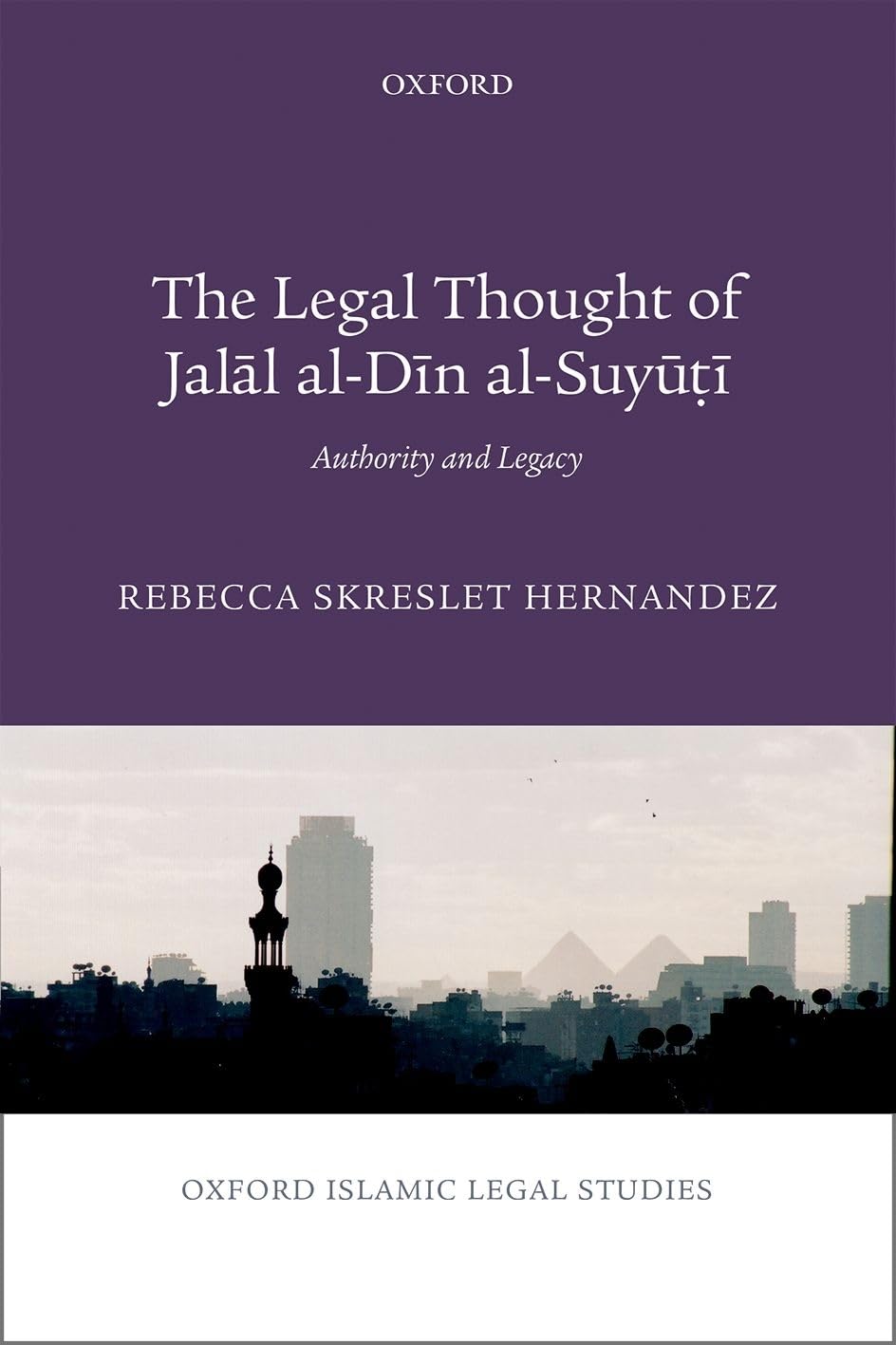
This book offers a new theoretical perspective on the thought of the great fifteenthcentury Egyptian polymath, Jalal alDin alSuyuti (d. 1505). In spite of the enormous popularity that alSuyuti's works continue to enjoy amongst scholars and students in the Muslim world, he remains underappreciated by western academia.This project contributes to the fields of Mamluk Studies, Islamic Studies, and Middle Eastern Studies not only an interdisciplinary analysis of alSuyuti's legal writing within its historical context, but also a reflection on the legacy of the medieval jurist to modern debates. The study highlights the discursive strategies that the jurist uses to construct his own authority and frame his identity as a superior legal scholar during a key transitional moment in Islamic history. The approach aims for a balance between detailed textual analysis and "big picture" questions of how legal identity and religious authority are constructed, negotiated and maintained.AlSuyuti's struggle for authority as one of a select group of trained experts vested with the moral responsibility of interpreting God's law in society finds echoes in contemporary debates, particularly in his native land of Egypt. At a time when increasing numbers of people in the Arab world have raised their voices to demand democratic forms of government that nevertheless stay true to the principles of Shari'a, the issue of who has the ultimate authority to interpret the sources of law, to set legal norms, and to represent the "voice" of Shari'a principles in society is still in dispute.
⚠️ WARNING (California Proposition 65):
This product may contain chemicals known to the State of California to cause cancer,
birth defects, or other reproductive harm.
For MAP (Minimum Advertised Price) violations and Intellectual Property (IP) or Trademark concerns, please contact:
support@ergodebooks.com
⚠️ California Proposition 65 Warning: Some products sold on this website may expose you to chemicals known to the State of California to cause cancer, birth defects, or other reproductive harm. For more information, visit www.P65Warnings.ca.gov.