
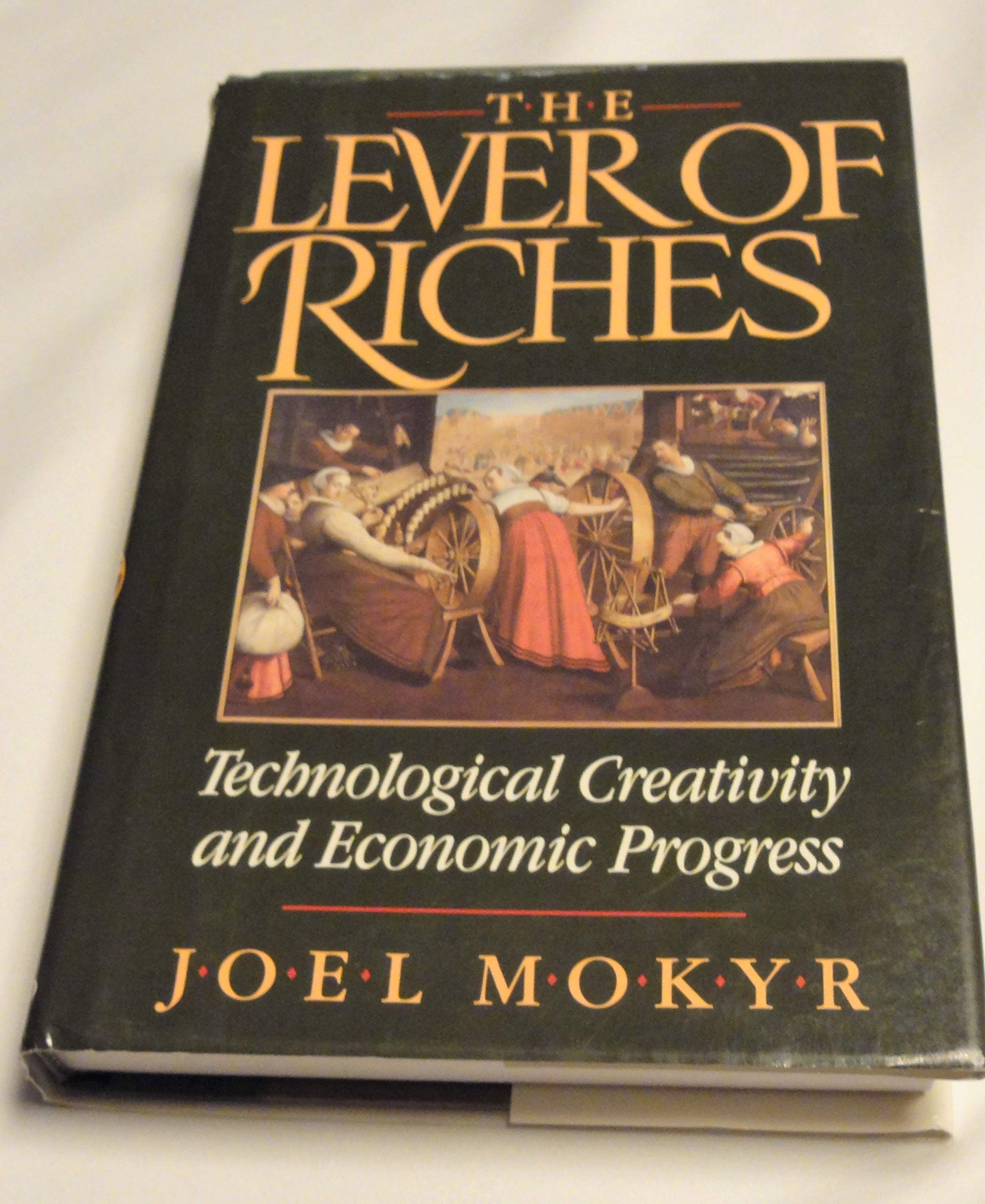
Title
The Lever Of Riches: Technological Creativity And Economic Progress,New
Sold by Ergodebooks, an authorized reseller.
Returns accepted within 30 days | support@ergodebooks.com
Shipping Information
- Free Standard Shipping — United States only
- Processing Time: 3–5 business days
- Estimated Delivery: 6–10 business days after dispatch
- Double-boxed, fully insured & discreetly packaged
- Tracking number sent via email once dispatched
Returns & Refund
Returns accepted within 30 days of delivery.
Damaged or Defective Item
Free return shipping + replacement or full refund
Wrong Item Received
Free return shipping + replacement or full refund
Change of Mind
Return shipping at customer's expense · 25% restocking fee applies
Payment Option

In A World Of Supercomputers, Genetic Engineering, And Fiber Optics, Technological Creativity Is Ever More The Key To Economic Success. But Why Are Some Nations More Creative Than Others, And Why Do Some Highly Innovative Societiessuch As Ancient China, Or Britain In The Industrial Revolutionpass Into Stagnation?Beginning With A Fascinating, Concise History Of Technological Progress, Mokyr Sets The Background For His Analysis By Tracing The Major Inventions And Innovations That Have Transformed Society Since Ancient Greece And Rome. What Emerges From This Survey Is Often Surprising: The Classical World, For Instance, Was Largely Barren Of New Technology, The Relatively Backward Society Of Medieval Europe Bristled With Inventions, And The Period Between The Reformation And The Industrial Revolution Was One Of Slow And Unspectacular Progress In Technology, Despite The Tumultuous Developments Associated With The Voyages Of Discovery And The Scientific Revolution.What Were The Causes Of Technological Creativity? Mokyr Distinguishes Between The Relationship Of Inventors And Their Physical Environmentwhich Determined Their Willingness To Challenge Natureand The Social Environment, Which Determined The Openness To New Ideas. He Discusses A Long List Of Such Factors, Showing How They Interact To Help Or Hinder A Nation'S Creativity, And Then Illustrates Them By A Number Of Detailed Studies Taken From The History Of Europe And China. He Examines Such Aspects As The Role Of The State (The Chinese Gave Up A Milleniumwide Lead In Shipping To The Europeans, For Example, When An Emperor Banned Large Oceangoing Vessels), The Impact Of Science, As Well As Religion, Politics, And Even Nutrition. He Questions The Importance Of Such Commonlycited Factors As The Spillover Benefits Of War, The Abundance Of Of Natural Resources, Life Expectancy, And Labor Costs. And He Presents Startlingly Novel Explanations Of Why China Lost Its Dramatic Lead In Technology To Europe, Why Medieval Europe Was Technologically More Creative Than Classical Antiquity, And Why Britain Left The Rest Of The World Behind During The Industrial Revolution Only To Lose Its Leadership A Century Later.Today, An Ever Greater Number Of Industrial Economies Are Competing In The Global Market, Locked In A Struggle That Revolves Around Technological Ingenuity. Lever Of Riches, With Its Keen Analysis Derived From A Sweeping Survey Of Creativity Throughout History, Offers Telling Insight Into The Question Of How Western Economies Can Maintain, And Developing Nations Can Unlock, Their Creative Potential.
⚠️ WARNING (California Proposition 65):
This product may contain chemicals known to the State of California to cause cancer, birth defects, or other reproductive harm.
For more information, please visit www.P65Warnings.ca.gov.
- Q: What is the page count of the book? A: The book has three hundred sixty-eight pages. This extensive length covers a detailed analysis of technological creativity and economic progress.
- Q: What are the dimensions of the book? A: The book measures six point thirty-one inches in length, one point eleven inches in width, and nine point five inches in height. These dimensions make it a standard hardcover format.
- Q: What type of binding does the book have? A: The book is bound in hardcover. This type of binding offers durability and a classic look.
- Q: Who is the author of the book? A: The book is authored by Joel Mokyr. He is a renowned economist specializing in the intersection of technological innovation and economic history.
- Q: What is the genre of this book? A: The book falls under the genre of Economic History. It explores the relationship between technological creativity and economic development.
- Q: What themes does the book discuss? A: The book discusses themes of technological innovation, historical progress, and economic factors shaping creativity. It provides insights into various societies' advancements.
- Q: How can I use this book for research? A: You can use this book as a scholarly resource for understanding the history of technology and its economic implications. It offers a comprehensive analysis that can support various academic inquiries.
- Q: Is this book suitable for beginners in economic history? A: Yes, this book is suitable for beginners. It presents complex ideas in an accessible manner, making it a good starting point for those new to the field.
- Q: What kind of reader would benefit from this book? A: Readers interested in economic theory, history, and technological development will benefit from this book. It provides valuable insights for students and professionals alike.
- Q: How should I care for this hardcover book? A: To care for the hardcover book, store it in a cool, dry place and avoid exposure to direct sunlight. This will help preserve its condition over time.
- Q: Can this book be safely stored on a bookshelf? A: Yes, this book can be safely stored on a bookshelf. Ensure it is placed upright to prevent bending or damage to the spine.
- Q: What if the book arrives damaged? A: If the book arrives damaged, you should contact the seller for a return or replacement. Most retailers have policies in place for damaged goods.
- Q: What is the return policy for this book? A: The return policy typically allows returns within a specified period, often thirty days. Check with the retailer for specific terms regarding returns.
- Q: Is there a warranty for this book? A: No, books generally do not come with a warranty. However, you can inquire about the return policy for any issues upon receipt.
- Q: What is the publisher of the book? A: The book is published by Oxford University Press, USA. This publisher is known for its academic and scholarly publications.
- Q: Is this book appropriate for children? A: No, this book is not appropriate for children. It covers complex economic theories and historical analyses that are intended for adult readers.