
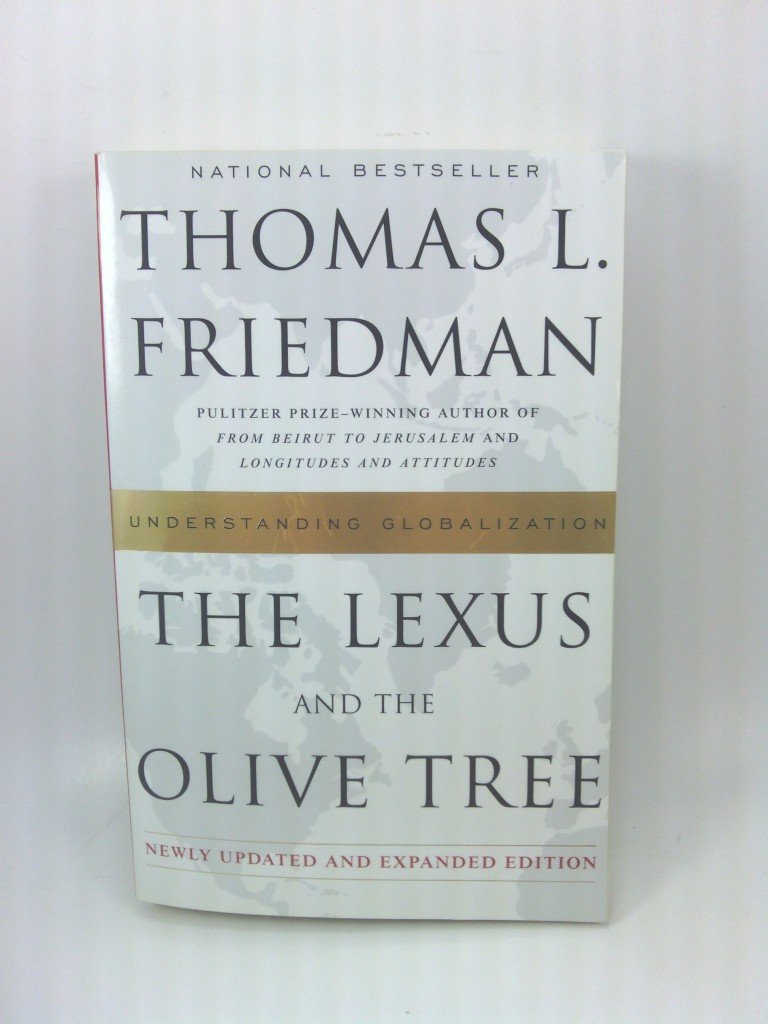
Title
The Lexus And The Olive Tree: Understanding Globalization
Sold by Ergodebooks, an authorized reseller.
Returns accepted within 30 days | support@ergodebooks.com
Shipping Information
- Free Standard Shipping — United States only
- Processing Time: 3–5 business days
- Estimated Delivery: 6–10 business days after dispatch
- Double-boxed, fully insured & discreetly packaged
- Tracking number sent via email once dispatched
Returns & Refund
Returns accepted within 30 days of delivery.
Damaged or Defective Item
Free return shipping + replacement or full refund
Wrong Item Received
Free return shipping + replacement or full refund
Change of Mind
Return shipping at customer's expense · 25% restocking fee applies
Payment Option

From One Of Our Most Perceptive Commentators And Winner Of The National Book Award, A Comprehensive Look At The New World Of Globalization, The International System That, More Than Anything Else, Is Shaping World Affairs Today.As The Foreign Affairs Columnist For The New York Times, Thomas L. Friedman Has Traveled The Globe, Interviewing People From All Walks Of Contemporary Life: Brazilian Peasants In The Amazon Rain Forest, New Entrepreneurs In Indonesia, Islamic Students In Teheran, And The Financial Wizards On Wall Street And In Silicon Valley.Now Friedman Has Drawn On His Years On The Road To Produce An Engrossing And Original Look At Globalization. Globalization, He Argues, Is Not Just A Phenomenon And Not Just A Passing Trend. It Is The International System That Replaced The Cold War System; The New, Wellgreased, Interconnected System: Globalization Is The Integration Of Capital, Technology, And Information Across National Borders, In A Way That Is Creating A Single Global Market And, To Some Degreee, A Global Village. Simply Put, One Can'T Possibly Understand The Morning News Or One'S Own Investments Without Some Grasp Of The System. Just One Example: During The Cold War, We Reached For The Hot Line Between The White House And The Kremlina Symbol That We Were All Divided But At Least The Two Superpowers Were In Charge. In The Era Of Globalization, We Reach For The Interneta Symbol That We Are All Connected But Nobody Is Totally In Charge.With Vivid Stories And A Set Of Original Terms And Concepts, Friedman Offers Readers Remarkable Access To His Unique Understanding Of This New World Order, And Shows Us How To See This New System. He Dramatizes The Conflict Of The Lexus And The Olive TreeThe Tension Between The Globalization System And Ancient Forces Of Culture, Geography, Tradition, And Community. He Also Details The Powerful Backlash That Globalization Produces Among Those Who Feel Brutalized By It, And He Spells Out What We All Need To Do To Keep The System In Balance. Finding The Proper Balance Between The Lexus And The Olive Tree Is The Great Drama Of He Globalization Era, And The Ultimate Theme Of Friedman'S Challenging, Provocative Bookessential Reading For All Who Care About How The World Really Works.
⚠️ WARNING (California Proposition 65):
This product may contain chemicals known to the State of California to cause cancer, birth defects, or other reproductive harm.
For more information, please visit www.P65Warnings.ca.gov.
- Q: How many pages does the book have? A: The book has four hundred ninety pages. This length allows for a comprehensive exploration of globalization and its implications.
- Q: What is the binding type of this book? A: The binding type is paperback. This makes it lightweight and easy to carry, perfect for reading on the go.
- Q: What are the dimensions of the book? A: The dimensions are five point two inches in length, zero point nine five inches in width, and eight inches in height. These measurements make it a standard-sized paperback.
- Q: Who is the author of the book? A: The author is Thomas L. Friedman. He is known for his insightful commentary on globalization and world affairs.
- Q: What genre does this book belong to? A: The book belongs to the Economic Conditions genre. It provides a thorough analysis of global economic systems.
- Q: Is this book suitable for beginners in economics? A: Yes, this book is suitable for beginners. Friedman presents complex ideas in an accessible way, making it easy to understand.
- Q: What themes are explored in this book? A: The book explores themes of globalization, cultural conflict, and economic integration. It highlights the tension between modernity and tradition.
- Q: Can this book be read by young adults? A: Yes, young adults can read this book. Its themes are relevant and engaging for a younger audience interested in global issues.
- Q: How can I use this book for research? A: You can use this book for research by referencing its insights on globalization and economic systems. It offers a well-rounded perspective that can enhance your understanding.
- Q: How should I store this book to keep it in good condition? A: Store this book in a dry, cool place away from direct sunlight. This will help preserve its condition and prevent wear and tear.
- Q: Is there a warranty for this book? A: No, there is no warranty for this book. However, you can return it if it arrives damaged or defective.
- Q: What if I receive a damaged copy of the book? A: If you receive a damaged copy, you should contact the seller for a return or exchange. Most sellers will accommodate such requests.
- Q: What should I do if I have questions about the content? A: If you have questions about the content, consider discussing it with peers or seeking additional resources. The book provides a solid foundation for further exploration.
- Q: Is this book considered essential reading for understanding globalization? A: Yes, it is considered essential reading. Friedman’s insights are highly regarded and provide a comprehensive understanding of globalization.
- Q: How does this book compare to others on globalization? A: This book is notable for its narrative style and personal anecdotes, making it more engaging than some academic texts on globalization.
- Q: Can this book help me understand current global events? A: Yes, this book can help you understand current global events. It explains the underlying systems that shape world affairs today.