
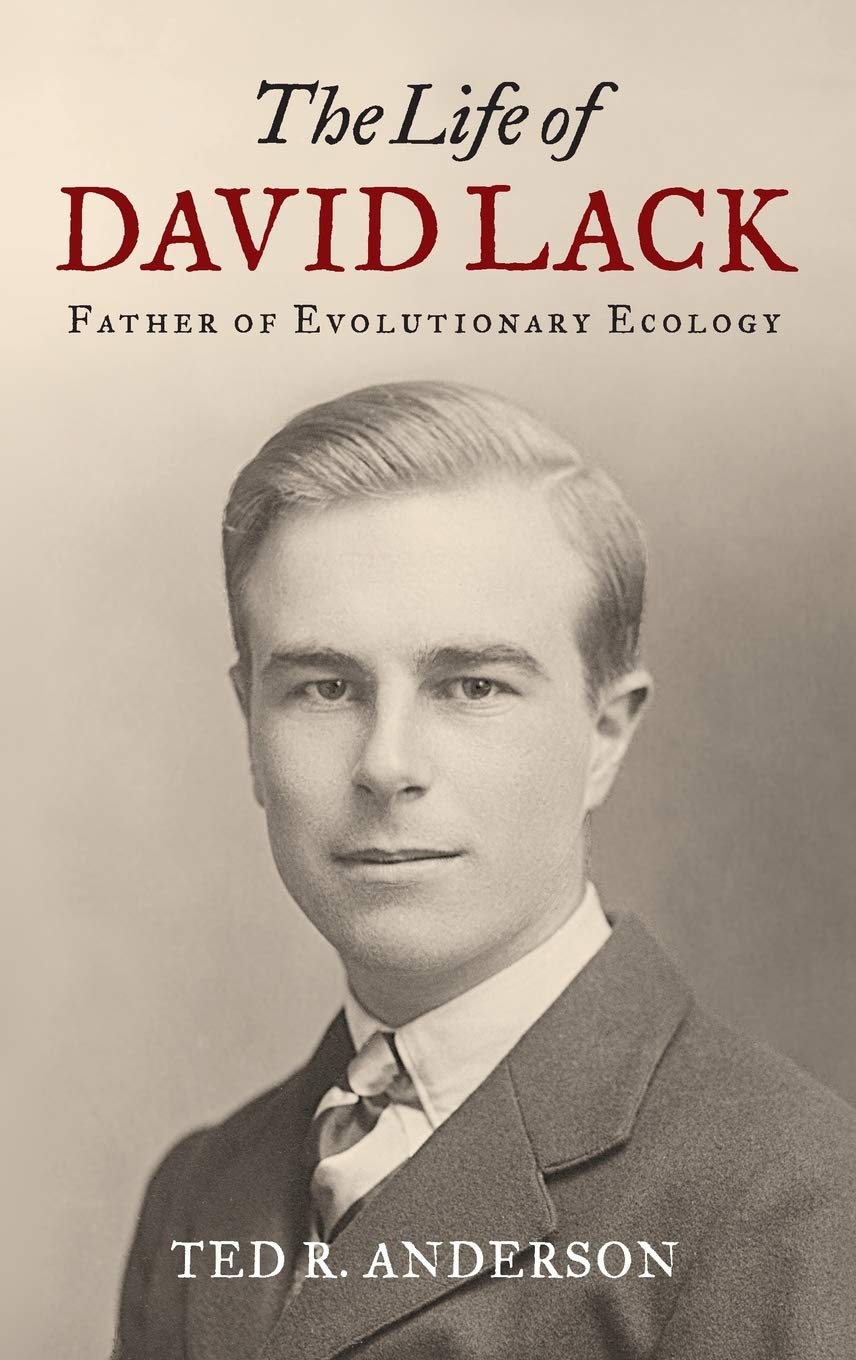
Title
The Life of David Lack: Father of Evolutionary Ecology,Used
Sold by Ergodebooks, an authorized reseller.
Returns accepted within 30 days | support@ergodebooks.com
Shipping Information
- Free Standard Shipping — United States only
- Processing Time: 3–5 business days
- Estimated Delivery: 6–10 business days after dispatch
- Double-boxed, fully insured & discreetly packaged
- Tracking number sent via email once dispatched
Returns & Refund
Returns accepted within 30 days of delivery.
Damaged or Defective Item
Free return shipping + replacement or full refund
Wrong Item Received
Free return shipping + replacement or full refund
Change of Mind
Return shipping at customer's expense · 25% restocking fee applies
Payment Option

Most people who have taken a biology course in the past 50 years are familiar with the work of David Lack, but few remember his name. Almost all general biology texts produced during that period have a figure showing the beak size differences among the finches of the Galapagos Islands from Lack's 1947 classic, Darwin's Finches. Lack's pioneering conclusions in Darwin's Finches mark the beginning of a new scientific discipline, evolutionary ecology. Tim Birkhead, in his acclaimed book, The Wisdom of Birds, calls Lack the 'hero of modern ornithology.' Who was this influential, yet relatively unknown man? The Life of David Lack, Father of Evolutionary Ecology provides an answer to that question based on Ted Anderson's personal interviews with colleagues, family members and former students as well as material in the extensive Lack Archive at Oxford University.
⚠️ WARNING (California Proposition 65):
This product may contain chemicals known to the State of California to cause cancer, birth defects, or other reproductive harm.
For more information, please visit www.P65Warnings.ca.gov.
- Q: What is the main focus of 'The Life of David Lack: Father of Evolutionary Ecology'? A: The book focuses on the life and contributions of David Lack, a pivotal figure in evolutionary ecology, highlighting his influential work on Darwin's finches and his impact on modern ornithology.
- Q: Who is the author of this book? A: The author of 'The Life of David Lack' is Ted R. Anderson, who compiled insights from personal interviews and archival research.
- Q: How many pages does this book have? A: The book contains a total of 246 pages.
- Q: What type of binding does this book have? A: This edition of the book is bound in hardcover.
- Q: When was 'The Life of David Lack' published? A: The book was published on July 1, 2013.
- Q: Is this book suitable for someone studying biology? A: Yes, the book is suitable for those studying biology, particularly those interested in evolutionary ecology and ornithology.
- Q: What kind of research is included in this book? A: The book includes material from personal interviews with colleagues, family members, and former students, as well as research from the Lack Archive at Oxford University.
- Q: Is this book considered a biography? A: Yes, it is a biographical account that explores the life and achievements of David Lack in the field of evolutionary ecology.
- Q: What audience is this book intended for? A: The book is intended for both academic audiences and general readers interested in science, particularly those curious about the history of evolutionary ecology.
- Q: Can this book be a good resource for educators? A: Yes, it can serve as a valuable resource for educators looking to teach about evolutionary ecology and the contributions of key figures in the field.