
Title
The Limits of Expertise: Rethinking Pilot Error and the Causes of Airline Accidents,Used
Sold by Ergodebooks, an authorized reseller.
Returns accepted within 30 days | support@ergodebooks.com
Shipping Information
- Free Standard Shipping — United States only
- Processing Time: 3–5 business days
- Estimated Delivery: 6–10 business days after dispatch
- Double-boxed, fully insured & discreetly packaged
- Tracking number sent via email once dispatched
Returns & Refund
Returns accepted within 30 days of delivery.
Damaged or Defective Item
Free return shipping + replacement or full refund
Wrong Item Received
Free return shipping + replacement or full refund
Change of Mind
Return shipping at customer's expense · 25% restocking fee applies
Payment Option

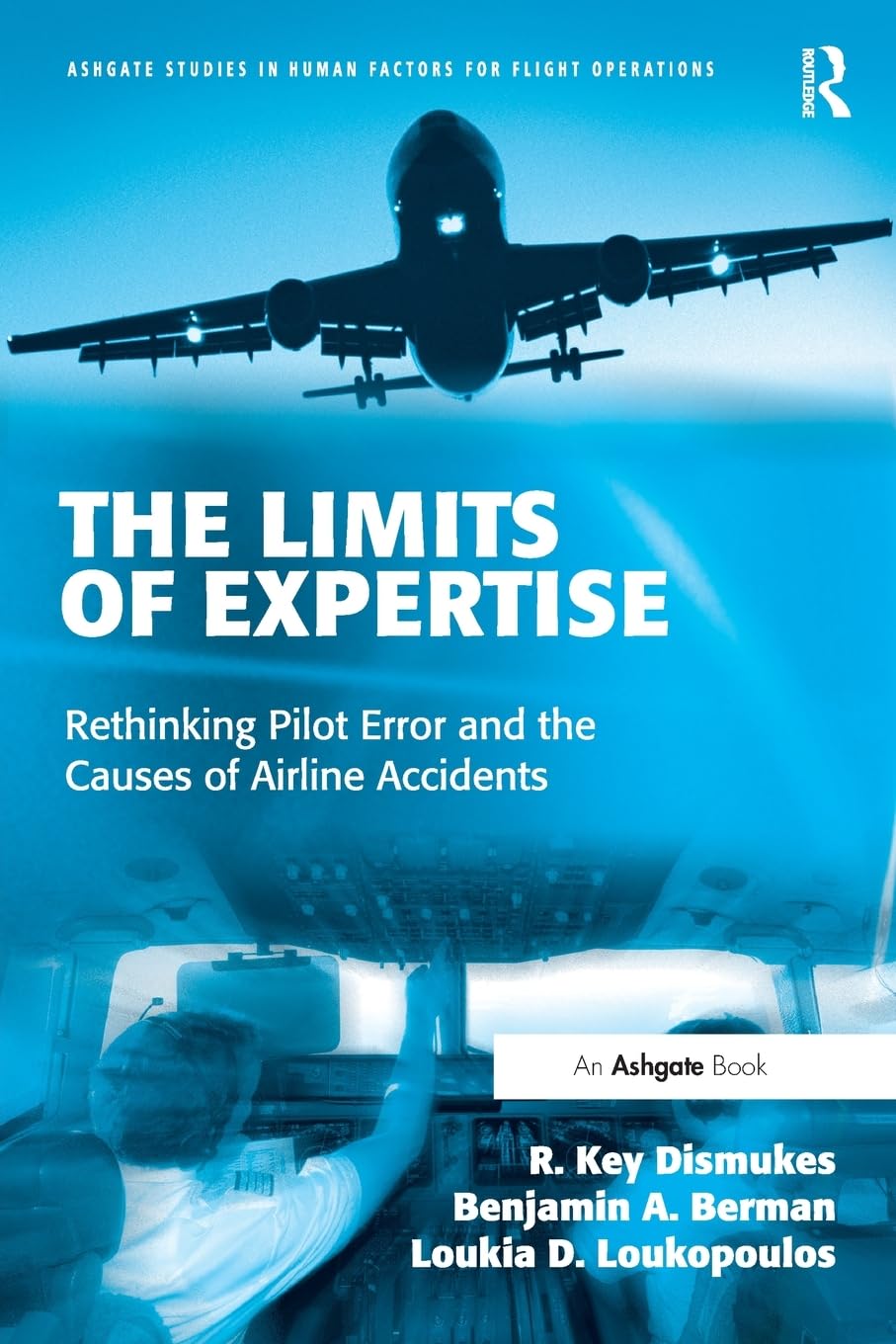
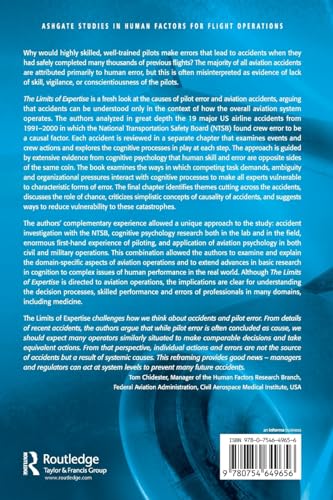
Why would highly skilled, welltrained pilots make errors that lead to accidents when they had safely completed many thousands of previous flights? The majority of all aviation accidents are attributed primarily to human error, but this is often misinterpreted as evidence of lack of skill, vigilance, or conscientiousness of the pilots. The Limits of Expertise is a fresh look at the causes of pilot error and aviation accidents, arguing that accidents can be understood only in the context of how the overall aviation system operates. The authors analyzed in great depth the 19 major U.S. airline accidents from 19912000 in which the National Transportation Safety Board (NTSB) found crew error to be a causal factor. Each accident is reviewed in a separate chapter that examines events and crew actions and explores the cognitive processes in play at each step. The approach is guided by extensive evidence from cognitive psychology that human skill and error are opposite sides of the same coin. The book examines the ways in which competing task demands, ambiguity and organizational pressures interact with cognitive processes to make all experts vulnerable to characteristic forms of error. The final chapter identifies themes cutting across the accidents, discusses the role of chance, criticizes simplistic concepts of causality of accidents, and suggests ways to reduce vulnerability to these catastrophes. The authors' complementary experience allowed a unique approach to the study: accident investigation with the NTSB, cognitive psychology research both in the lab and in the field, enormous firsthand experience of piloting, and application of aviation psychology in both civil and military operations. This combination allowed the authors to examine and explain the domainspecific aspects of aviation operations and to extend advances in basic research in cognition to complex issues of human performance in the real world. Although The Limits of Expertise is directed to aviation operations, the implications are clear for understanding the decision processes, skilled performance and errors of professionals in many domains, including medicine.
⚠️ WARNING (California Proposition 65):
This product may contain chemicals known to the State of California to cause cancer, birth defects, or other reproductive harm.
For more information, please visit www.P65Warnings.ca.gov.
- Q: What is the main topic of 'The Limits of Expertise'? A: 'The Limits of Expertise' focuses on understanding pilot error in aviation and the underlying causes of airline accidents, emphasizing the role of human cognition and systemic factors.
- Q: Who are the authors of this book? A: The book is authored by R. Key Dismukes, who brings extensive experience in accident investigation and cognitive psychology.
- Q: How many pages does the book contain? A: 'The Limits of Expertise' contains 368 pages, providing a comprehensive analysis of aviation accidents.
- Q: What is the publication date of the book? A: 'The Limits of Expertise' was published on January 12, 2007.
- Q: What type of binding does this book have? A: The book is available in paperback binding, making it convenient for reading and handling.
- Q: Is this book suitable for professionals outside of aviation? A: Yes, while focused on aviation, the insights provided in the book are applicable to understanding decision-making and error management in various professional fields.
- Q: What condition is the book in? A: The book is listed as 'New', ensuring that buyers receive a quality product.
- Q: What key themes are discussed in the final chapter? A: The final chapter identifies overarching themes across the examined accidents, discusses the role of chance, and critiques simplistic causality concepts.
- Q: How does the book relate human skill to errors? A: The book argues that human skill and error are interconnected, influenced by cognitive processes and situational demands.
- Q: What are the main features of this book? A: The main feature of 'The Limits of Expertise' is its in-depth analysis of major airline accidents and the cognitive psychology behind pilot error.