
Title
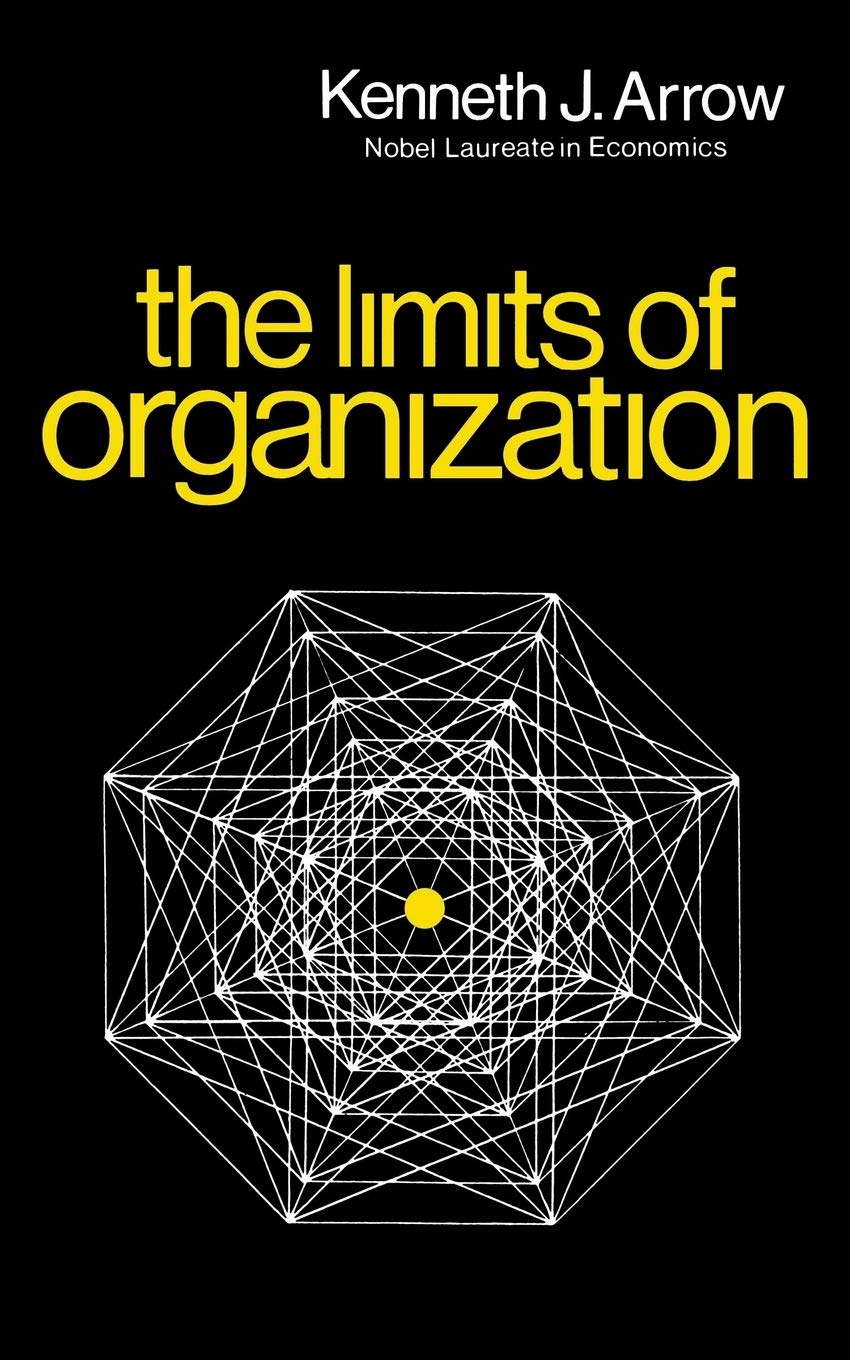
The Limits Of Organization (Fels Lectures On Public Policy Analysis),New
Sold by Ergodebooks, an authorized reseller.
Returns accepted within 30 days | support@ergodebooks.com
Shipping Information
- Free Standard Shipping — United States only
- Processing Time: 3–5 business days
- Estimated Delivery: 6–10 business days after dispatch
- Double-boxed, fully insured & discreetly packaged
- Tracking number sent via email once dispatched
Returns & Refund
Returns accepted within 30 days of delivery.
Damaged or Defective Item
Free return shipping + replacement or full refund
Wrong Item Received
Free return shipping + replacement or full refund
Change of Mind
Return shipping at customer's expense · 25% restocking fee applies
Payment Option

The Tension Between What We Wish For And What We Can Get, Between Values And Opportunities, Exists Even At The Purely Individual Level. A Hermit On A Mountain May Value Warm Clothing And Yet Be Hardpressed To Make It From The Leaves, Bark, Or Skins He Can Find. But When Many People Are Competing With Each Other For Satisfaction Of Their Wants, Learning How To Exploit What Is Available Becomes More Difficult. In This Volume, Nobel Laureate Kenneth J. Arrow Analyzes Why And How Human Beings Organize Their Common Lives To Overcome The Basic Economic Problem: The Allocation Of Scarce Resources. The Price System Is One Means Of Organizing Society To Mediate Competition, And Arrow Analyzes Its Successes And Failures. Alternative Modes Of Achieving Efficient Allocation Of Resources Are Explored: Government, The Internal Organization Of The Firm, And The 'Invisible Institutions' Of Ethical And Moral Principles. Professor Arrow Shows How These Systems Create Channels To Make Decisions, And Discusses The Costs Of Information Acquisition And Retrieval. He Investigates The Factors Determining Which Potential Decision Variables Are Recognized As Such. Finally, He Argues That Organizations Must Achieve Some Balance Between The Power Of The Decision Makers And Their Obligation To Those Who Carry Out Their Decisions Between Authority And Responsibility.
⚠️ WARNING (California Proposition 65):
This product may contain chemicals known to the State of California to cause cancer, birth defects, or other reproductive harm.
For more information, please visit www.P65Warnings.ca.gov.
- Q: What is the page count of 'The Limits of Organization'? A: This book contains eighty-eight pages. It provides insights into public policy analysis and resource allocation.
- Q: What type of binding does this book have? A: This book is available in paperback binding. This makes it lightweight and easy to handle.
- Q: Who is the author of 'The Limits of Organization'? A: The author is Kenneth J. Arrow. He is a Nobel Laureate known for his work in economics.
- Q: What themes are covered in this book? A: This book covers themes like resource allocation, competition, and the organization of human lives. It explores the balance between authority and responsibility.
- Q: What is the height and width of the book? A: The book measures eight point four inches in height and zero point two inches in width. This compact size makes it convenient for reading.
- Q: Is this book suitable for beginners in public policy? A: Yes, this book is suitable for beginners. It presents complex ideas in an accessible manner, making it a good starting point.
- Q: How can I apply the concepts from this book? A: You can apply the concepts by analyzing real-world situations involving resource allocation and decision-making processes. It encourages critical thinking.
- Q: Does this book have any prerequisites for reading? A: No, there are no prerequisites for reading this book. It is designed to be comprehensible for a general audience.
- Q: How should I store this book to keep it in good condition? A: Store this book in a cool, dry place. Keep it upright on a shelf to avoid bending the pages.
- Q: What if the book arrives damaged? A: If the book arrives damaged, you can return it for a replacement or refund. Customer service will assist you with the process.
- Q: Is there a warranty for this book? A: No, books typically do not come with a warranty. However, you can check the return policy for any issues.
- Q: How do I clean this book if it gets dirty? A: To clean this book, gently wipe the cover with a soft, dry cloth. Avoid using water or cleaning solutions.
- Q: Can I use this book for academic purposes? A: Yes, this book can be used for academic purposes. It provides valuable insights into theories of public policy analysis.
- Q: What makes this book different from others in its category? A: This book distinguishes itself by combining economic theory with practical implications for organizing society. It offers a unique perspective.
- Q: Is the content of this book relevant to current public policy debates? A: Yes, the content remains relevant. It discusses fundamental issues of resource allocation that are still applicable today.