
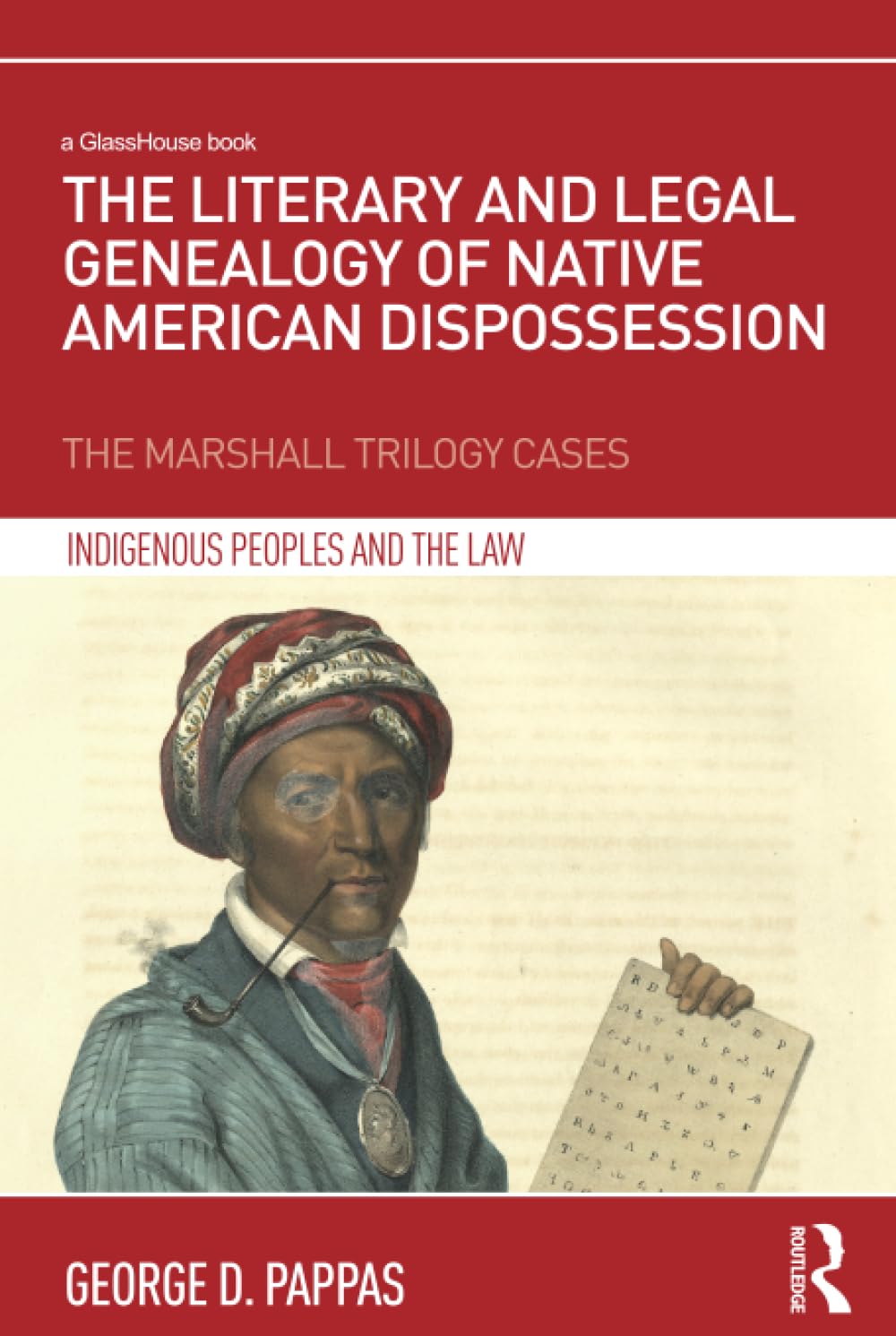
Title
The Literary and Legal Genealogy of Native American Dispossession (Indigenous Peoples and the Law),Used
Sold by Ergodebooks, an authorized reseller.
Returns accepted within 30 days | support@ergodebooks.com
Shipping Information
- Free Standard Shipping — United States only
- Processing Time: 3–5 business days
- Estimated Delivery: 6–10 business days after dispatch
- Double-boxed, fully insured & discreetly packaged
- Tracking number sent via email once dispatched
Returns & Refund
Returns accepted within 30 days of delivery.
Damaged or Defective Item
Free return shipping + replacement or full refund
Wrong Item Received
Free return shipping + replacement or full refund
Change of Mind
Return shipping at customer's expense · 25% restocking fee applies
Payment Option

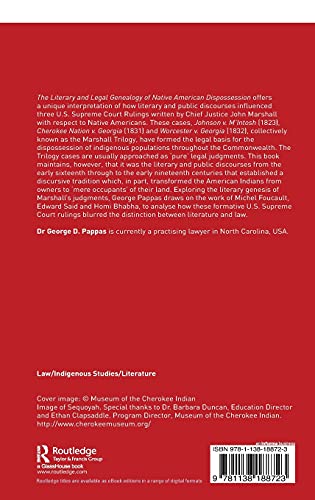
The Literary and Legal Genealogy of Native American Dispossession offers a unique interpretation of how literary and public discourses influenced three U.S. Supreme Court Rulings written by Chief Justice John Marshall with respect to Native Americans. These cases, Johnson v. MIntosh (1823), Cherokee Nation v. Georgia (1831) and Worcester v. Georgia (1832), collectively known as the Marshall Trilogy, have formed the legal basis for the dispossession of indigenous populations throughout the Commonwealth. The Trilogy cases are usually approached as pure legal judgments. This book maintains, however, that it was the literary and public discourses from the early sixteenth through to the early nineteenth centuries that established a discursive tradition which, in part, transformed the American Indians from owners to mere occupants of their land. Exploring the literary genesis of Marshalls judgments, George Pappas draws on the work of Michel Foucault, Edward Said and Homi Bhabha, to analyse how these formative U.S. Supreme Court rulings blurred the distinction between literature and law.
⚠️ WARNING (California Proposition 65):
This product may contain chemicals known to the State of California to cause cancer, birth defects, or other reproductive harm.
For more information, please visit www.P65Warnings.ca.gov.