If you have any questions, you are always welcome to contact us. We'll get back to you as soon as possible, withing 24 hours on weekdays.
Customer service
All questions about your order, return and delivery must be sent to our customer service team by e-mail at yourstore@yourdomain.com
Sale & Press
If you are interested in selling our products, need more information about our brand or wish to make a collaboration, please contact us at press@yourdomain.com
Help
If you have any questions, you are always welcome to contact us. We'll get back to you as soon as possible, withing 24 hours on weekdays.
Customer service
All questions about your order, return and delivery must be sent to our customer service team by e-mail at yourstore@yourdomain.com
Sale & Press
If you are interested in selling our products, need more information about our brand or wish to make a collaboration, please contact us at press@yourdomain.com
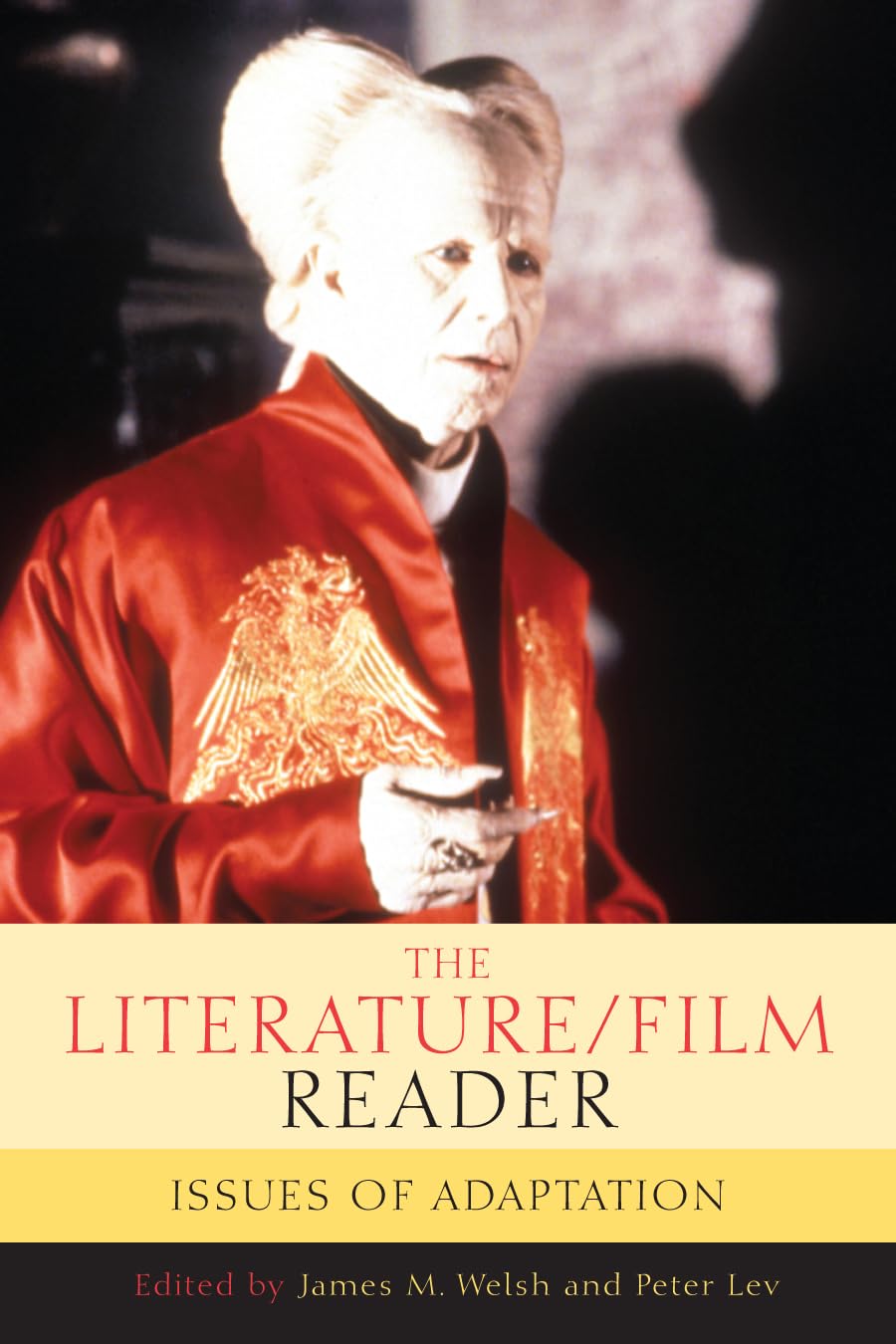
From examinations of Francis Ford Coppola's Apocalypse Now to Alfred Hitchcock's Vertigo, The Literature Film Reader: Issues of Adaptation covers a wide range of films adapted from other sources. The first section presents essays on the hows and whys of adaptation studies, and subsequent sections highlight films adapted from a variety of sources, including classic and popular literature, drama, biography, and memoir. The last section offers a new departure for adaptation studies, suggesting that films about historyoften a separate category of film studycan be seen as adaptations of records of the past. The anthology concludes with speculations about the future of adaptation studies.Several essays provide detailed analyses of films, in some cases discussing more than one adaptation of a literary or dramatic source, such as The Manchurian Candidate, The Quiet American, and Romeo and Juliet. Other works examined include Moby Dick, The House of Mirth, Dracula, and Starship Troopers, demonstrating the breadth of material considered for this anthology.Although many of the essays appeared in Literature/Film Quarterly, more than half are original contributions. Chosen for their readability, these essays avoid theoretical jargon as much as possible. For this reason alone, this collection should be of interest to not only cinema scholars but to anyone interested in films and their source material. Ultimately, The Literature Film Reader: Issues of Adaptation provides an excellent overview of this critical aspect of film studies.
⚠️ WARNING (California Proposition 65):
This product may contain chemicals known to the State of California to cause cancer,
birth defects, or other reproductive harm.
For MAP (Minimum Advertised Price) violations and Intellectual Property (IP) or Trademark concerns, please contact:
support@ergodebooks.com
⚠️ California Proposition 65 Warning: Some products sold on this website may expose you to chemicals known to the State of California to cause cancer, birth defects, or other reproductive harm. For more information, visit www.P65Warnings.ca.gov.