
Title
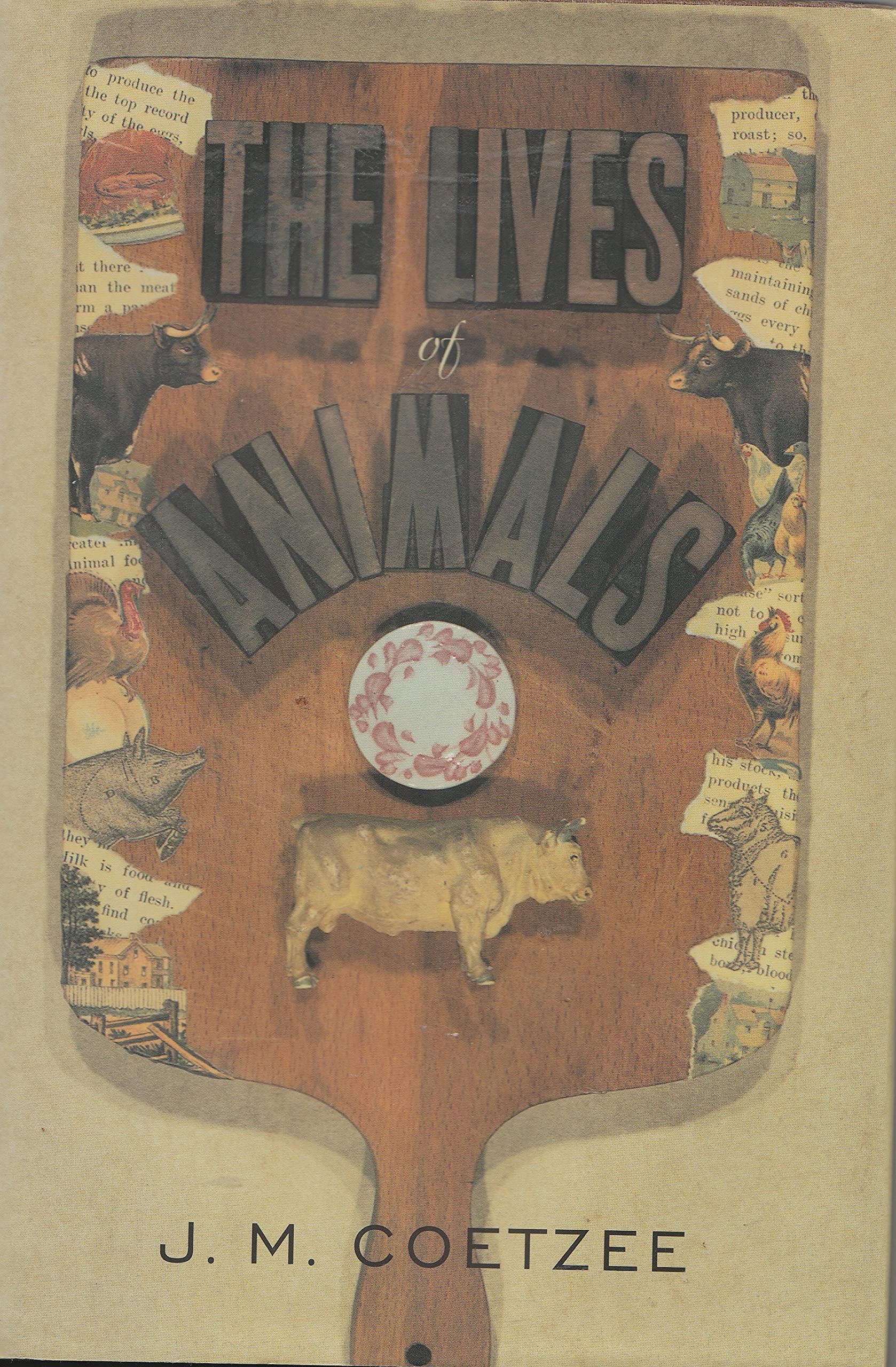
The Lives of Animals,Used
Sold by Ergodebooks, an authorized reseller.
Returns accepted within 30 days | support@ergodebooks.com
Shipping Information
- Free Standard Shipping — United States only
- Processing Time: 3–5 business days
- Estimated Delivery: 6–10 business days after dispatch
- Double-boxed, fully insured & discreetly packaged
- Tracking number sent via email once dispatched
Returns & Refund
Returns accepted within 30 days of delivery.
Damaged or Defective Item
Free return shipping + replacement or full refund
Wrong Item Received
Free return shipping + replacement or full refund
Change of Mind
Return shipping at customer's expense · 25% restocking fee applies
Payment Option

The idea of human cruelty to animals so consumes novelist Elizabeth Costello in her later years that she can no longer look another person in the eye: humans, especially meateating ones, seem to her to be conspirators in a crime of stupefying magnitude taking place on farms and in slaughterhouses, factories, and laboratories across the world.Costello's son, a physics professor, admires her literary achievements, but dreads his mother's lecturing on animal rights at the college where he teaches. His colleagues resist her argument that human reason is overrated and that the inability to reason does not diminish the value of life; his wife denounces his mother's vegetarianism as a form of moral superiority.At the dinner that follows her first lecture, the guests confront Costello with a range of sympathetic and skeptical reactions to issues of animal rights, touching on broad philosophical, anthropological, and religious perspectives. Painfully for her son, Elizabeth Costello seems offensive and flaky, butdare he admit it?strangely on target.Here the internationally renowned writer J. M. Coetzee uses fiction to present a powerfully moving discussion of animal rights in all their complexity. He draws us into Elizabeth Costello's own sense of mortality, her compassion for animals, and her alienation from humans, even from her own family. In his fable, presented as a Tanner Lecture sponsored by the University Center for Human Values at Princeton University, Coetzee immerses us in a drama reflecting the reallife situation at hand: a writer delivering a lecture on an emotionally charged issue at a prestigious university. Literature, philosophy, performance, and deep human convictionCoetzee brings all these elements into play.As in the story of Elizabeth Costello, the Tanner Lecture is followed by responses treating the reader to a variety of perspectives, delivered by leading thinkers in different fields. Coetzee's text is accompanied by an introduction by political philosopher Amy Gutmann and responsive essays by religion scholar Wendy Doniger, primatologist Barbara Smuts, literary theorist Marjorie Garber, and moral philosopher Peter Singer, author of Animal Liberation. Together the lecturefable and the essays explore the palpable social consequences of uncompromising moral conflict and confrontation.
⚠️ WARNING (California Proposition 65):
This product may contain chemicals known to the State of California to cause cancer, birth defects, or other reproductive harm.
For more information, please visit www.P65Warnings.ca.gov.
- Q: What is the page count of 'The Lives of Animals'? A: This book has one hundred thirty pages. It presents a deep exploration of animal rights through fiction.
- Q: What are the dimensions of this book? A: The book measures six and a half inches in length, nine point seven six inches in height, and three quarters of an inch in width.
- Q: What type of binding does 'The Lives of Animals' have? A: It features a hardcover binding. This provides durability and makes it a great addition to any bookshelf.
- Q: Who is the author of 'The Lives of Animals'? A: The author is J. M. Coetzee. He is an internationally renowned writer known for his thought-provoking narratives.
- Q: What is the main theme of this book? A: The main theme revolves around animal rights and human moral responsibility. It addresses the complexities of cruelty towards animals.
- Q: Is 'The Lives of Animals' suitable for young readers? A: This book is primarily intended for adult readers. It contains complex themes that may not be suitable for children.
- Q: How is the content of 'The Lives of Animals' presented? A: The book is presented as a fable followed by essays from leading thinkers. This format encourages diverse perspectives on animal rights.
- Q: What philosophical perspectives are explored in this book? A: The book touches on philosophical, anthropological, and religious perspectives. It invites readers to consider varied viewpoints on animal ethics.
- Q: How do I care for this hardcover book? A: To care for the book, store it upright in a cool, dry place. Avoid exposure to direct sunlight to prevent fading.
- Q: Can I return 'The Lives of Animals' if I'm not satisfied? A: Yes, you can return the book if you are not satisfied. Check the store's return policy for specific details.
- Q: Are there any essays included with the main text? A: Yes, the book includes essays by notable scholars. These essays respond to Coetzee's narrative and enhance the discussion on animal rights.
- Q: Is there any specific moral argument presented in the book? A: Yes, the book argues that human reason is overrated. It emphasizes the value of life beyond rationality.
- Q: What type of readers might enjoy this book? A: Readers interested in animal rights, literature, and philosophy will likely enjoy this book. It appeals to those who appreciate thoughtful narratives.
- Q: Does the book discuss real-life implications of its themes? A: Yes, it reflects on real-life issues related to animal cruelty and moral conflict. The narrative encourages readers to think critically about these topics.
- Q: Is 'The Lives of Animals' a work of fiction or non-fiction? A: It is a work of fiction. However, it deeply engages with non-fictional themes of ethics and morality.
- Q: What publishing house released 'The Lives of Animals'? A: The book is published by Princeton University Press. This publisher is known for its academic and literary contributions.