
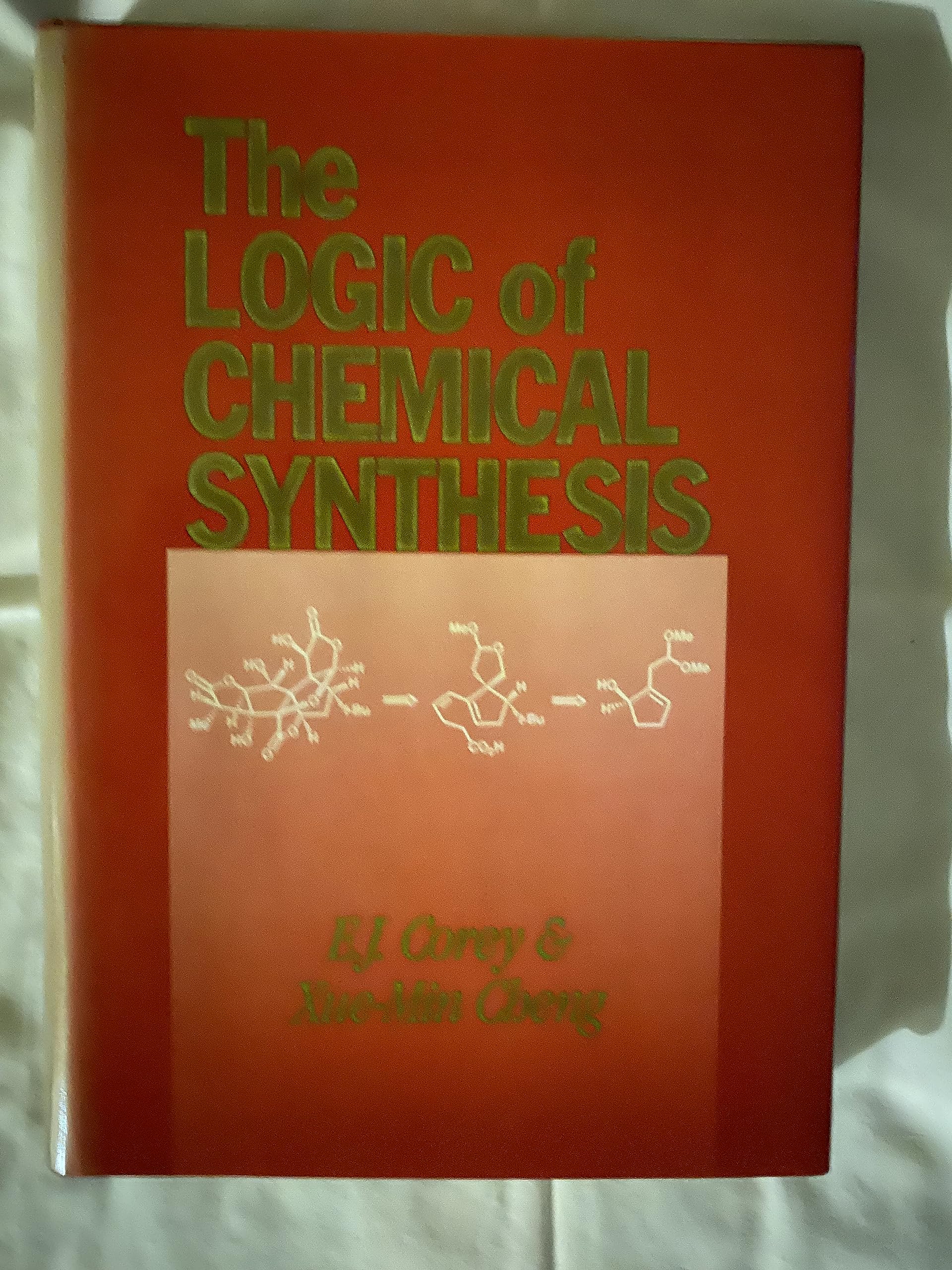
Title
The Logic of Chemical Synthesis,Used
Sold by Ergodebooks, an authorized reseller.
Returns accepted within 30 days | support@ergodebooks.com
Shipping Information
- Free Standard Shipping — United States only
- Processing Time: 3–5 business days
- Estimated Delivery: 6–10 business days after dispatch
- Double-boxed, fully insured & discreetly packaged
- Tracking number sent via email once dispatched
Returns & Refund
Returns accepted within 30 days of delivery.
Damaged or Defective Item
Free return shipping + replacement or full refund
Wrong Item Received
Free return shipping + replacement or full refund
Change of Mind
Return shipping at customer's expense · 25% restocking fee applies
Payment Option

The Logic of Chemical Synthesis The title of this threepart volume derives from a key theme of the bookthe logic underlying the rational analysis of complex synthetic problems. Although the book deals almost exclusively with molecules of biological origin, which are ideal for developing the fundamental ideas of multistep synthetic design because of their architectural complexity and variety, the approach taken is fully applicable to other types of carbonbased structures. Part One outlines the basic concepts of retrosynthetic analysis and the general strategies for generating possible synthetic pathways by logical reduction of molecular complexity. Systematic retrosynthetic analysis and the concurrent use of multiple independent strategies to guide problem solving greatly simplify the task of devising a new synthesis. This way of thinking has been used for more than two decades by one of the authors to teach the analysis of difficult synthetic problems to many hundreds of chemists. A substantial fraction of the intricate syntheses which have appeared in the literature in recent years have been produced by these individuals and their students. Part Two, a collection of multistep syntheses, provides much integrated information on synthetic methods and pathways for the construction of interesting target molecules. These syntheses are the result of synthetic planning which was based on the general principles summarized in Part One. Thus, Part Two serves to supplement Part One with emphasis on the reactions of synthesis and on specific examples of retrosynthetically planned syntheses. Part Three is intended to balance the coverage of Parts One and Two and to serve as a convenient guide to the now enormous literature of multistep synthesis. Information on more than six hundred interesting multistep syntheses of biologically derived molecules is included. It is hoped that the structural range and variety of target molecules presented in Part Three will appeal to many chemists.
⚠️ WARNING (California Proposition 65):
This product may contain chemicals known to the State of California to cause cancer, birth defects, or other reproductive harm.
For more information, please visit www.P65Warnings.ca.gov.