
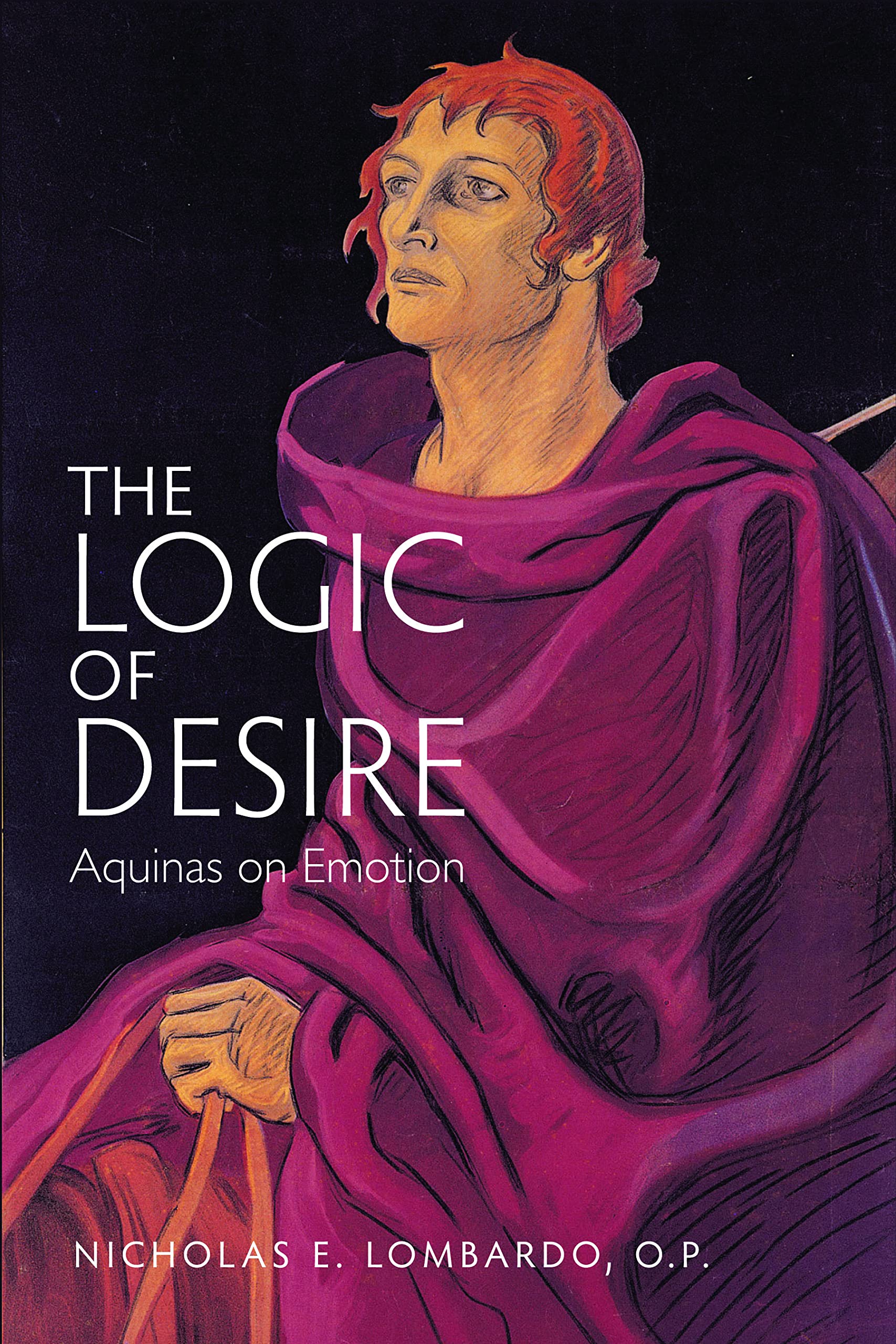
Title
The Logic Of Desire: Aquinas On Emotion
Sold by Ergodebooks, an authorized reseller.
Returns accepted within 30 days | support@ergodebooks.com
Shipping Information
- Free Standard Shipping — United States only
- Processing Time: 3–5 business days
- Estimated Delivery: 6–10 business days after dispatch
- Double-boxed, fully insured & discreetly packaged
- Tracking number sent via email once dispatched
Returns & Refund
Returns accepted within 30 days of delivery.
Damaged or Defective Item
Free return shipping + replacement or full refund
Wrong Item Received
Free return shipping + replacement or full refund
Change of Mind
Return shipping at customer's expense · 25% restocking fee applies
Payment Option

When Thomas Aquinas Completed His Treatise On The Passions, It Was Likely The Longest Sustained Discussion Of The Emotions Ever Written. His Influence On Medieval And Early Modern Philosophy Was Enormous, Overshadowing Every Other Medieval Author On The Topic Of Emotion. Although Aquinas'S Account Of Emotion Merits Attention For Its Historical Significance And Enduring Value, It Remains Neglected By Philosophers And Theologians.With Emotion Emerging As A Focus Of Interest In Many Disciplines, The Time Is Ripe For A Reconsideration Of Aquinas'S Contribution. Desire And Emotion Are Central To Aquinas'S Theological Project, And His Views On Many Topics, Including The Relationship Between Cognition And Emotion, Show Remarkable Prescience In The Light Of Recent Developments. Emotion Is Particularly Important To His Understanding Of Virtue And Vice. Focusing On The Summa Theologiae, Nicholas Lombardo Contributes To The Recovery, Reconstruction, And Critique Of Aquinas'S Account Of Emotion In Dialogue With Both The Thomist Tradition And Contemporary Analytic Philosophy. It Considers Aquinas'S Thought On Emotion In Its Historical Context And Inner Logic, And Shows How It Bears On Larger Issues In His Anthropology And Ethics.About The Author:Nicholas E. Lombardo Is Assistant Professor Of Historical And Systematic Theology At The Catholic University Of America.Praise For The Book:Nicholas Lombardo'S Beautifully Argued And Carefully Documented Book Is A Persuasive Retrieval Of What Saint Thomas Himself Obviously Regarded As Essential To Our Understanding Of The Moral And Spiritual Lifeeven More Important Now Than In His Own Day.Fergus Kerr, O.P., Honorary Fellow, School Of Divinity, University Of EdinburghThis Book Is A Fine And Much Needed Retrieval Of What Constitutes Emotion In The Writings Of Thomas Aquinas, Bringing Precision And Clarification Where It Was Previously Wanting. At The Very Least, Lombardo'S Careful Work Will Demand Attention From Anyone Who Writes In This Area Of Thomas'S Thought In The Future. The Thomist
⚠️ WARNING (California Proposition 65):
This product may contain chemicals known to the State of California to cause cancer, birth defects, or other reproductive harm.
For more information, please visit www.P65Warnings.ca.gov.
- Q: How many pages are in 'The Logic of Desire: Aquinas on Emotion'? A: There are three hundred nineteen pages in this book. It offers a comprehensive exploration of Thomas Aquinas's views on emotions.
- Q: What is the binding type of this book? A: The book is available in paperback binding. This makes it lightweight and easy to handle while reading.
- Q: What are the dimensions of 'The Logic of Desire: Aquinas on Emotion'? A: The dimensions are six point fourteen inches in length, zero point eighty-seven inches in width, and eight point ninety-eight inches in height. These dimensions make it a convenient size for reading.
- Q: Who is the author of this book? A: The author is Nicholas E. Lombardo. He is an Assistant Professor of Historical and Systematic Theology at The Catholic University of America.
- Q: What genre does this book fall under? A: This book falls under the genre of theology and philosophy. It specifically focuses on the emotional aspects of Aquinas's theological project.
- Q: How should I approach reading this book? A: You can read it as a scholarly work or for personal interest in Aquinas's thoughts on emotions. It's suitable for readers interested in theology and philosophy.
- Q: Is this book suitable for beginners in philosophy? A: Yes, it is suitable for beginners. While it discusses complex ideas, Lombardo presents them in an accessible manner for all readers.
- Q: What themes does the book explore? A: The book explores themes of desire, emotion, virtue, and vice within the context of Aquinas's teachings. It engages with both historical and contemporary philosophical discussions.
- Q: Are there any recommendations for studying this book? A: It is recommended to take notes while reading to better understand Aquinas's arguments. Engaging in discussions with peers can also enhance comprehension.
- Q: How should I store this book? A: Store it in a cool, dry place to maintain its condition. Keep it away from direct sunlight to prevent fading of the cover and pages.
- Q: What is the recommended care for this paperback book? A: To care for the book, avoid bending the cover and pages. Keep it clean by dusting it regularly to prevent dirt accumulation.
- Q: Is this book safe for all ages? A: Yes, the book is safe for all ages. However, its themes may be more suitable for older teens and adults interested in philosophical discussions.
- Q: What if the book arrives damaged? A: If the book arrives damaged, you should contact the retailer for a replacement or refund. Most sellers have return policies to address such issues.
- Q: Does this book include references to contemporary philosophy? A: Yes, it includes dialogue with contemporary analytic philosophy. This helps contextualize Aquinas's views in modern discussions of emotion.
- Q: What makes this book unique compared to other works on Aquinas? A: This book uniquely focuses on Aquinas's account of emotion, emphasizing its historical significance and relevance in today's philosophical landscape.