
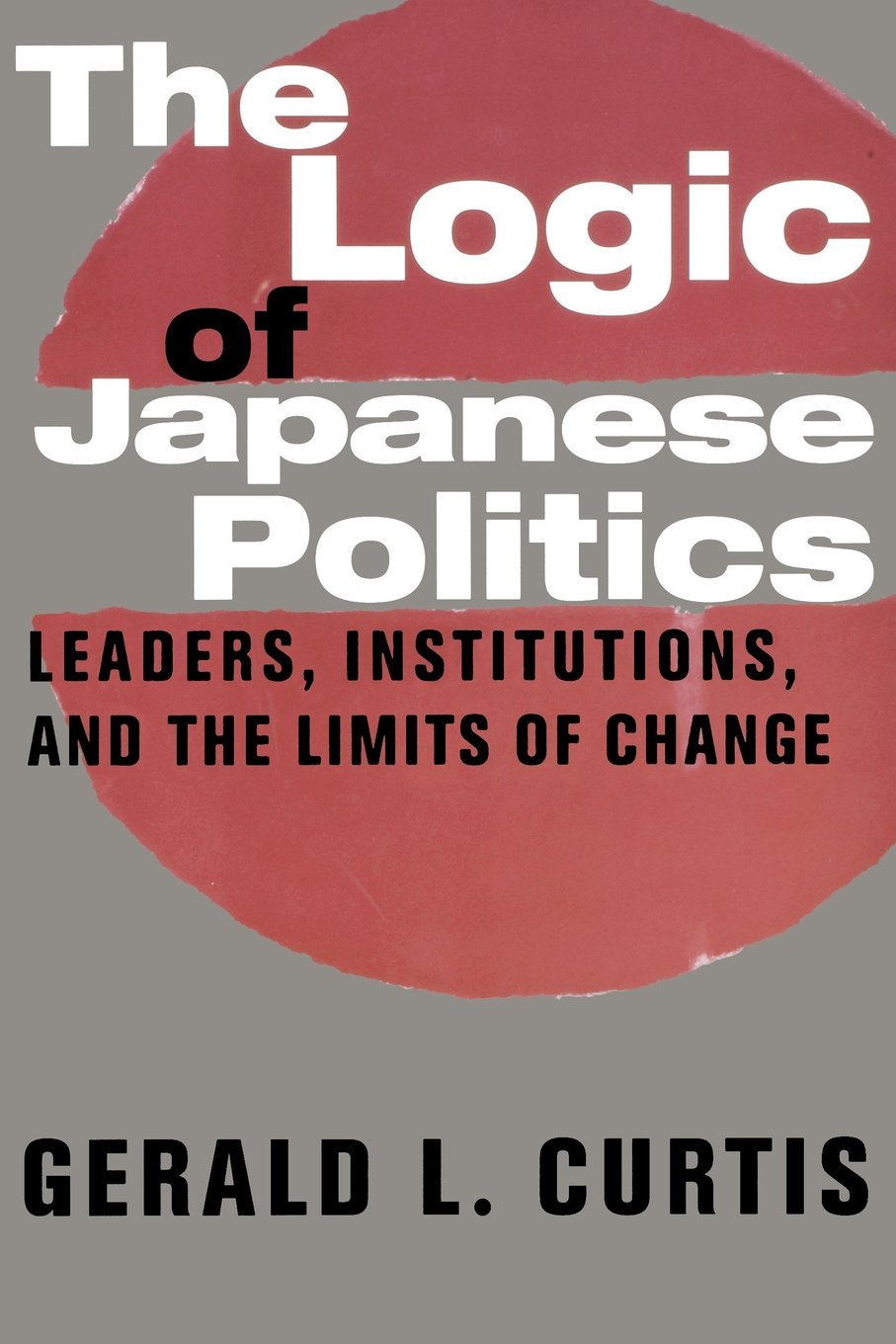
Title
The Logic Of Japanese Politics,New
Sold by Ergodebooks, an authorized reseller.
Returns accepted within 30 days | support@ergodebooks.com
Shipping Information
- Free Standard Shipping — United States only
- Processing Time: 3–5 business days
- Estimated Delivery: 6–10 business days after dispatch
- Double-boxed, fully insured & discreetly packaged
- Tracking number sent via email once dispatched
Returns & Refund
Returns accepted within 30 days of delivery.
Damaged or Defective Item
Free return shipping + replacement or full refund
Wrong Item Received
Free return shipping + replacement or full refund
Change of Mind
Return shipping at customer's expense · 25% restocking fee applies
Payment Option

Widely Recognized Both In America And Japan For His Insider Knowledge And Penetrating Analyses Of Japanese Politics, Gerald Curtis Is The Political Analyst Best Positioned To Explore The Complexities Of The Japanese Political Scene Today. Curtis Has Personally Known Most Of The Key Players In Japanese Politics For More Than Thirty Years, And He Draws On Their Candid Comments To Provide Invaluable And Graphic Insights Into The World Of Japanese Politics. By Relating The Behavior Of Japanese Political Leaders To The Institutions Within Which They Must Operate, Curtis Makes Sense Out Of What Others Have Regarded As Enigmatic Or Illogical. He Utilizes His Skills As A Scholar And His Knowledge Of The Inner Workings Of The Japanese Political System To Highlight The Commonalities Of Japanese And Western Political Practices While At The Same Time Explaining What Sets Japan Apart.Curtis Rejects The Notion That Cultural Distinctiveness And Consensus Are The Defining Elements Of Japan'S Political Decision Making, Emphasizing Instead The Competition Among And The Profound Influence Of Individuals Operating Within Particular Institutional Contexts On The Development Of Japan'S Politics. The Discussions Featured Hereas They Survey Both The Detailed Events And The Broad Structures Shaping The Mercurial Japanese Political Scene Of The 1990Sdraw On Extensive Conversations With Virtually All Of The Decade'S Political Leaders And Focus On The Interactions Among Specific Politicians As They Struggle For Political Power.The Logic Of Japanese Politics Covers Such Important Political Developments As The Liberal Democratic Party'S Egress From Power In 1993, After Reigning For Nearly Four Decades, And Their Crushing Defeat In The 'Voters' Revolt' Of The 1998 Upperhouse Election; The Formation Of The 1993 Seven Party Coalition Government Led By Prime Minister Morihiro Hosokawa And Its Collapse Eight Months Later; The Historic Electoral Reform Of 1994 Which Replaced The Electoral System Operative Since The Adoption Of Universal Manhood Suffrage In 1925; And The Decline Of Machine Politics And The Rise Of The Mutohasothe Floating, Nonparty Voter.Scrutinizing And Interpreting A Complex And Changing Political System, This Multilayered Chronicle Reveals The Dynamics Of Democracy At Workjapanesestyle. In The Process, The Logic Of Japanese Politics Not Only Offers A Fascinating Picture Of Japanese Politics And Politicians But Also Provides A Framework For Understanding Japan'S Attempts To Surmount Its Present Problems, And Helps Readers Gain Insight Into Japan'S Future.
⚠️ WARNING (California Proposition 65):
This product may contain chemicals known to the State of California to cause cancer, birth defects, or other reproductive harm.
For more information, please visit www.P65Warnings.ca.gov.
- Q: How many pages does this book have? A: This book contains three hundred thirty-six pages. It provides an in-depth analysis of Japanese politics and key political developments.
- Q: What is the binding type of this book? A: The binding type is paperback. This makes it lightweight and easy to handle for reading.
- Q: What are the dimensions of this book? A: The dimensions of this book are nine point zero six inches in length, six point zero six inches in width, and zero point seven nine inches in height.
- Q: Who is the author of 'The Logic of Japanese Politics'? A: The author is Gerald L. Curtis. He is a well-regarded political analyst with extensive knowledge of Japanese politics.
- Q: What topics are covered in this book? A: This book covers topics such as the Liberal Democratic Party's loss of power and the rise of the floating voter in Japan. It also discusses electoral reforms and political dynamics.
- Q: What is the target audience for this book? A: The book is suitable for readers interested in political science and Japanese politics. It is ideal for both students and general readers.
- Q: How do I read this book effectively? A: To read this book effectively, consider taking notes on key political events and figures mentioned. Engaging with the content through discussions can also enhance understanding.
- Q: Is this book suitable for beginners in political studies? A: Yes, this book is suitable for beginners. It provides clear insights into Japanese political structures and decision-making processes.
- Q: What should I do to keep this book in good condition? A: To keep this book in good condition, store it in a cool, dry place and avoid exposing it to direct sunlight. Handle it gently to prevent wear and tear.
- Q: Can this book be used as a reference for academic work? A: Yes, this book can be used as a reference for academic work. It includes detailed analyses and discussions relevant to Japanese political studies.
- Q: Are there any specific care instructions for this book? A: There are no specific care instructions, but it’s advisable to keep it away from moisture and extreme temperatures to preserve its quality.
- Q: What if I receive a damaged copy of the book? A: If you receive a damaged copy, you should contact the seller for a return or exchange. Most sellers provide a satisfaction guarantee.
- Q: Is there a warranty for this book? A: No, books typically do not come with a warranty. However, many sellers offer return policies for unsatisfactory items.
- Q: How does this book compare to other political analysis texts? A: This book offers unique insights into Japanese politics not found in many general political analysis texts. It is particularly strong on Japan's political history.
- Q: Is this book recommended for those interested in international relations? A: Yes, this book is highly recommended for those interested in international relations. It provides context on Japan's political interactions with other countries.