If you have any questions, you are always welcome to contact us. We'll get back to you as soon as possible, withing 24 hours on weekdays.
Customer service
All questions about your order, return and delivery must be sent to our customer service team by e-mail at yourstore@yourdomain.com
Sale & Press
If you are interested in selling our products, need more information about our brand or wish to make a collaboration, please contact us at press@yourdomain.com
Help
If you have any questions, you are always welcome to contact us. We'll get back to you as soon as possible, withing 24 hours on weekdays.
Customer service
All questions about your order, return and delivery must be sent to our customer service team by e-mail at yourstore@yourdomain.com
Sale & Press
If you are interested in selling our products, need more information about our brand or wish to make a collaboration, please contact us at press@yourdomain.com
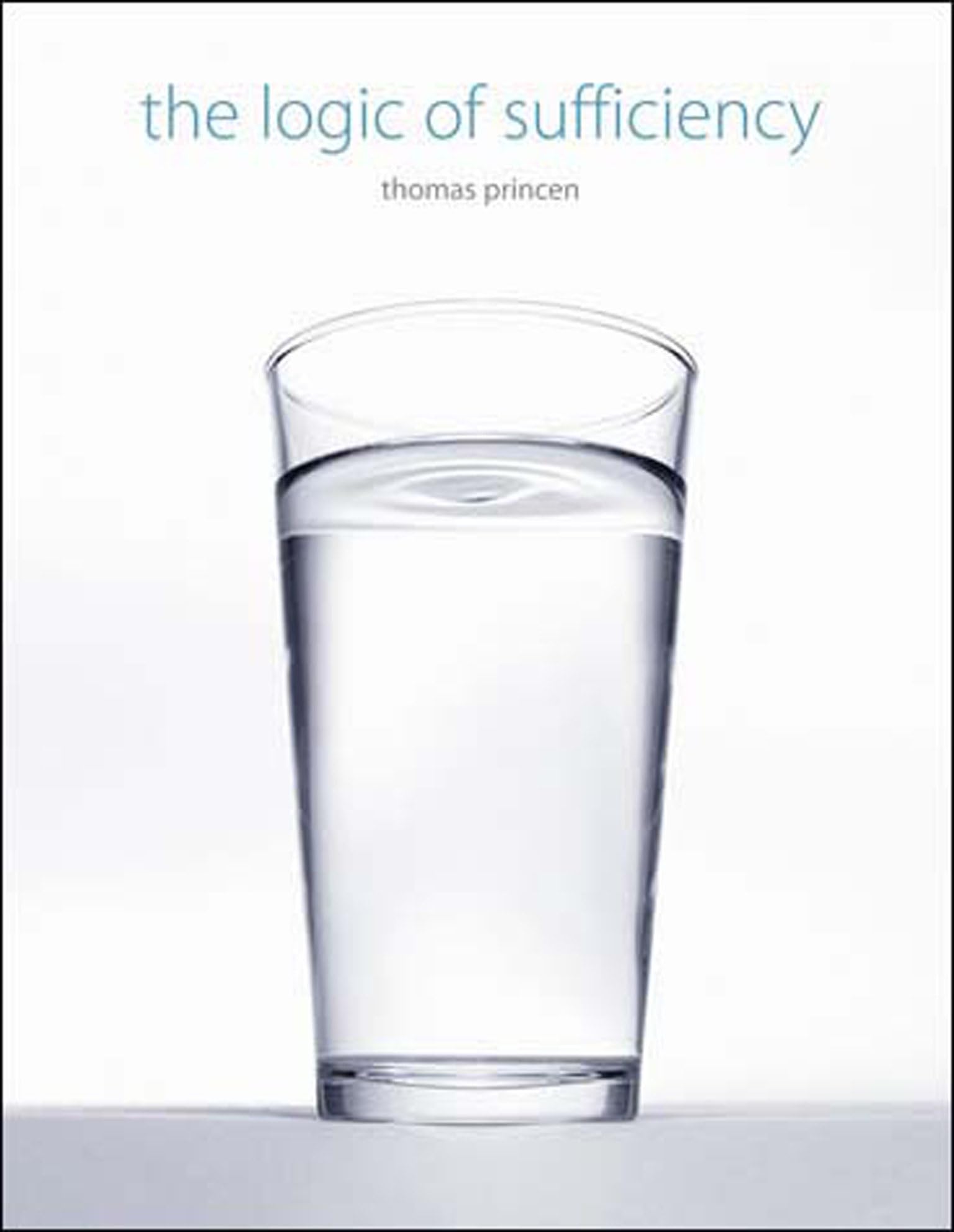
What if modern society put a priority on the material security of its citizens and the ecological integrity of its resource base? What if it took ecological constraint as a given, not a hindrance but a source of longterm economic security? How would it organize itself, structure its industry, shape its consumption?Across time and across cultures, people actually have adapted to ecological constraint. They have changed behavior; they have built institutions. And they have developed norms and principles for their time. Today's environmental challengesat once global, technological, and commercialrequire new behaviors, new institutions, and new principles.In this highly original work, Thomas Princen builds one such principle: sufficiency. Sufficiency is not about denial, not about sacrifice or doing without. Rather, when resource depletion and overconsumption are real, sufficiency is about doing well. It is about good work and good governance; it is about goods that are good only to a point.With examples ranging from timbering and fishing to automobility and meat production, Princen shows that sufficiency is perfectly sensible and yet absolutely contrary to modern society's dominant principle, efficiency. He argues that seeking enough when more is possible is both intuitive and rationalpersonally, organizationally and ecologically rational. And under global ecological constraint, it is ethical. Over the long term, an economyindeed a societycannot operate as if there's never enough and never too much.
⚠️ WARNING (California Proposition 65):
This product may contain chemicals known to the State of California to cause cancer,
birth defects, or other reproductive harm.
For MAP (Minimum Advertised Price) violations and Intellectual Property (IP) or Trademark concerns, please contact:
support@ergodebooks.com
⚠️ California Proposition 65 Warning: Some products sold on this website may expose you to chemicals known to the State of California to cause cancer, birth defects, or other reproductive harm. For more information, visit www.P65Warnings.ca.gov.