
Title
The Long Partition And The Making Of Modern South Asia: Refugees, Boundaries, Histories (Cultures Of History),New
Sold by Ergodebooks, an authorized reseller.
Returns accepted within 30 days | support@ergodebooks.com
Shipping Information
- Free Standard Shipping — United States only
- Processing Time: 3–5 business days
- Estimated Delivery: 6–10 business days after dispatch
- Double-boxed, fully insured & discreetly packaged
- Tracking number sent via email once dispatched
Returns & Refund
Returns accepted within 30 days of delivery.
Damaged or Defective Item
Free return shipping + replacement or full refund
Wrong Item Received
Free return shipping + replacement or full refund
Change of Mind
Return shipping at customer's expense · 25% restocking fee applies
Payment Option

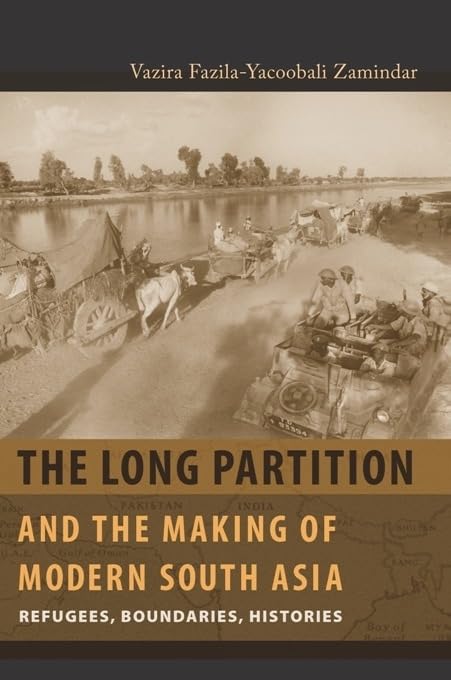
Nationstates Often Shape The Boundaries Of Historical Enquiry, And Thus Silence The Very Histories That Have Sutured Nations To Territorial States. 'India' And 'Pakistan' Were Drawn Onto Maps In The Midst Of Partition'S Genocidal Violence And One Of The Largest Displacements Of People In The Twentieth Century. Yet This Historical Specificity Of Decolonization On The Very Making Of A Nationalized Cartography Of Modern South Asia Has Largely Gone Unexamined.In This Remarkable Study Based On More Than Two Years Of Ethnographic And Archival Research, Vazira Fazilayacoobali Zamindar Argues That The Combined Interventions Of The Two Postcolonial States Were Enormously Important In Shaping These Massive Displacements. She Examines The Long, Contentious, And Ambivalent Process Of Drawing Political Boundaries And Making Distinct Nationstates In The Midst Of This Historic Chaos.Zamindar Crosses Political And Conceptual Boundaries To Bring Together Oral Histories With North Indian Muslim Families Divided Between The Two Cities Of Delhi And Karachi With Extensive Archival Research In Previously Unexamined Urdu Newspapers And Government Records Of India And Pakistan. She Juxtaposes The Experiences Of Ordinary People Against The Bureaucratic Interventions Of Both Postcolonial States To Manage And Control Refugees And Administer Refugee Property. As A Result, She Reveals The Surprising History Of The Making Of The Western Indopak Border, One Of The Most Highly Surveillanced In The World, Which Came To Be Instituted In Response To This Refugee Crisis, In Order To Construct National Difference Where It Was The Most Blurred.In Particular, Zamindar Examines The 'Muslim Question' At The Heart Of Partition. From The Margins And Silences Of National Histories, She Draws Out The Resistance, Bewilderment, And Marginalization Of North Indian Muslims As They Came To Be Pushed Out And Divided By Both Emergent Nationstates. It Is Here That Zamindar Asks Us To Stretch Our Understanding Of 'Partition Violence' To Include This Long, And In Some Sense Ongoing, Bureaucratic Violence Of Postcolonial Nationhood, And To Place Partition At The Heart Of A Twentieth Century Of Bordermaking And Nationstate Formation.
⚠️ WARNING (California Proposition 65):
This product may contain chemicals known to the State of California to cause cancer, birth defects, or other reproductive harm.
For more information, please visit www.P65Warnings.ca.gov.