
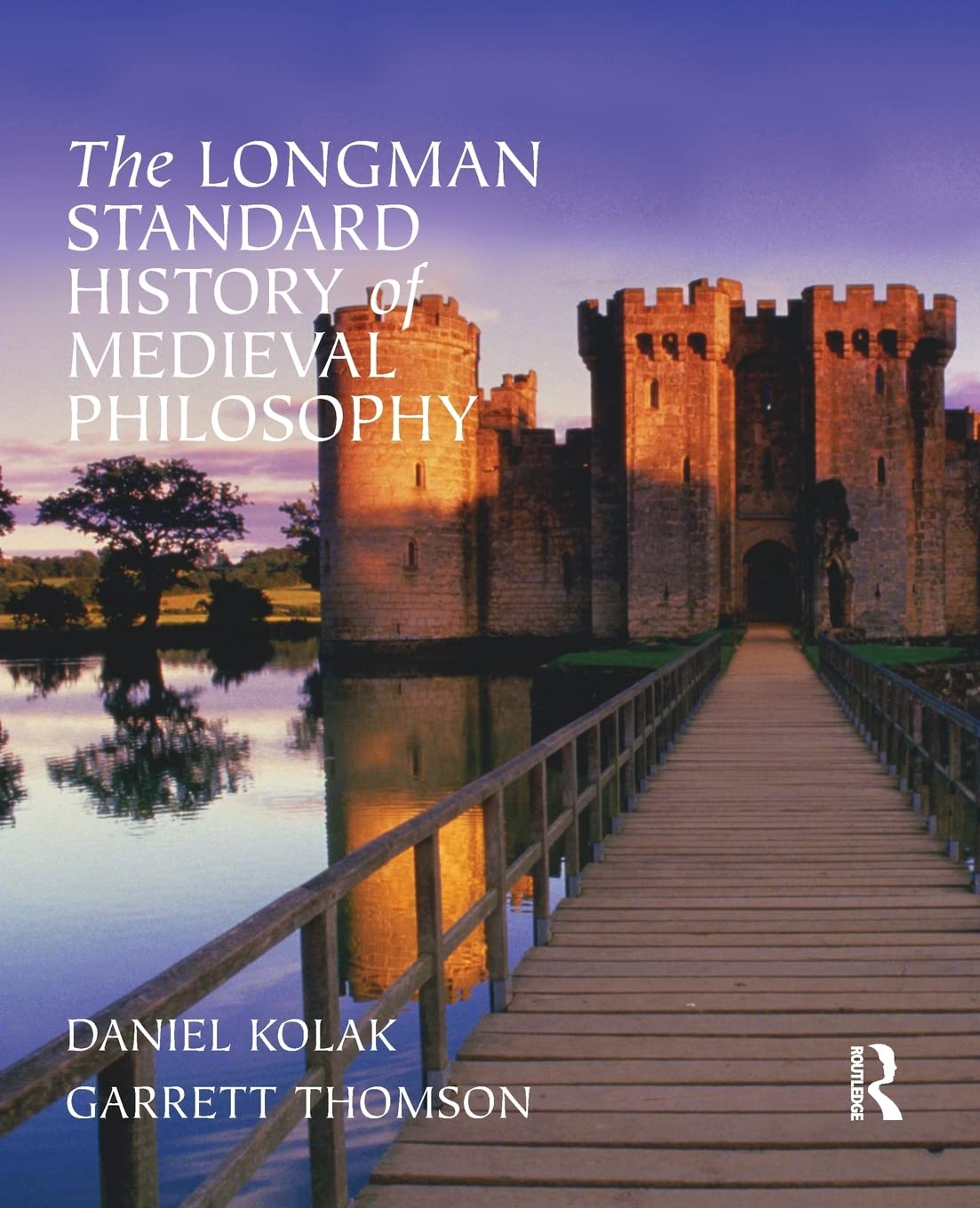
Title
The Longman Standard History of Medieval Philosophy,New
Processing time: 1-3 days
US Orders Ships in: 3-5 days
International Orders Ships in: 8-12 days
Return Policy: 15-days return on defective items
Payment Option

With selections of philosophers from Plotinus to Bruno, this new anthology provides significant learning support and historical context for the readings along with a wide variety of pedagogical assists.Featuring biographical headnotes, reading introductions, study questions, as well as special Prologues and Philosophical Overviews, this anthology offers a unique set of critical thinking promtps to help students understand and appreciate the philosophical concepts under discussion. Philosophical Bridges' discuss how the work of earlier thinkers would influence philosophers to come and place major movements in a contemporary context, showing students how the schools of philosophy interrelate and how the various philosophies apply to the world today.In addition to this volume of Medieval Philosophy, a comprehensive survey of the whole of Western philosophical history and other individual volumes for each of the major historical eras are also available for specialized courses.
⚠️ WARNING (California Proposition 65):
This product may contain chemicals known to the State of California to cause cancer, birth defects, or other reproductive harm.
For more information, please visit www.P65Warnings.ca.gov.
- Q: How many pages does this book have? A: This book has four hundred thirty-two pages. It provides ample content for an in-depth understanding of medieval philosophy.
- Q: What is the binding type of this book? A: This book is paperback bound. The paperback format makes it lightweight and portable for easy reading.
- Q: What are the dimensions of this book? A: This book measures seven point five two inches in length, zero point nine eight inches in width, and eight point seven five inches in height. These dimensions make it a compact addition to your library.
- Q: Who is the author of this book? A: The author of this book is Garrett Thomson. He has curated a selection of philosophical works for this anthology.
- Q: What is the main topic of this book? A: The main topic of this book is medieval philosophy. It covers key philosophers from Plotinus to Bruno.
- Q: Is this book suitable for beginners? A: Yes, this book is suitable for beginners. It provides historical context and pedagogical support for new learners in philosophy.
- Q: Are there study questions included in this book? A: Yes, there are study questions included in this book. These questions are designed to enhance comprehension and critical thinking.
- Q: Can this book be used for classroom instruction? A: Yes, this book is ideal for classroom instruction. It includes various pedagogical assists to support educators.
- Q: What age group is this book appropriate for? A: This book is appropriate for high school students and above. It addresses complex philosophical concepts suitable for older students.
- Q: How should I store this book? A: Store this book in a cool, dry place to maintain its condition. Keep it upright on a shelf to prevent bending.
- Q: Can I clean this book if it gets dirty? A: Yes, you can clean this book if it gets dirty. Use a dry cloth to gently wipe the cover and pages.
- Q: Is this book safe for children? A: No, this book is not specifically designed for children. It contains complex philosophical themes that are better suited for older readers.
- Q: What if the book arrives damaged? A: If the book arrives damaged, you should contact customer support for a replacement. They will assist you with the return process.
- Q: Does this book have an index? A: Yes, this book includes an index. The index helps readers locate specific topics and philosophers quickly.
- Q: Is there a digital version available? A: Yes, there is a digital version available for this book. The digital format allows for easy access and portability.
- Q: What other topics are covered in related volumes? A: Related volumes cover a comprehensive survey of Western philosophical history. They provide insights into various historical eras of philosophy.