
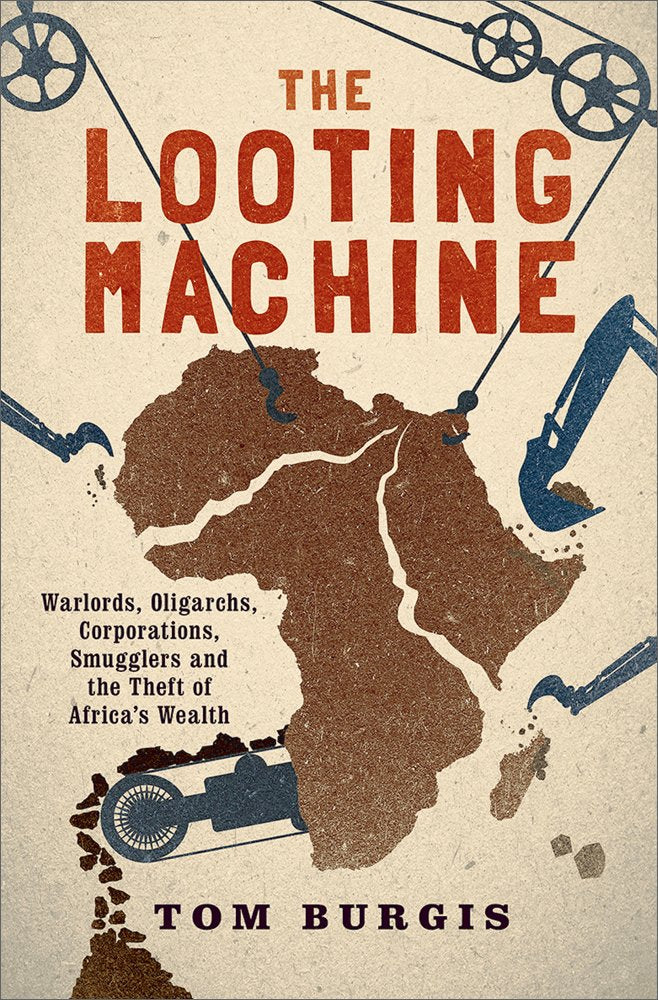
Title
The Looting Machine: Warlords, Oligarchs, Corporations, Smugglers, and the Theft of Africas Wealth,Used
Sold by Ergodebooks, an authorized reseller.
Returns accepted within 30 days | support@ergodebooks.com
Shipping Information
- Free Standard Shipping — United States only
- Processing Time: 3–5 business days
- Estimated Delivery: 6–10 business days after dispatch
- Double-boxed, fully insured & discreetly packaged
- Tracking number sent via email once dispatched
Returns & Refund
Returns accepted within 30 days of delivery.
Damaged or Defective Item
Free return shipping + replacement or full refund
Wrong Item Received
Free return shipping + replacement or full refund
Change of Mind
Return shipping at customer's expense · 25% restocking fee applies
Payment Option

One of Financial Times Books of the Year, 2015The trade in oil, gas, gems, metals and rare earth minerals wreaks havoc in Africa. During the years when Brazil, India, China and the other emerging markets?have transformed their economies, Africas resource states remained tethered to the bottom of the industrial supply chain. While Africa accounts for about 30 per cent of the worlds reserves of hydrocarbons and minerals and 14 per cent of the worlds population, its share of global manufacturing stood in 2011 exactly where it stood in 2000: at 1 percent.In his first book, The Looting Machine, Tom Burgis exposes the truth about the African development miracle: for the resource states, its a mirage. The oil, copper, diamonds, gold and coltan deposits attract a global network of traders, bankers, corporate extractors and investors who combine with venal political cabals to loot the states value. And the vagaries of resourcedependent economies could pitch Africas new middle class back into destitution just as quickly as they climbed out of it. The ground beneath their feet is as precarious as a Congolese mine shaft; their prosperity could spill away like crude from a busted pipeline.This catastrophic social disintegration is not merely a continuation of Africas past as a colonial victim. The looting now is accelerating as never before. As global demand for Africas resources rises, a handful of Africans are becoming legitimately rich but the vast majority, like the continent as a whole, is being fleeced. Outsiders tend to think of Africa as a great drain of philanthropy. But look more closely at the resource industry and the relationship between Africa and the rest of the world looks rather different. In 2010, fuel and mineral exports from Africa were worth 333 billion, more than seven times the value of the aid that went in the opposite direction. But who received the money? For every Frenchwoman who dies in childbirth, 100 die in Niger alone, the former French colony whose uranium fuels Frances nuclear reactors. In petrostates like Angola threequarters of government revenue comes from oil. The government is not funded by the people, and as result it is not beholden to them. A score of African countries whose economies depend on resources are rentier states; their people are largely serfs. The resource curse is not merely some unfortunate economic phenomenon, the product of an intangible force. What is happening in Africas resource states is systematic looting. Like its victims, its beneficiaries have names.
⚠️ WARNING (California Proposition 65):
This product may contain chemicals known to the State of California to cause cancer, birth defects, or other reproductive harm.
For more information, please visit www.P65Warnings.ca.gov.
- Q: What are the dimensions of the book? A: The book measures seven point zero one inches in length, one point two six inches in width, and ten inches in height.
- Q: How many pages does the book have? A: The book contains three hundred fifty two pages.
- Q: What type of binding does the book have? A: The book is bound in hardcover.
- Q: Who is the author of 'The Looting Machine'? A: The author of the book is Tom Burgis.
- Q: What is the main theme of the book? A: The book explores the impact of resource extraction on Africa's economies and the social consequences of systematic looting.
- Q: Is this book suitable for young adults? A: Yes, the book is suitable for young adults interested in economics and social issues.
- Q: How should I read this book for best comprehension? A: It is recommended to read the book in a quiet environment, taking notes on key points for better understanding.
- Q: Can I use this book for academic purposes? A: Yes, the book is a well-researched resource suitable for academic study in environmental economics.
- Q: How should I store this book to keep it in good condition? A: Store the book upright on a shelf in a cool, dry place away from direct sunlight.
- Q: Is there a warranty or return policy for the book? A: Typically, books can be returned within a specified period if they are in new condition; check the retailer's policy for details.
- Q: What if the book arrives damaged? A: If the book arrives damaged, contact the retailer immediately for a return or exchange.
- Q: Does this book contain any adult content? A: No, the book does not contain adult content; it focuses on economic and social issues.
- Q: How can I clean the book if it gets dirty? A: To clean the book, gently wipe the cover with a soft, dry cloth; avoid using water or cleaning solutions.
- Q: Is this book recommended for beginners in environmental economics? A: Yes, the book is accessible and provides foundational insights into environmental economics.
- Q: What makes this book different from other economic books? A: This book uniquely combines investigative journalism with economic analysis, focusing specifically on Africa’s resource exploitation.
- Q: Are there any other books by Tom Burgis? A: Yes, Tom Burgis has authored other investigative works that delve into similar themes of corruption and resource management.