
Title
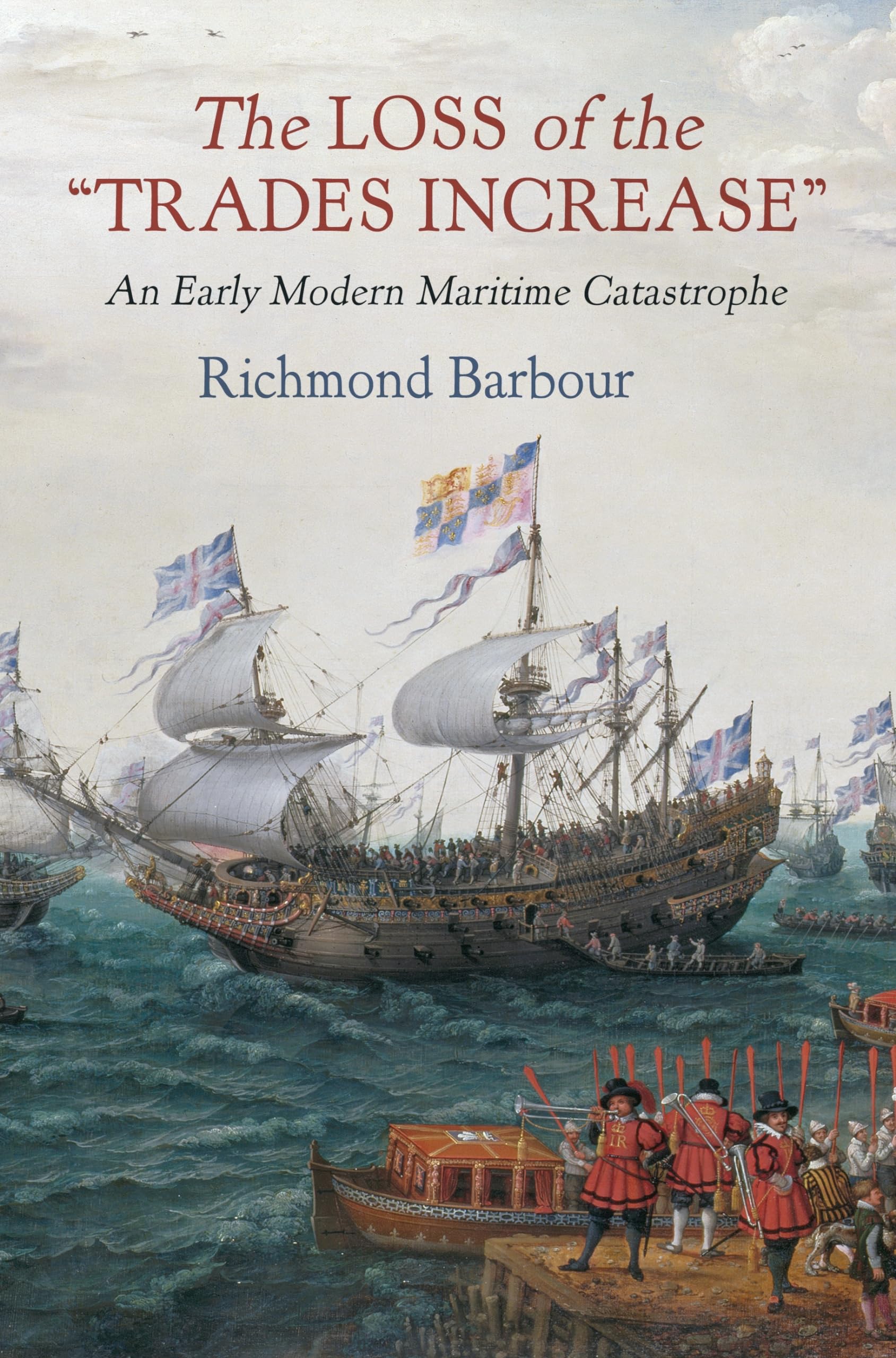
The Loss Of The 'Trades Increase': An Early Modern Maritime Catastrophe (Haney Foundation Series),Used
Sold by Ergodebooks, an authorized reseller.
Returns accepted within 30 days | support@ergodebooks.com
Shipping Information
- Free Standard Shipping — United States only
- Processing Time: 3–5 business days
- Estimated Delivery: 6–10 business days after dispatch
- Double-boxed, fully insured & discreetly packaged
- Tracking number sent via email once dispatched
Returns & Refund
Returns accepted within 30 days of delivery.
Damaged or Defective Item
Free return shipping + replacement or full refund
Wrong Item Received
Free return shipping + replacement or full refund
Change of Mind
Return shipping at customer's expense · 25% restocking fee applies
Payment Option

Was it the Titanic of its age?Christened by an optimistic King James I in December 1609, the Trades Increase was the greatest English merchant vessel of the Jacobean eraa magnificent ship embodying the hopes of the nascent East India Company to claim a commanding share of the Eastern trade. But the ship's launch failed when it proved too large to exit from its dock, an illfated start to an expedition that would end some three years later, when a dangerously leaking Trades Increase at last reached the shores of Java. While its smaller companion vessel would sail home with handsome profits for investors, the rotting hull of the great ship itself was beyond repair. The Trades Increase and nearly all who sailed it perished wretchedly on the far side of the world.The terrible pattern proven by this voyage, with profits to an elite few in London stained by catastrophic losses in equipment and personnel abroad, ignited rancorous controversy in England over the human, moral, and economic costs of such commerce. In The Loss of the 'Trades Increase' Richmond Barbour has written an engrossing account of the tragic expedition and of global capitalism at its hour of emergence.Its sources fragmented among journals, minutes, and letters in the archives of the East India Company, the full story of the Trades Increase is told here for the first time. Earlier writers minimized the loss as a temporary setback and necessary sacrifice on the road to empire. In a work informed by corporate history and postcolonial theory, Barbour sees the saga of the voyage, and all that produced and justified it, differently: as an expression of the structural conflicts, operational risks, and material incapacities that haunted and ultimately unraveled the British Empireand that destabilize multinational corporations, global markets, and our common biosphere to this day.
⚠️ WARNING (California Proposition 65):
This product may contain chemicals known to the State of California to cause cancer, birth defects, or other reproductive harm.
For more information, please visit www.P65Warnings.ca.gov.