
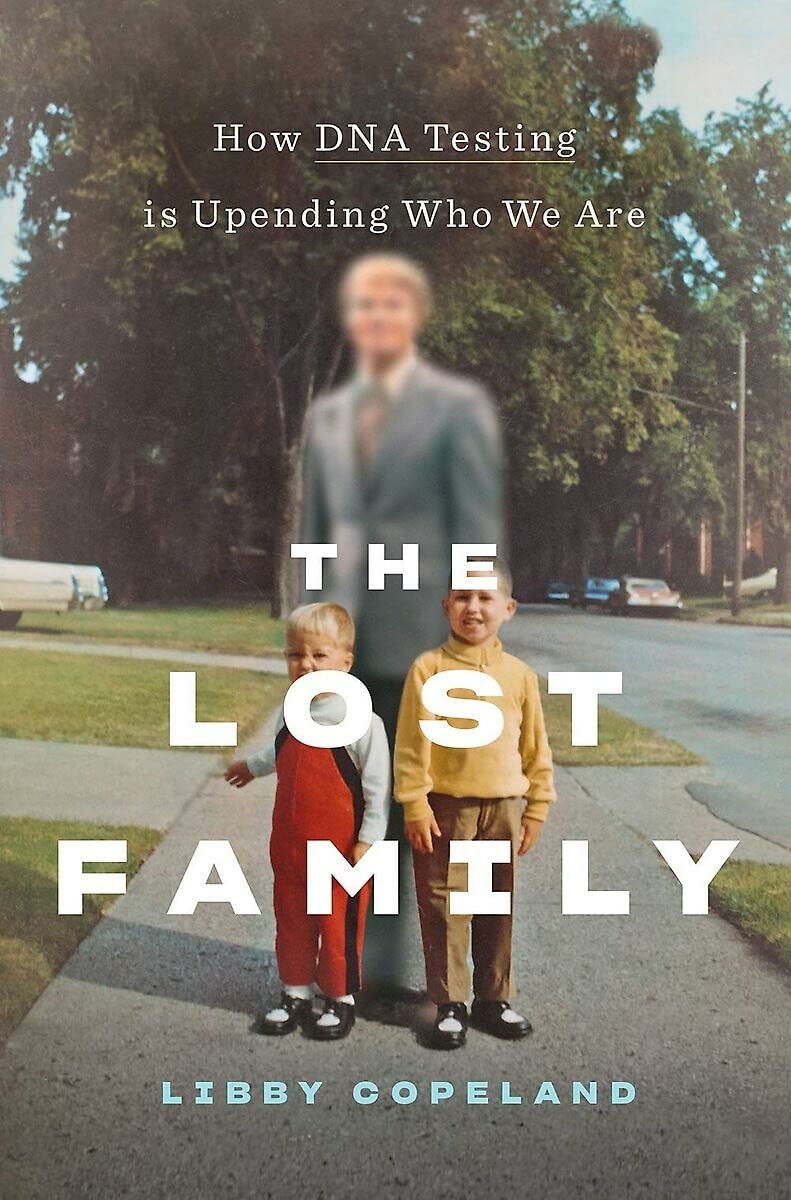
Title
The Lost Family: How Dna Testing Is Upending Who We Are
Sold by Ergodebooks, an authorized reseller.
Returns accepted within 30 days | support@ergodebooks.com
Shipping Information
- Free Standard Shipping — United States only
- Processing Time: 3–5 business days
- Estimated Delivery: 6–10 business days after dispatch
- Double-boxed, fully insured & discreetly packaged
- Tracking number sent via email once dispatched
Returns & Refund
Returns accepted within 30 days of delivery.
Damaged or Defective Item
Free return shipping + replacement or full refund
Wrong Item Received
Free return shipping + replacement or full refund
Change of Mind
Return shipping at customer's expense · 25% restocking fee applies
Payment Option

Before You Spit In That Vial, Read This Book. New York Timesa Fascinating Account Of Lives Dramatically Affected By Genetic Sleuthing. Wall Street Journalwrestles With Some Of The Biggest Questions In Life: Who Are We? What Is Family? Are We Defined By Nature, Nurture Or Both? Washington Postyou Swab Your Cheek Or Spit Into A Vial, Then Send Your Dna Test Away To A Lab Somewhere. Weeks Later You Get A Report That Might Tell You Where Your Ancestors Came From Or If You Carry Certain Genetic Risks. Or The Report Could Reveal A Longburied Family Secret And Upend Your Entire Sense Of Identity.Soon A Lark Becomes An Obsession, An Incessant Desire To Find Answers To Questions At The Core Of Your Being, Like Who Am I? And Where Did I Come From? Welcome To The Age Of Home Genetic Testing.The Lost Family Delves Into The Many Lives That Have Been Irrevocably Changed By Home Dna Testsa Technology That Represents The End Of Family Secrets. So Much Can Come Out When You Use Biology To Find Out The Truth: Adoptees Whove Used The Tests To Find Their Birth Parents Donorconceived Adults Who Suddenly Discover They Have More Than 50 Siblings Hundreds Of Thousands Of Americans Who Discover Their Fathers Arent Biologically Related To Them, A Phenomenon So Common It Is Known As A Nonpaternity Event Individuals Who Are Left To Grapple With Their Conceptions Of Race And Ethnicity When Their True Ancestral Histories Are Discovered In The Lost Family, Journalist Libby Copeland Investigates What Happens When We Embark On A Vast Social Experiment With Little Understanding Of The Ramifications. Copeland Explores The Culture Of Genealogy Buffs, The Science Of Dna, And The Business Of Companies Like Ancestry And 23Andme, All While Tracing The Story Of One Woman, Her Unusual Results, And A Relentless Methodical Drive For Answers That Becomes A Thoroughly Modern Genetic Detective Story.Throughout These Accounts, Copeland Explores The Impulse Toward Genetic Essentialism And Raises The Question Of How Much Our Genes Should Get To Tell Us About Who We Are. With More Than 30 Million People Having Undergone Home Dna Testing, The Answer To That Question Is More Important Than Ever. Gripping And Masterfully Told, The Lost Family Is A Spectacular Book On A Big, Timely Subject.
⚠️ WARNING (California Proposition 65):
This product may contain chemicals known to the State of California to cause cancer, birth defects, or other reproductive harm.
For more information, please visit www.P65Warnings.ca.gov.
- Q: How many pages does the book have? A: The book has three hundred four pages. It offers an in-depth exploration of genetic testing and its impact on identity.
- Q: What is the binding type of this book? A: The book is a hardcover edition. This durable binding ensures longevity and makes it suitable for repeated reading.
- Q: What are the dimensions of the book? A: The book measures six point four two inches in length, one point two inches in width, and nine point three five inches in height.
- Q: Who is the author of the book? A: The author is Libby Copeland. She is a journalist known for her insightful exploration of complex societal issues.
- Q: What genre does this book belong to? A: The book falls into the non-fiction genre. It discusses themes of family, identity, and the implications of DNA testing.
- Q: Is this book suitable for all ages? A: The book is not specifically categorized for children. It addresses complex themes about identity and family secrets, which may be more suitable for adult readers.
- Q: How should I store this book? A: Store the book in a cool, dry place. Keeping it upright on a shelf will help maintain its shape and prevent damage.
- Q: Can I clean the book's cover? A: Yes, you can clean the cover gently with a damp cloth. Avoid using harsh chemicals to prevent damage to the material.
- Q: How do I care for the book to ensure it lasts? A: To ensure longevity, handle the book with clean hands and avoid exposing it to direct sunlight for prolonged periods.
- Q: What if the book arrives damaged? A: If the book arrives damaged, you should contact customer support for a replacement or return. Make sure to provide documentation of the damage.
- Q: Can I return the book if I don't like it? A: Yes, you can typically return the book if it is in original condition. Check the specific return policy for details.
- Q: Is this book a good choice for someone interested in genealogy? A: Yes, the book is an excellent choice for those interested in genealogy. It provides insights into how DNA testing affects family dynamics.
- Q: Does the book cover ethical concerns about DNA testing? A: Yes, the book discusses the ethical implications of DNA testing. It raises questions about privacy and the impact on personal identity.
- Q: What themes are explored in this book? A: The book explores themes of identity, family dynamics, and the societal impacts of genetic testing. It delves into personal stories affected by these themes.
- Q: How does the author approach the topic of DNA testing? A: The author approaches the topic through investigative journalism, sharing real-life stories and examining the broader social implications of genetic testing.
- Q: Is there a focus on personal stories in the book? A: Yes, the book includes various personal stories. These narratives illustrate the profound effects of DNA testing on individuals and families.