
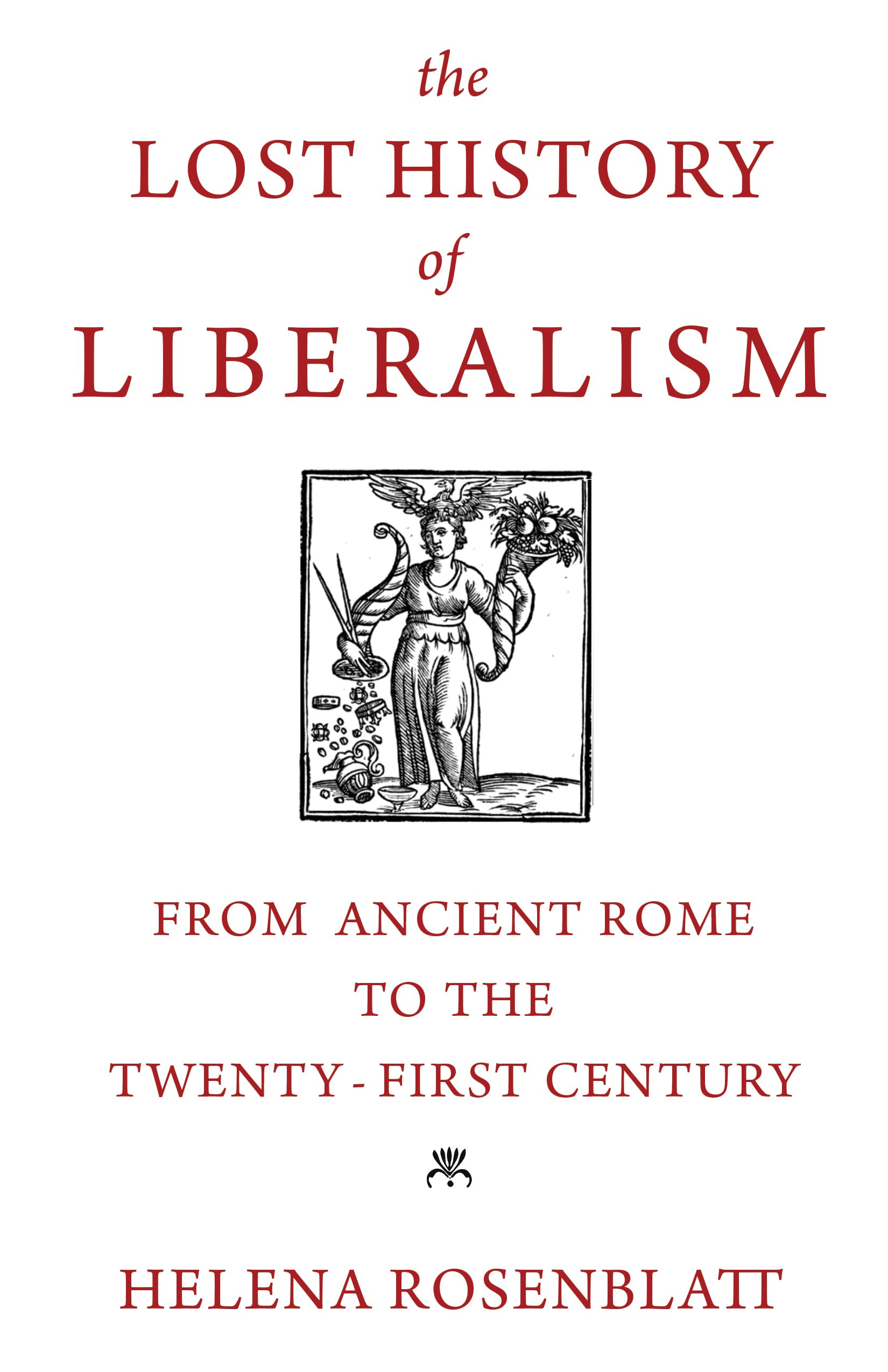
Title
The Lost History of Liberalism: From Ancient Rome to the TwentyFirst Century,Used
Sold by Ergodebooks, an authorized reseller.
Returns accepted within 30 days | support@ergodebooks.com
Shipping Information
- Free Standard Shipping — United States only
- Processing Time: 3–5 business days
- Estimated Delivery: 6–10 business days after dispatch
- Double-boxed, fully insured & discreetly packaged
- Tracking number sent via email once dispatched
Returns & Refund
Returns accepted within 30 days of delivery.
Damaged or Defective Item
Free return shipping + replacement or full refund
Wrong Item Received
Free return shipping + replacement or full refund
Change of Mind
Return shipping at customer's expense · 25% restocking fee applies
Payment Option

The changing face of the liberal creed from the ancient world to todayThe Lost History of Liberalism challenges our most basic assumptions about a political creed that has become a rallying cryand a term of derisionin todays increasingly divided public square. Taking readers from ancient Rome to today, Helena Rosenblatt traces the evolution of the words liberal and liberalism, revealing the heated debates that have taken place over their meaning.In this timely and provocative book, Rosenblatt debunks the popular myth of liberalism as a uniquely AngloAmerican tradition centered on individual rights. She shows that it was the French Revolution that gave birth to liberalism and Germans who transformed it. Only in the midtwentieth century did the concept become widely known in the United Statesand then, as now, its meaning was hotly debated. Liberals were originally moralists at heart. They believed in the power of religion to reform society, emphasized the sanctity of the family, and never spoke of rights without speaking of duties. It was only during the Cold War and Americas growing world hegemony that liberalism was refashioned into an American ideology focused so strongly on individual freedoms.Today, we still cant seem to agree on liberalisms meaning. In the United States, a liberal is someone who advocates big government, while in France, big government is contrary to liberalism. Political debates become befuddled because of semantic and conceptual confusion. The Lost History of Liberalism sets the record straight on a core tenet of todays political conversation and lays the foundations for a more constructive discussion about the future of liberal democracy.
⚠️ WARNING (California Proposition 65):
This product may contain chemicals known to the State of California to cause cancer, birth defects, or other reproductive harm.
For more information, please visit www.P65Warnings.ca.gov.
- Q: What is the main theme of 'The Lost History of Liberalism'? A: The main theme of the book is the evolution of liberalism from ancient Rome to the present day, challenging the notion that liberalism is solely an Anglo-American tradition focused on individual rights.
- Q: Who is the author of 'The Lost History of Liberalism'? A: The author of the book is Helena Rosenblatt.
- Q: When was 'The Lost History of Liberalism' published? A: 'The Lost History of Liberalism' was published on October 2, 2018.
- Q: What format is 'The Lost History of Liberalism' available in? A: The book is available in hardcover format.
- Q: How many pages does 'The Lost History of Liberalism' have? A: The book has a total of 368 pages.
- Q: What is the condition of the book being sold? A: The book is in new condition.
- Q: Does 'The Lost History of Liberalism' discuss modern political debates? A: Yes, the book addresses contemporary political debates surrounding the meaning of liberalism in different cultural contexts.
- Q: Is 'The Lost History of Liberalism' suitable for readers unfamiliar with political theory? A: Yes, the book is designed to be accessible to a broad audience, providing historical context and clarity on liberalism's evolution.
- Q: What historical events does the book tie to the development of liberalism? A: The book ties the development of liberalism to significant events such as the French Revolution and the transformations it underwent in Germany.
- Q: Does the book explore the relationship between liberalism and individual rights? A: Yes, it challenges the common perception of liberalism as primarily focused on individual rights and discusses the historical roots of the concept.