
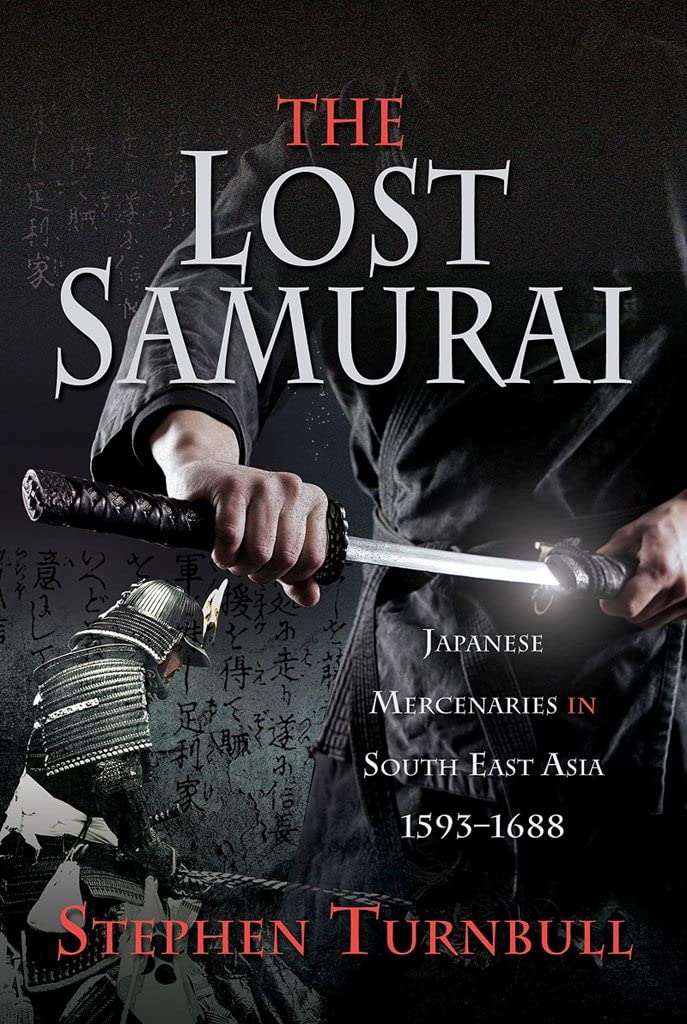
Title
The Lost Samurai: Japanese Mercenaries in South East Asia, 15931688,Used
Sold by Ergodebooks, an authorized reseller.
Returns accepted within 30 days | support@ergodebooks.com
Shipping Information
- Free Standard Shipping — United States only
- Processing Time: 3–5 business days
- Estimated Delivery: 6–10 business days after dispatch
- Double-boxed, fully insured & discreetly packaged
- Tracking number sent via email once dispatched
Returns & Refund
Returns accepted within 30 days of delivery.
Damaged or Defective Item
Free return shipping + replacement or full refund
Wrong Item Received
Free return shipping + replacement or full refund
Change of Mind
Return shipping at customer's expense · 25% restocking fee applies
Payment Option

The first ever account of Japanese overseas mercenaries including material never before translated into English, written by a renowned and highly respected expert on the subject.The Lost Samurai reveals the greatest untold story of Japans legendary warrior class, which is that for almost a hundred years Japanese samurai were employed as mercenaries in the service of the kings of Siam, Cambodia, Burma, Spain and Portugal, as well as by the directors of the Dutch East India Company.The Japanese samurai were used in dramatic assault parties, as royal bodyguards, as staunch garrisons and as willing executioners. As a result, a stereotypical image of the fierce Japanese warrior developed that had a profound influence on the way they were regarded by their employers.While the Southeast Asian kings tended to employ samurai on a longterm basis as palace guards, their European employers usually hired them on a temporary basis for specific campaigns. Also, whereas the Southeast Asian monarchs tended to trust their wellestablished units of Japanese mercenaries, the Europeans, whilst admiring them, also feared them. In every European example a progressive shift in attitude may be discerned from initial enthusiasm to great suspicion that the Japanese might one day turn against them, as illustrated by the longstanding Spanish fear of an invasion of the Philippines by Japan accompanied by a local uprising.It also suggested that if, during the 1630s, Japan had chosen engagement with Southeast Asia rather than isolation from it, the established presence of Japanese communities overseas may have had a profound influence on the subsequent development of international relations within the area, perhaps even seeing the early creation of an overseas Japanese empire that would have provided a rival to Great Britain. Instead Japan closed its doors, leaving these fierce mercenaries stranded in distant countries never to return: lost samurai indeed!
⚠️ WARNING (California Proposition 65):
This product may contain chemicals known to the State of California to cause cancer, birth defects, or other reproductive harm.
For more information, please visit www.P65Warnings.ca.gov.