
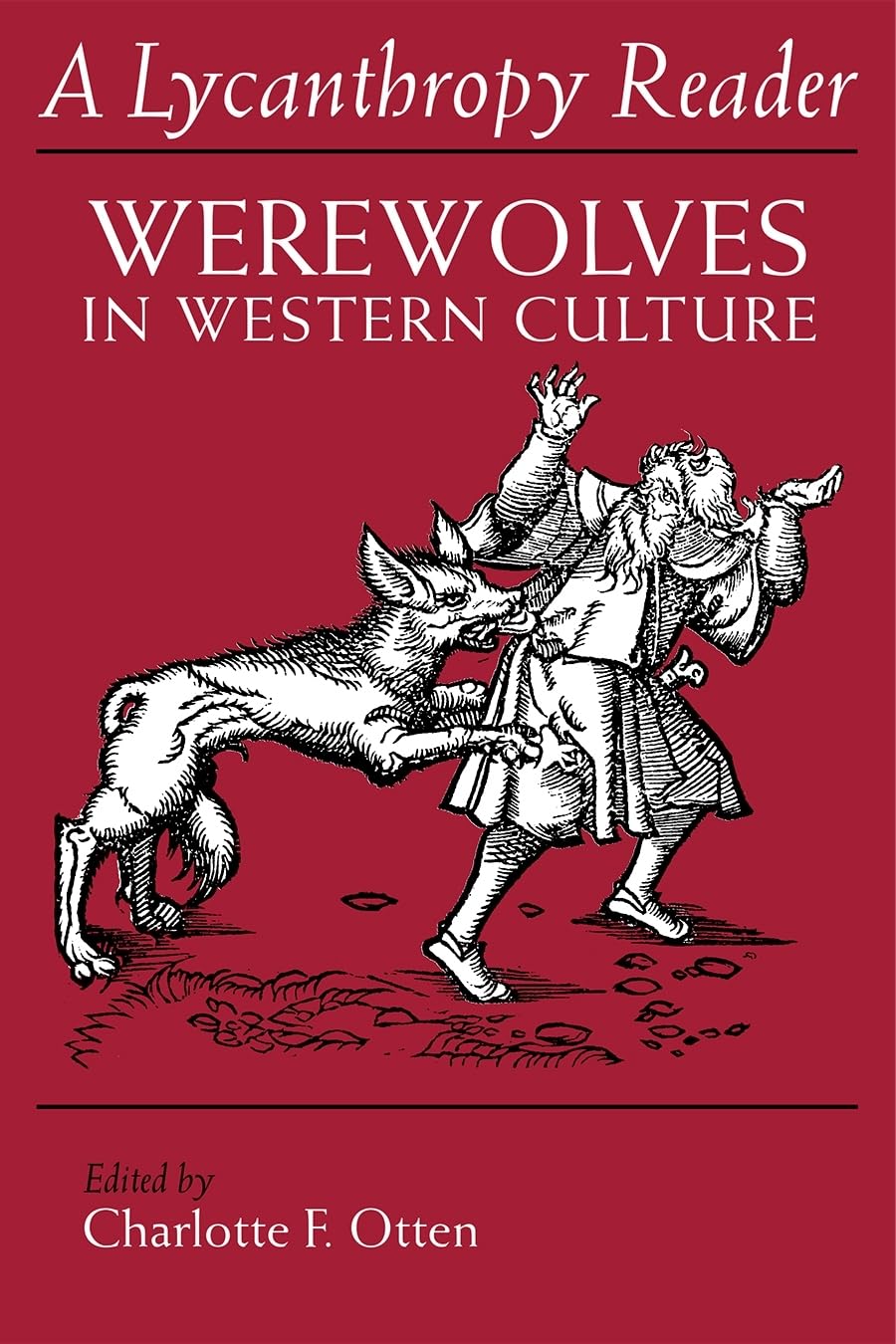
Title
The Lycanthropy Reader: Werewolves In Western Culture,Used
Sold by Ergodebooks, an authorized reseller.
Returns accepted within 30 days | support@ergodebooks.com
Shipping Information
- Free Standard Shipping — United States only
- Processing Time: 3–5 business days
- Estimated Delivery: 6–10 business days after dispatch
- Double-boxed, fully insured & discreetly packaged
- Tracking number sent via email once dispatched
Returns & Refund
Returns accepted within 30 days of delivery.
Damaged or Defective Item
Free return shipping + replacement or full refund
Wrong Item Received
Free return shipping + replacement or full refund
Change of Mind
Return shipping at customer's expense · 25% restocking fee applies
Payment Option

Our understanding of lycanthropy is limited by our association of it with contemporary portrayals of werewolves in horror films and gothic fiction. No rational person today believes that a human being can literally be metamorphosed into a wolf; therefore, in the absence of an historical context, the study of werewolves can appear to be a wayward pursuit of the perversely irrational and the sensational. This Reader provides the historical context Drawing on primary sources, it is a comprehensive survey of all aspects of lycanthropy, with a focus on the medieval and Renaissance periods. Lycanthropes were on trial in the courtrooms of Europe, and on examination in medical offices and mental hospitals; they were the objects of communal fear and pity, and the subjects of sermons and philosophical treatises. In the Introduction to the Reader, Charlotte Otten shows that the study of lycanthropy uncovers basic issues in human life the significance of violence and criminality, the role of the demonic in aberrant behavior, and ultimately the nature of good and evil The implications for modern life are immediately apparent. The Reader is divided into six sections ( 1) Medical Cases, Diagnoses, Descriptions; (2) Trial Records, Historical Accounts, Sightings; (3) Philosophical and Theological Approaches to Metamorphosis; ( 4) Critical Essays on Lycanthropy (Anthropology, History, and Medicine); (5) Myths and Legends; and (6) Allegory . Each section has an introduction that summarizes and interprets the materials.
⚠️ WARNING (California Proposition 65):
This product may contain chemicals known to the State of California to cause cancer, birth defects, or other reproductive harm.
For more information, please visit www.P65Warnings.ca.gov.
- Q: How many pages does this book have? A: This book has three hundred fifty-six pages. It provides a comprehensive exploration of lycanthropy across historical contexts.
- Q: What is the binding type of this book? A: The binding type is paperback. This makes it flexible and lightweight for easy handling.
- Q: What are the dimensions of the book? A: The dimensions are six inches in length, one inch in width, and nine point zero two inches in height. This size is standard for paperback books.
- Q: Who is the author of this book? A: The author is Charlotte Otten. She is known for her scholarly work on lycanthropy and its cultural significance.
- Q: What are the main themes covered in the book? A: The book covers themes such as the historical context of lycanthropy, the nature of good and evil, and the implications for modern life. It dives deep into philosophical and cultural dimensions.
- Q: Is this book suitable for young readers? A: No, this book is not specifically aimed at young readers. It deals with complex themes and historical details that may not be suitable for children.
- Q: How can I best utilize this book for research? A: You can use this book as a primary source for understanding historical perspectives on lycanthropy. It includes sections that summarize critical essays and primary historical documents.
- Q: Is there a glossary or index in this book? A: Yes, there is an index included. This makes it easier to locate specific topics related to lycanthropy and its cultural implications.
- Q: Are there illustrations or images in the book? A: No, the book does not contain illustrations or images. It focuses on text-based historical analysis and critical essays.
- Q: How should I store this book to maintain its condition? A: Store this book upright in a cool, dry place away from direct sunlight. This helps prevent fading and damage to the cover and pages.
- Q: Can this book be returned if I am not satisfied? A: Yes, the book can generally be returned if it is in original condition. It's best to check the return policy of the seller for specific details.
- Q: What if the book arrives damaged? A: If the book arrives damaged, you should contact the seller immediately for a replacement or refund. Document the damage with photographs if possible.
- Q: Does this book include any references or citations? A: Yes, the book includes references and citations for primary sources. This makes it a valuable resource for academic work.
- Q: What makes this book different from other books on lycanthropy? A: This book is unique as it provides a comprehensive historical context and includes various critical essays. It goes beyond sensational portrayals in media.
- Q: Is this book part of a series or standalone? A: This book is a standalone Reader. It is not part of a series but offers in-depth insights into the topic of lycanthropy.