If you have any questions, you are always welcome to contact us. We'll get back to you as soon as possible, withing 24 hours on weekdays.
Customer service
All questions about your order, return and delivery must be sent to our customer service team by e-mail at yourstore@yourdomain.com
Sale & Press
If you are interested in selling our products, need more information about our brand or wish to make a collaboration, please contact us at press@yourdomain.com
Help
If you have any questions, you are always welcome to contact us. We'll get back to you as soon as possible, withing 24 hours on weekdays.
Customer service
All questions about your order, return and delivery must be sent to our customer service team by e-mail at yourstore@yourdomain.com
Sale & Press
If you are interested in selling our products, need more information about our brand or wish to make a collaboration, please contact us at press@yourdomain.com
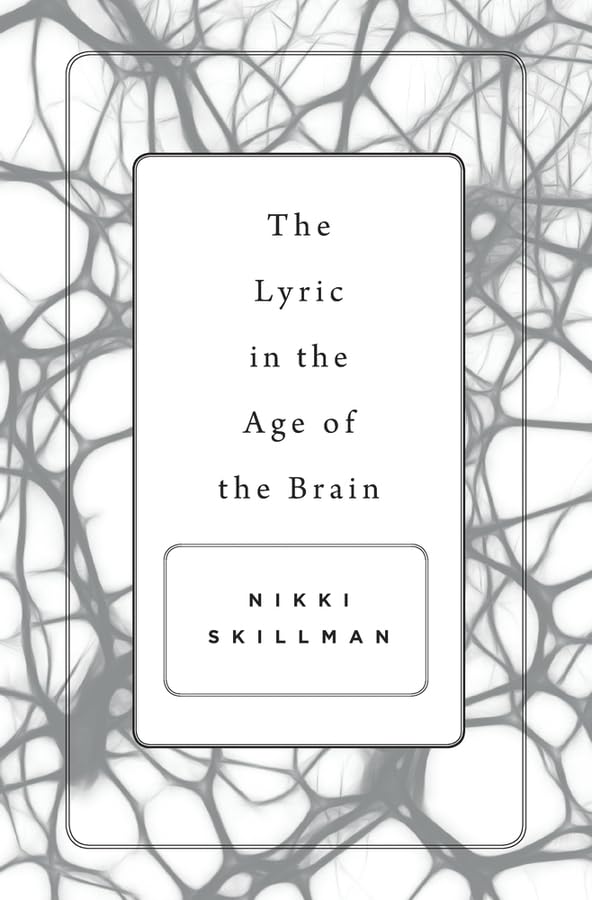
Exploration of our inner lifeperception, thought, memory, feelingonce seemed a privileged domain of lyric poetry. Scientific discoveries, however, have recently supplied physiological explanations for what was once believed to be transcendental; the past sixty years have brought wide recognition that the euphoria of love is both a felt condition and a chemical phenomenon, that memories are both representations of lived experience and dynamic networks of activation in the brain. Caught between a powerful but reductive scientific view of the mind and traditional literary metaphors for consciousness that have come to seem ever more naive, American poets since the sixties have struggled to articulate a vision of human consciousness that is both scientifically informed and poetically truthful.The Lyric in the Age of the Brain examines several contemporary poetsRobert Lowell, A. R. Ammons, Robert Creeley, James Merrill, John Ashbery, Jorie Graham, and experimentalists such as Harryette Mullen and Tan Linto discern what new language, poetic forms, and depictions of selfhood this perplexity forces into being. Nikki Skillman shows that under the sway of physiological conceptions of mind, poets ascribe ever less agency to the self, ever less transformative potential to the imagination. But in readings that unravel factional oppositions in contemporary American poetry, Skillman argues that the lyrica genre accustomed to revealing expansive aesthetic possibilities within narrow formal limitsproves uniquely positioned to register and redeem the dispersals of human mystery that loom in the age of the brain.
⚠️ WARNING (California Proposition 65):
This product may contain chemicals known to the State of California to cause cancer,
birth defects, or other reproductive harm.
For MAP (Minimum Advertised Price) violations and Intellectual Property (IP) or Trademark concerns, please contact:
support@ergodebooks.com
⚠️ California Proposition 65 Warning: Some products sold on this website may expose you to chemicals known to the State of California to cause cancer, birth defects, or other reproductive harm. For more information, visit www.P65Warnings.ca.gov.