If you have any questions, you are always welcome to contact us. We'll get back to you as soon as possible, withing 24 hours on weekdays.
Customer service
All questions about your order, return and delivery must be sent to our customer service team by e-mail at yourstore@yourdomain.com
Sale & Press
If you are interested in selling our products, need more information about our brand or wish to make a collaboration, please contact us at press@yourdomain.com
Help
If you have any questions, you are always welcome to contact us. We'll get back to you as soon as possible, withing 24 hours on weekdays.
Customer service
All questions about your order, return and delivery must be sent to our customer service team by e-mail at yourstore@yourdomain.com
Sale & Press
If you are interested in selling our products, need more information about our brand or wish to make a collaboration, please contact us at press@yourdomain.com
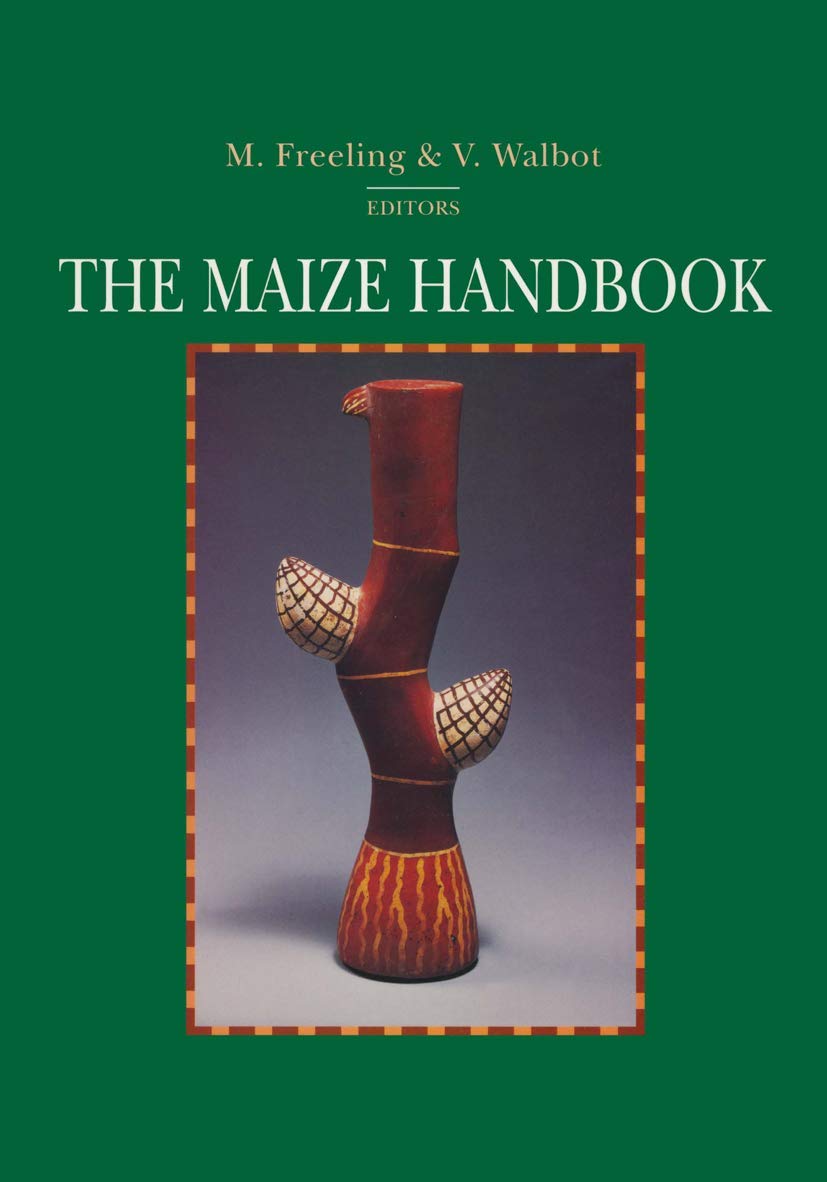
The Maize Handbook represents the collective efforts of the maize research community to enumerate the key steps of standard procedures and to disseminate these protocols for the common good. Although the material in this volume is drawn from experience with maize, many of the procedures, protocols, and descriptions are applicable to other higher plants, particularly to other grasses. The power and resolution of experiments with maize depend on the wide range of specialized genetic techniques and marked stocks; these materials are available today as the culmination of nearly 100 years of genetic research. A major goal of this volume is to introduce this genetical legacy and to highlight current stock construction programs that will soon benefit our work, e. g. highdensity RFLP maps, deletion stocks, etc. Both stock construction and maintenance are relatively straightforward in maize as a result of the ease of crossing and the longevity of stored seeds. Crossing is facilitated by the separate staminate (tassel) and pistillate (ear) flowers, a feature almost unique to maize. On the other hand, many of the genetic methodologies utilized with maize, including the precision of record keeping, can be adapted to other plants. Facile communication and a spirit of cooperation have characterized the maize genetics community since its earliest days. Starting in the 1930s, institutions such as annual Maize Genetics Cooperation Newsletter, the Maize Genetics Stock Center, and the annual maize genetics meeting provide continuity to the field.
⚠️ WARNING (California Proposition 65):
This product may contain chemicals known to the State of California to cause cancer,
birth defects, or other reproductive harm.
For MAP (Minimum Advertised Price) violations and Intellectual Property (IP) or Trademark concerns, please contact:
support@ergodebooks.com
⚠️ California Proposition 65 Warning: Some products sold on this website may expose you to chemicals known to the State of California to cause cancer, birth defects, or other reproductive harm. For more information, visit www.P65Warnings.ca.gov.