
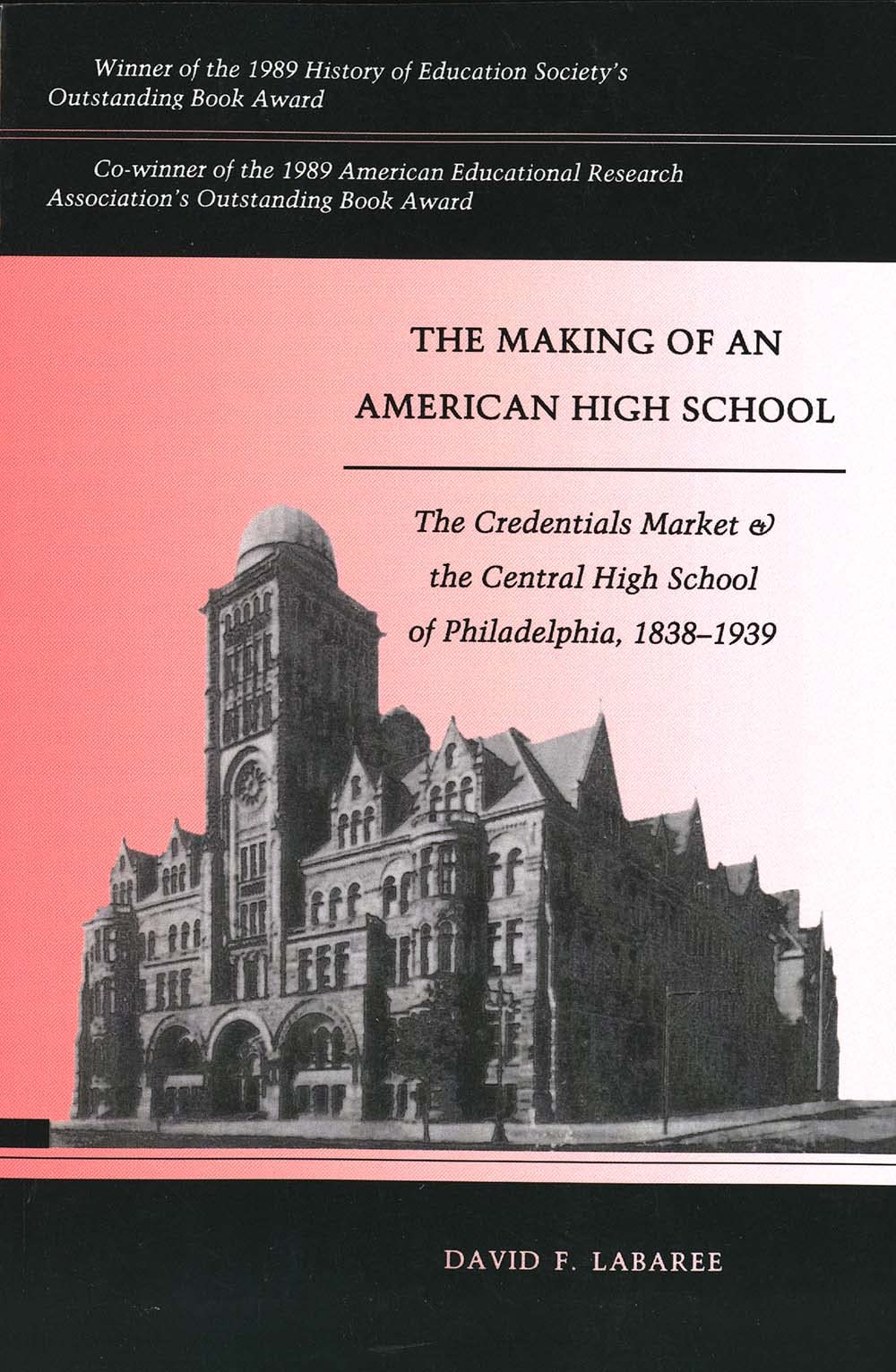
Title
The Making of an American High School: The Credentials Market and the Central High School of Philadelphia, 18381939,Used
Sold by Ergodebooks, an authorized reseller.
Returns accepted within 30 days | support@ergodebooks.com
Shipping Information
- Free Standard Shipping — United States only
- Processing Time: 3–5 business days
- Estimated Delivery: 6–10 business days after dispatch
- Double-boxed, fully insured & discreetly packaged
- Tracking number sent via email once dispatched
Returns & Refund
Returns accepted within 30 days of delivery.
Damaged or Defective Item
Free return shipping + replacement or full refund
Wrong Item Received
Free return shipping + replacement or full refund
Change of Mind
Return shipping at customer's expense · 25% restocking fee applies
Payment Option

How have the educational goals of American public high schools changed over time? What can the experiences of one secondary school tell us about the problems they all face today? This book provides an analytical history of the origins and development of Central High School, the first high school in Philadelphia and a model for many subsequent institutions. Using Central as a case study, David F. Labaree argues that the American public high school can be viewed as the product of both democratic politics and capitalist markets: although it was originally intended to produce informed citizens for the new republic, the high school, with its meritocratic emphasis, instead became a vehicle for conferring status on the select group that was educated there. The struggle between these two goalsone leading to political equality and the other reinforcing economic inequalityhas characterized its history ever since, says Labaree.According to Labaree, Central was founded as a selective middleclass school with broad moral and political aims. However, the schools success in providing advantages for its graduates led, during the 1880s, to growing public demand for secondary education. The resulting rapid expansion of Centrals enrollment and the establishment of other public high schools eventually undermined the selectivity that had made its credentials so valuable and enabled it to flourish. This in turn spurred the school to protect its credentials by introducing tracking, with a new dual curriculum for collegebound and non collegebound students.Labaree contends that this compromise between access and exclusivity does not work: it fails to serve the public interest because of the attenuation of the schools democratic goals, and it fails to serve private interests because of the declining value of the credentials it bestows. In order to achieve its original democratic goals, he argues, the public high school must abandon its longstanding links to the market.
⚠️ WARNING (California Proposition 65):
This product may contain chemicals known to the State of California to cause cancer, birth defects, or other reproductive harm.
For more information, please visit www.P65Warnings.ca.gov.
- Q: How many pages does the book have? A: The book has two hundred twenty-two pages. It provides an in-depth analysis of the history and evolution of Central High School.
- Q: What is the binding type of this book? A: This book is paperback bound. The paperback format makes it lightweight and portable for easy reading.
- Q: What are the dimensions of the book? A: The book measures six inches in length, zero point five two inches in width, and nine point zero two inches in height. These dimensions make it a convenient size for handling and storage.
- Q: Who is the author of the book? A: The author of the book is David F. Labaree. He provides a comprehensive analysis of the American high school system.
- Q: What is the main theme of the book? A: The main theme revolves around the evolution of educational goals in American high schools. It explores how Central High School's history reflects broader societal issues.
- Q: What is the target audience for this book? A: The target audience includes educators, historians, and anyone interested in education policy. It offers valuable insights into the educational system.
- Q: How do I read this book effectively? A: To read this book effectively, consider taking notes on key concepts and themes as you progress. Engaging with the material will enhance your understanding.
- Q: Is this book suitable for high school students? A: Yes, this book is suitable for high school students. It provides critical insights into the education system that can enhance their learning.
- Q: What age group is this book appropriate for? A: This book is appropriate for readers aged fifteen and above. It addresses complex themes related to education and society.
- Q: How should I care for this book? A: To care for this book, keep it in a cool, dry place and avoid exposure to direct sunlight. Handling it gently will help maintain its condition.
- Q: Can I use bookmarks in this book? A: Yes, you can use bookmarks in this book. Using bookmarks will help you keep track of important sections without damaging the pages.
- Q: What if my book arrives damaged? A: If your book arrives damaged, contact customer service for a replacement. Most retailers offer a return policy for damaged items.
- Q: Is there a return policy for this book? A: Yes, there is typically a return policy for this book. Check with the retailer for specific return conditions and timeframes.
- Q: How do I get support if I have questions about the book? A: For support, you can reach out to the retailer or publisher. They can provide assistance regarding any questions or concerns.
- Q: Is this book a good choice for educators? A: Yes, this book is an excellent choice for educators. It offers insights that can inform teaching practices and educational policy discussions.
- Q: How does this book compare to others in its genre? A: This book stands out for its historical analysis of American high schools. It offers a unique perspective compared to other educational literature.