
Title
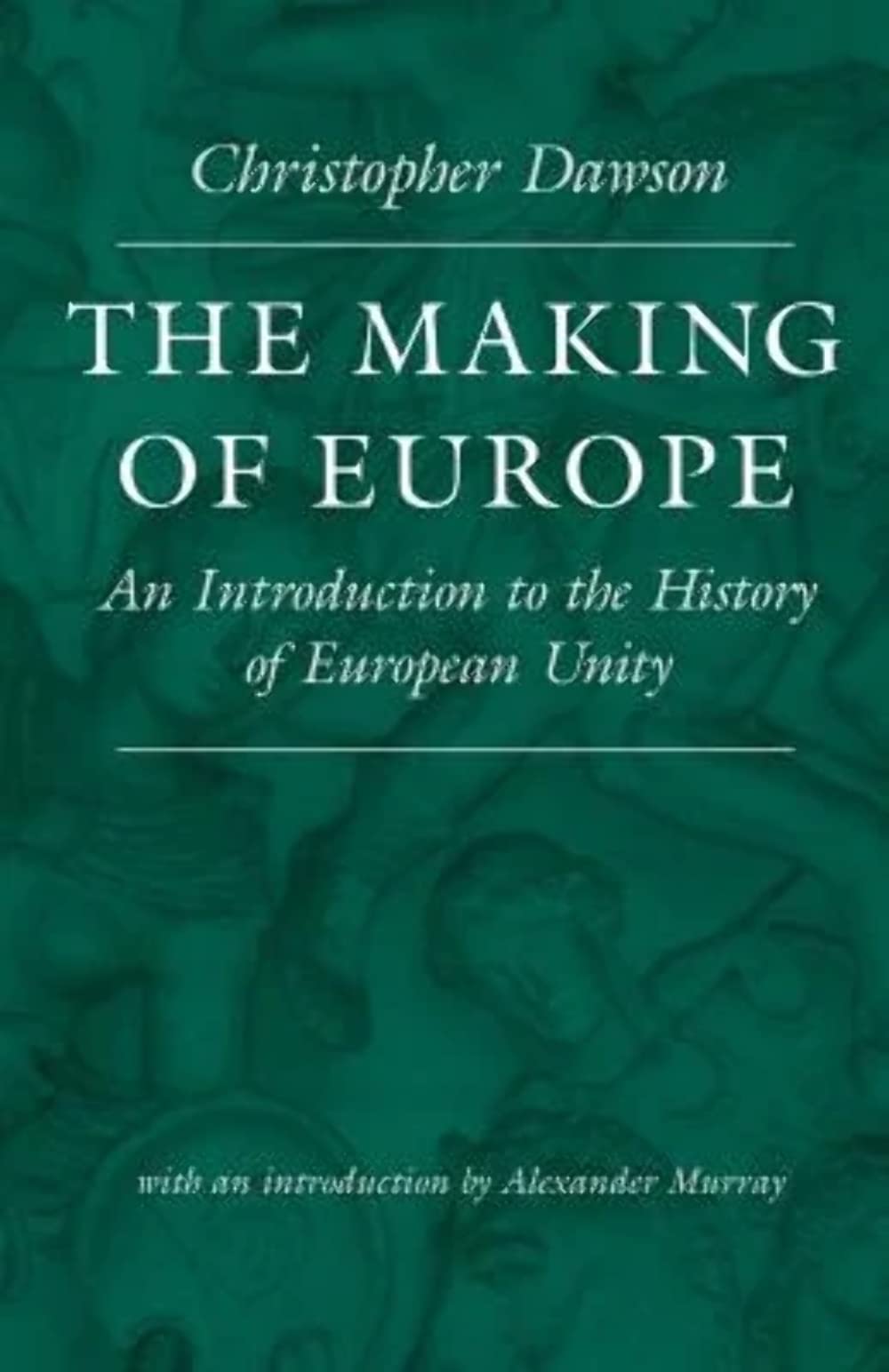
The Making of Europe: An Introduction to the History of European Unity (Works of Christopher Dawson),Used
Sold by Ergodebooks, an authorized reseller.
Returns accepted within 30 days | support@ergodebooks.com
Shipping Information
- Free Standard Shipping — United States only
- Processing Time: 3–5 business days
- Estimated Delivery: 6–10 business days after dispatch
- Double-boxed, fully insured & discreetly packaged
- Tracking number sent via email once dispatched
Returns & Refund
Returns accepted within 30 days of delivery.
Damaged or Defective Item
Free return shipping + replacement or full refund
Wrong Item Received
Free return shipping + replacement or full refund
Change of Mind
Return shipping at customer's expense · 25% restocking fee applies
Payment Option

In this seminal work, described by the Times Literary Supplement as 'impressive alike by the authority of its learning and the originality of its argument,' Christopher Dawson concludes that the period of the fourth to the eleventh centuries commonly known as the Dark Ages is not a barren prelude to the creative energy of the medieval world. Instead, he argues that it is better described as 'ages of dawn,' for it is in this rich and confused period that the complex and creative interaction of the Roman empire, the Christian Church, the classical tradition, and barbarous societies provided the foundation for a vital, unified European culture.In an age of fragmentation and the emergence of new nationalist forces, Dawson argued that if 'our civilization is to survive, it is essential that it should develop a common European consciousness and sense of historic and organic unity.' But he was clear that this unity required sources deeper and more complex than the political and economic movements on which so many had come to depend, and he insisted, prophetically, that Europe would need to recover its Christian roots if it was to survive.Glenn Olsen has noted that Dawson's point 'was that the spread and history of Christianity had provided the narrative which had formed Europe and taken out of this narrative, Europe could hardly be spoken of as existing.' In a time of cultural and political ambiguity, The Making of Europe is an indispensable work for understanding not only the rich sources but also the contemporary implications of the very idea of Europe.
⚠️ WARNING (California Proposition 65):
This product may contain chemicals known to the State of California to cause cancer, birth defects, or other reproductive harm.
For more information, please visit www.P65Warnings.ca.gov.