
Title
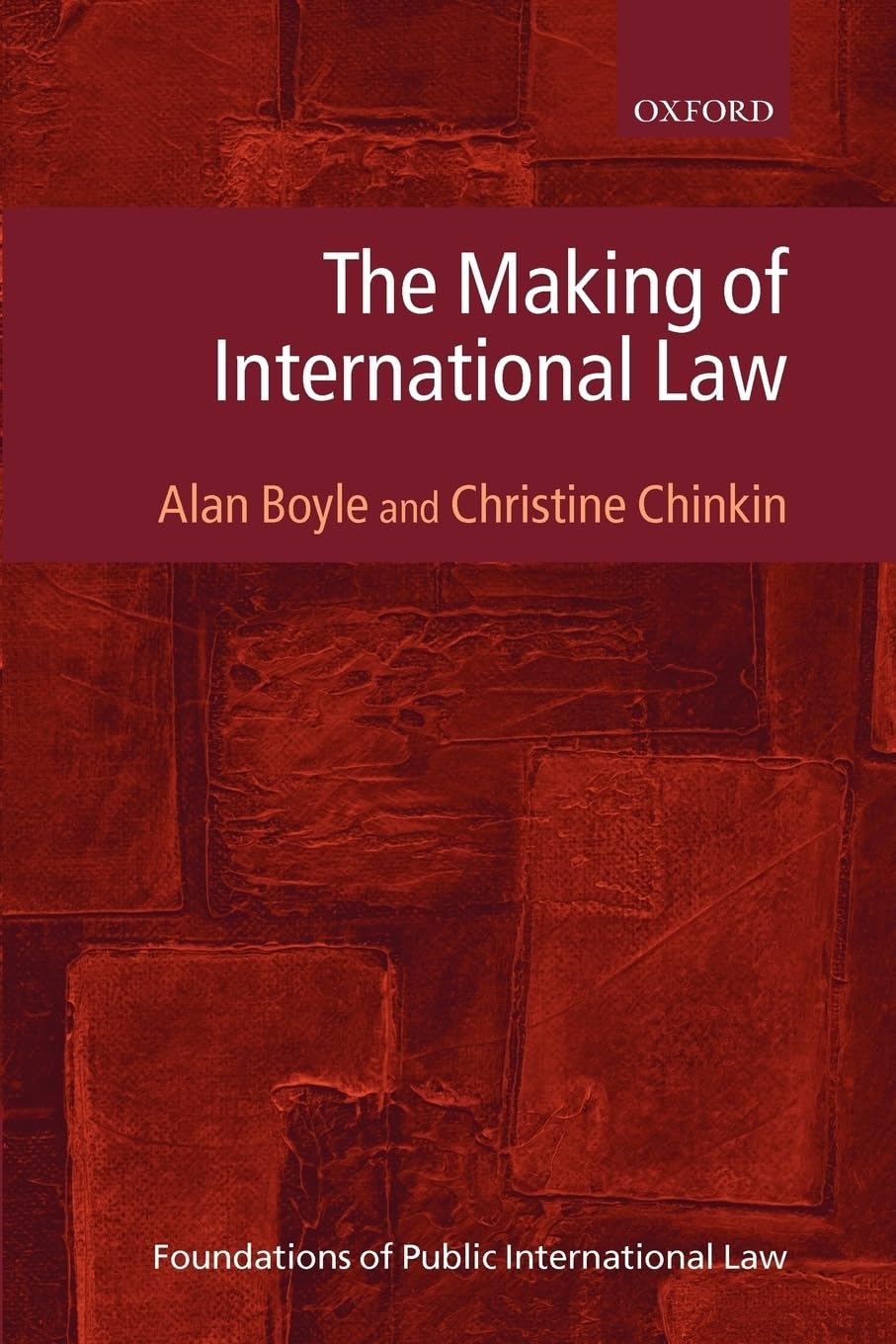
The Making of International Law (Foundations of Public International Law),Used
Sold by Ergodebooks, an authorized reseller.
Returns accepted within 30 days | support@ergodebooks.com
Shipping Information
- Free Standard Shipping — United States only
- Processing Time: 3–5 business days
- Estimated Delivery: 6–10 business days after dispatch
- Double-boxed, fully insured & discreetly packaged
- Tracking number sent via email once dispatched
Returns & Refund
Returns accepted within 30 days of delivery.
Damaged or Defective Item
Free return shipping + replacement or full refund
Wrong Item Received
Free return shipping + replacement or full refund
Change of Mind
Return shipping at customer's expense · 25% restocking fee applies
Payment Option

This is a study of the principal negotiating processes and lawmaking tools through which contemporary international law is made. It does not seek to give an account of the traditional and untraditional sources and theories of international law, but rather to identify the processes, participants and instruments employed in the making of international law. It accordingly examines some of the mechanisms and procedures whereby new rules of law are created or old rules are amended or abrogated. It concentrates on the UN, other international organizations, diplomatic conferences, codification bodies, NGOs, and courts.Every society perceives the need to differentiate between its legal norms and other norms controlling social, economic and political behavior. But unlike domestic legal systems where this distinction is typically determined by constitutional provisions, the decentralized nature of the international legal system makes this a complex and contested issue. Moreover, contemporary international law is often the product of a subtle and evolving interplay of lawmaking instruments, both binding and nonbinding, and of customary law and general principles. Only in this broader context can the significance of socalled 'soft law' and multilateral treaties be fully appreciated.An important question posed by any examination of international lawmaking structures is the extent to which we can or should make judgments about their legitimacy and coherence, and if so in what terms. Put simply, a lawmaking process perceived to be illegitimate or incoherent is more likely to be an ineffective process. From this perspective, the assumption of lawmaking power by the UN Security Council offers unique advantages of speed and universality, but it also poses a particular challenge to the development of a more open and participatory process observable in other international lawmaking bodies.
⚠️ WARNING (California Proposition 65):
This product may contain chemicals known to the State of California to cause cancer, birth defects, or other reproductive harm.
For more information, please visit www.P65Warnings.ca.gov.