
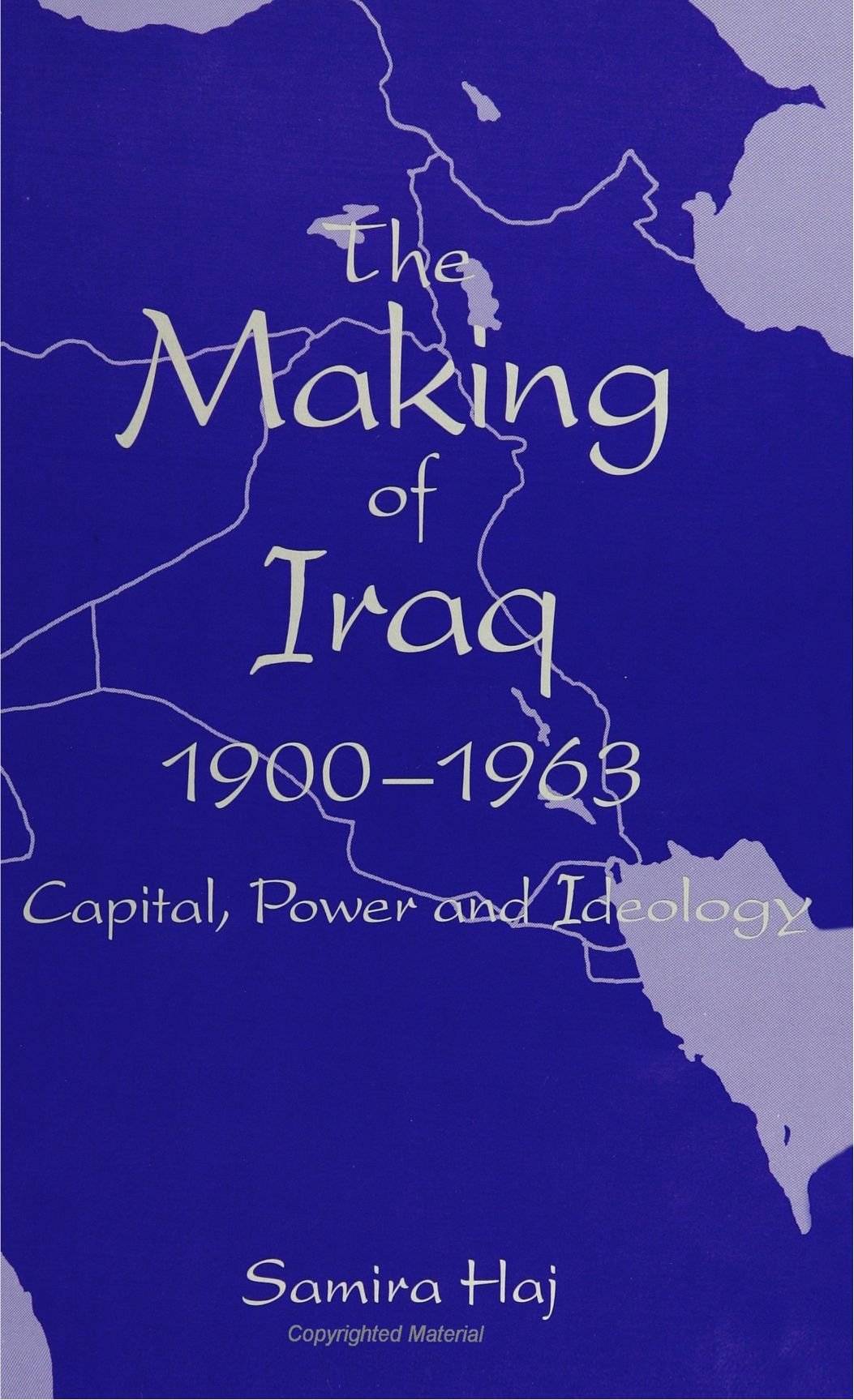
Title
The Making of Iraq, 19001963: Capital, Power, and Ideology (S U N Y Series in the Social and Economic History of the Middle Eas,Used
Sold by Ergodebooks, an authorized reseller.
Returns accepted within 30 days | support@ergodebooks.com
Shipping Information
- Free Standard Shipping — United States only
- Processing Time: 3–5 business days
- Estimated Delivery: 6–10 business days after dispatch
- Double-boxed, fully insured & discreetly packaged
- Tracking number sent via email once dispatched
Returns & Refund
Returns accepted within 30 days of delivery.
Damaged or Defective Item
Free return shipping + replacement or full refund
Wrong Item Received
Free return shipping + replacement or full refund
Change of Mind
Return shipping at customer's expense · 25% restocking fee applies
Payment Option

This book's innovative approach makes it an important intervention into the field of modern Iraqi and Arab history. Samira Haj's discussion of the factors that led to, and paradoxically caused the failure of, the 1958 revolution in Iraq forms the framework for her critique of conventional Eurocentric notions of nationalism, revolution, and modernity. Haj explains the pervasive violence of Iraq's political scene not by invoking ageless images of sectarian strife and irrational bloodlust but by showing that the violent political battles of the 1950s and 1960s were the result of fundamental changes in the system of ownership and agricultural production during the nineteenth century. Furthermore, she shows that the national government's smashing of the popular movement and the dismantling of its various grassroots organizations in 1963 signified the beginning of the end of participatory politics in Iraq.
⚠️ WARNING (California Proposition 65):
This product may contain chemicals known to the State of California to cause cancer, birth defects, or other reproductive harm.
For more information, please visit www.P65Warnings.ca.gov.
- Q: How many pages does the book have? A: This book has two hundred thirty pages. It provides a comprehensive exploration of Iraq's history from 1900 to 1963.
- Q: What are the dimensions of the book? A: The book measures five point twenty-eight inches in length, zero point fifty-two inches in width, and eight point sixty-three inches in height. These dimensions make it a convenient size for reading.
- Q: What type of binding does the book have? A: The book is published in paperback binding. This makes it lightweight and easy to handle.
- Q: Who is the author of this book? A: The author is Samira Haj. She offers a unique perspective on Iraqi history and the factors affecting its socio-political landscape.
- Q: What category does this book fall under? A: This book is categorized under Economic History. It delves into the economic and ideological aspects of Iraq's development.
- Q: Is this book suitable for academic use? A: Yes, this book is suitable for academic use. Its innovative approach and critical insights make it a valuable resource for students and researchers.
- Q: How should I care for this book? A: To keep this book in good condition, store it in a cool, dry place away from direct sunlight. Avoid bending the cover or pages.
- Q: Can I read this book if I'm new to the subject? A: Yes, you can read this book as a beginner. The author presents complex ideas in an accessible manner, making it suitable for newcomers.
- Q: What if the book arrives damaged? A: If the book arrives damaged, you should contact the seller for a return or exchange policy. Most sellers provide options for returning damaged items.
- Q: Is this book appropriate for younger readers? A: No, this book may not be appropriate for younger readers. It covers complex historical and political themes that are best suited for adults.
- Q: What topics are covered in the book? A: The book discusses nationalism, revolution, modernity, and the historical context of Iraq's political violence. It provides a critical analysis of these themes.
- Q: Does this book include any illustrations or maps? A: No, the book does not include illustrations or maps. It focuses on text-based analysis and critical discourse.
- Q: Is there a specific audience for this book? A: Yes, the book is aimed at historians, students, and anyone interested in Middle Eastern studies. Its depth makes it ideal for academic audiences.
- Q: Can this book help me understand Iraq's political history? A: Yes, this book can help you understand Iraq's political history. It provides insights into the factors that shaped the country's political landscape.
- Q: What makes this book different from others on the same topic? A: This book offers an innovative critique of Eurocentric notions of nationalism and revolution, providing a fresh perspective on Iraqi history.