
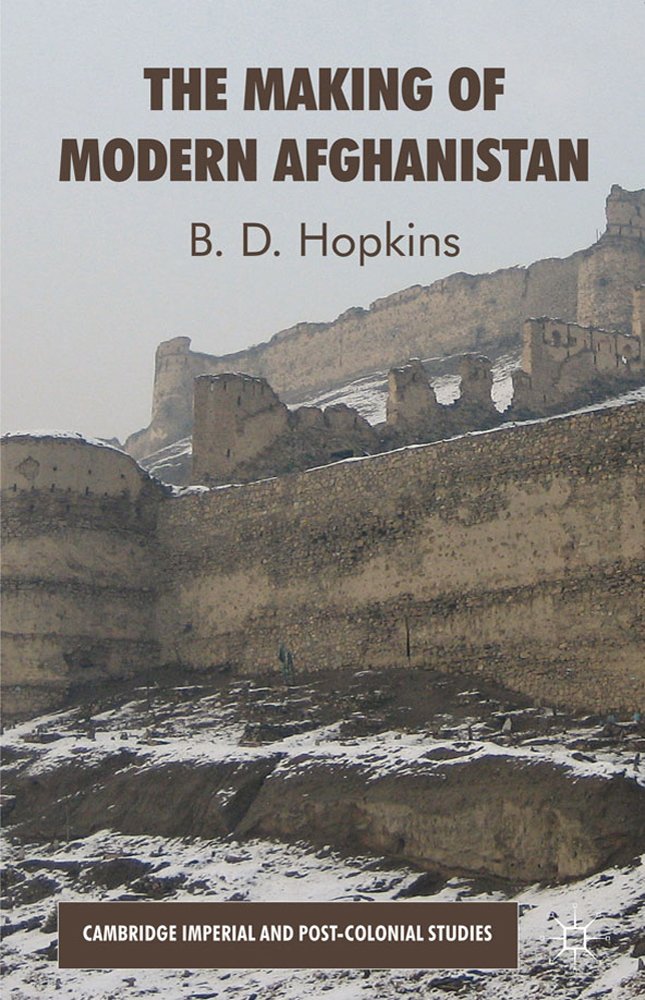
Title
The Making Of Modern Afghanistan (Cambridge Imperial And Postcolonial Studies)
Sold by Ergodebooks, an authorized reseller.
Returns accepted within 30 days | support@ergodebooks.com
Shipping Information
- Free Standard Shipping — United States only
- Processing Time: 3–5 business days
- Estimated Delivery: 6–10 business days after dispatch
- Double-boxed, fully insured & discreetly packaged
- Tracking number sent via email once dispatched
Returns & Refund
Returns accepted within 30 days of delivery.
Damaged or Defective Item
Free return shipping + replacement or full refund
Wrong Item Received
Free return shipping + replacement or full refund
Change of Mind
Return shipping at customer's expense · 25% restocking fee applies
Payment Option

Examines The Evolution Of The Modern Afghan State In The Shadow Of Britain'S Imperial Presence In South Asia During The First Half Of The Nineteenth Century, And Challenges The Staid Assumptions That The Afghans Were Little More Than Pawns In A Larger Anglorussian Imperial Rivalry Known As The 'Great Game'.
⚠️ WARNING (California Proposition 65):
This product may contain chemicals known to the State of California to cause cancer, birth defects, or other reproductive harm.
For more information, please visit www.P65Warnings.ca.gov.
- Q: What is the page count of The Making of Modern Afghanistan? A: The book contains two hundred eighty pages. It offers a comprehensive examination of the evolution of the Afghan state.
- Q: What kind of binding does this book have? A: The book is available in paperback binding. This makes it lightweight and easy to handle during reading.
- Q: Who is the author of The Making of Modern Afghanistan? A: The author is B. Hopkins. He explores the historical context of Afghanistan during the British imperial period.
- Q: How do I read The Making of Modern Afghanistan? A: You simply open the book and read. It may be suitable for university students and anyone interested in Afghan history.
- Q: Is this book suitable for beginners in history? A: Yes, this book is suitable for beginners. It presents historical events in an engaging manner that is accessible to new readers.
- Q: What age group is The Making of Modern Afghanistan appropriate for? A: This book is appropriate for readers aged sixteen and up. It discusses complex historical themes that may be better understood by older teens.
- Q: How should I store The Making of Modern Afghanistan? A: Store the book in a cool, dry place. Avoid direct sunlight to prevent fading and keep it in a bookshelf to maintain its condition.
- Q: Can I clean the book if it gets dirty? A: Yes, you can gently wipe the cover with a soft, dry cloth. Avoid using any liquids that may damage the paper.
- Q: What if the book arrives damaged? A: If the book arrives damaged, you should contact customer service for a return or exchange. They will guide you through the process.
- Q: Is there a warranty on The Making of Modern Afghanistan? A: No, there is no warranty for books. However, you can return it if it arrives in unsatisfactory condition.
- Q: How does this book compare to other historical texts on Afghanistan? A: This book offers a unique perspective by focusing on colonial influences. It stands out due to its critical analysis of the 'Great Game'.
- Q: Is The Making of Modern Afghanistan a good choice for academic research? A: Yes, it is a valuable resource for academic research. The thorough examination of historical contexts provides essential insights for students.
- Q: What themes are explored in The Making of Modern Afghanistan? A: The book explores themes of imperialism, state evolution, and cultural identity. It challenges popular narratives about Afghanistan's historical role.
- Q: Can I gift this book to someone interested in history? A: Yes, it makes a great gift for history enthusiasts. The engaging narrative and rich content will appeal to those interested in Afghanistan.
- Q: Does the book contain any illustrations or maps? A: No, this book does not contain illustrations or maps. It primarily focuses on textual analysis without visual aids.