
Title
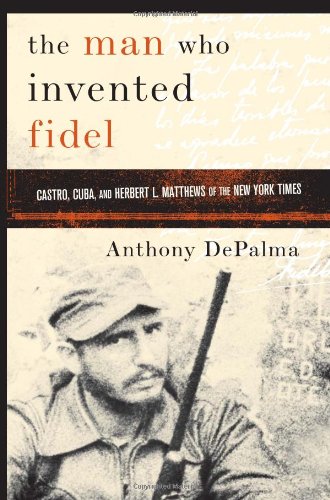
The Man Who Invented Fidel: Castro, Cuba, and Herbert L. Matthews of The New York Times,Used
Sold by Ergodebooks, an authorized reseller.
Returns accepted within 30 days | support@ergodebooks.com
Shipping Information
- Free Standard Shipping — United States only
- Processing Time: 3–5 business days
- Estimated Delivery: 6–10 business days after dispatch
- Double-boxed, fully insured & discreetly packaged
- Tracking number sent via email once dispatched
Returns & Refund
Returns accepted within 30 days of delivery.
Damaged or Defective Item
Free return shipping + replacement or full refund
Wrong Item Received
Free return shipping + replacement or full refund
Change of Mind
Return shipping at customer's expense · 25% restocking fee applies
Payment Option

In 1957, Herbert L.Matthews of the New York Times, then considered one of the premiere foreign correspondents of his time, tracked down Fidel Castro in Cuba's Sierra Maestra mountains and returned with what was considered the scoop of the century. His heroic portrayal of Castro, who was then believed dead, had a powerful effect on American perceptions of Cuba, both in and out of the government, and profoundly influenced the fall of the Batista regime. When Castro emerged as a Sovietbacked dictator, Matthews became a scapegoat; his paper turned on him, his career foundered, and he was accused of betraying his country. In this fascinating book, New York Times reporter DePalma investigates the Matthews case to reveal how it contains the story not just of one newspaperman but of an age, not just how Castro came to power but how America determines who its enemies are. He recreates the atmosphere of revolutionary Cuba and Cold War America, and clarifies the facts of Castro's ascension and political evolution from the many myths that have sprung up around them. Through a dramatic, ironic, in ways tragic story, The Man Who Invented Fidel offers provocative insights into Cuban politics, the CubanAmerican relationship, and the many difficult balancing acts of responsible journalism.
⚠️ WARNING (California Proposition 65):
This product may contain chemicals known to the State of California to cause cancer, birth defects, or other reproductive harm.
For more information, please visit www.P65Warnings.ca.gov.
- Q: What is the main subject of 'The Man Who Invented Fidel'? A: The book explores the life of Fidel Castro, focusing on Herbert L. Matthews, a journalist who reported on Castro during the Cuban Revolution and how his portrayal influenced American perceptions of Cuba.
- Q: Who is the author of this book? A: The author is Anthony DePalma, a New York Times reporter who investigates the impact of Matthews' journalism on American views of Cuba.
- Q: What type of book is 'The Man Who Invented Fidel'? A: It is an annotated hardcover book that combines historical narrative with journalistic analysis.
- Q: How many pages does the book have? A: The book contains 328 pages.
- Q: What is the publication date of this book? A: The book was published on April 24, 2006.
- Q: Is this book in new or used condition? A: The book is listed as a new item.
- Q: What are some themes covered in the book? A: The book discusses themes such as the portrayal of Castro in the media, the dynamics of Cuban politics, and the relationship between Cuba and the United States during the Cold War.
- Q: Is this book suitable for academic research? A: Yes, it provides detailed insights and historical context that can be beneficial for academic research on journalism, Cuban history, and Cold War politics.
- Q: What are the critical features of this book? A: Key features include its detailed narrative, historical accuracy, and the author's investigative approach to journalism.
- Q: Can this book provide insights into responsible journalism? A: Yes, it explores the ethical dilemmas faced by journalists and the impact of their work on public perception and policy.