
Title
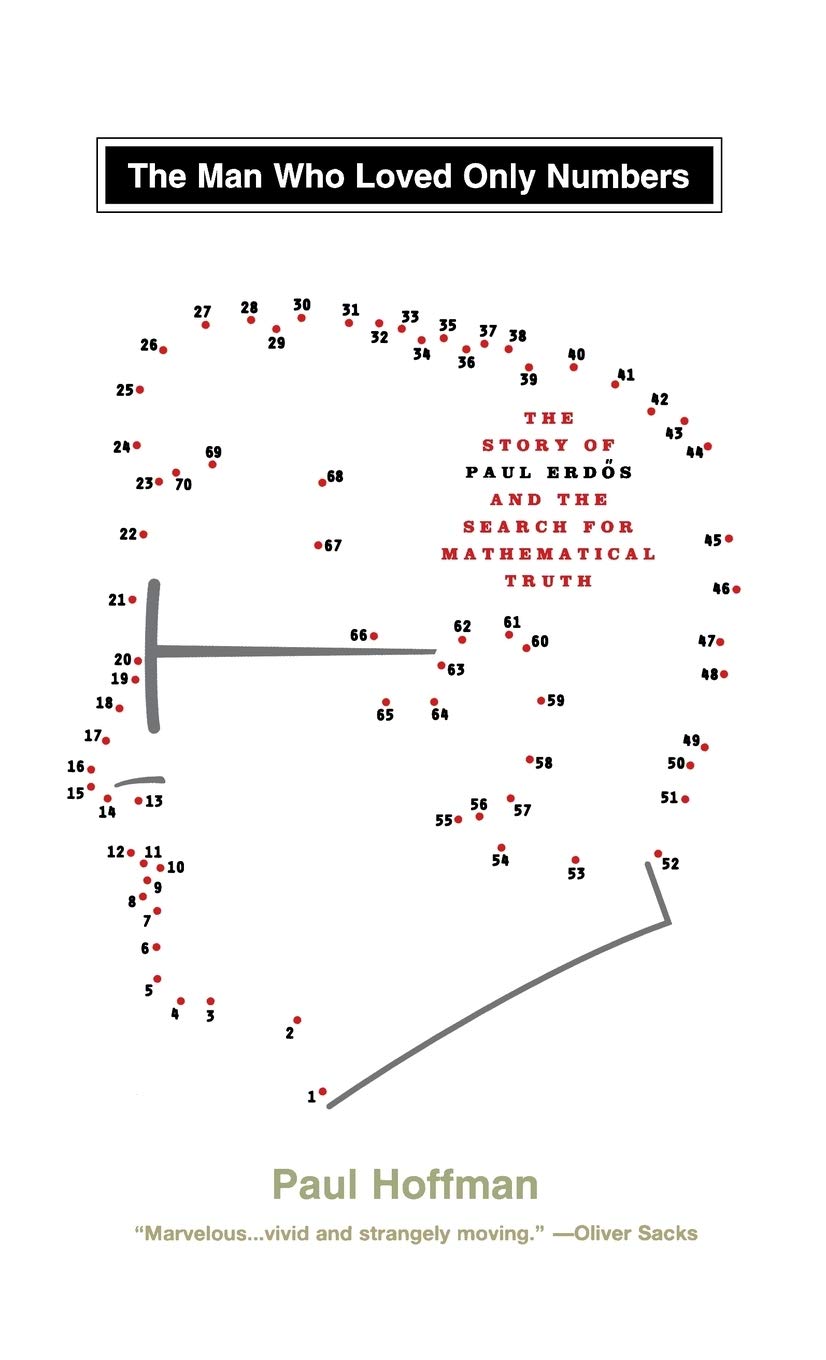
The Man Who Loved Only Numbers: The Story Of Paul Erdos And The Search For Mathematical Truth,New
Sold by Ergodebooks, an authorized reseller.
Returns accepted within 30 days | support@ergodebooks.com
Shipping Information
- Free Standard Shipping — United States only
- Processing Time: 3–5 business days
- Estimated Delivery: 6–10 business days after dispatch
- Double-boxed, fully insured & discreetly packaged
- Tracking number sent via email once dispatched
Returns & Refund
Returns accepted within 30 days of delivery.
Damaged or Defective Item
Free return shipping + replacement or full refund
Wrong Item Received
Free return shipping + replacement or full refund
Change of Mind
Return shipping at customer's expense · 25% restocking fee applies
Payment Option

A Funny, Marvelously Readable Portrait Of One Of The Most Brilliant And Eccentric Men In History.' The Seattle Timespaul Erdos Was An Amazing And Prolific Mathematician Whose Life As A Worldwandering Numerical Nomad Was Legendary. He Published Almost 1500 Scholarly Papers Before His Death In 1996, And He Probably Thought More About Math Problems Than Anyone In History. Like A Traveling Salesman Offering His Thoughts As Wares, Erdos Would Show Up On The Doorstep Of One Mathematician Or Another And Announce, 'My Brain Is Open.' After Working Through A Problem, He'D Move On To The Next Place, The Next Solution.Hoffman'S Book, Like Sylvia Nasar'S Biography Of John Nash, A Beautiful Mind, Reveals A Genius'S Life That Transcended The Merely Quirky. But Erdos'S Brand Of Madness Was Joyful, Unlike Nash'S Despairing Schizophrenia. Erdos Never Tried To Dilute His Obsessive Passion For Numbers With Ordinary Emotional Interactions, Thus Avoiding Hurting The People Around Him, As Nash Did. Oliver Sacks Writes Of Erdos: 'A Mathematical Genius Of The First Order, Paul Erdos Was Totally Obsessed With His Subjecthe Thought And Wrote Mathematics For Nineteen Hours A Day Until The Day He Died. He Traveled Constantly, Living Out Of A Plastic Bag, And Had No Interest In Food, Sex, Companionship, Artall That Is Usually Indispensable To A Human Life.'The Man Who Loved Only Numbers Is Easy To Love, Despite His Strangeness. It'S Hard Not To Have Affection For Someone Who Referred To Children As 'Epsilons,' From The Greek Letter Used To Represent Small Quantities In Mathematics; A Man Whose Epitaph For Himself Read, 'Finally I Am Becoming Stupider No More'; And Whose Only Really Necessary Tool To Do His Work Was A Quiet And Open Mind.Hoffman, Who Followed And Spoke With Erdos Over The Last 10 Years Of His Life, Introduces Us To An Undeniably Odd, Yet Pure And Joyful, Man Who Loved Numbers More Than He Loved Godwhom He Referred To As Sf, For Supreme Fascist. He Was Often Misunderstood, And He Certainly Annoyed People Sometimes, But Paul Erdos Is No Doubt Missed. Therese Littleton
⚠️ WARNING (California Proposition 65):
This product may contain chemicals known to the State of California to cause cancer, birth defects, or other reproductive harm.
For more information, please visit www.P65Warnings.ca.gov.
- Q: How many pages are in The Man Who Loved Only Numbers? A: This book has three hundred twenty pages. It provides an in-depth look at the life of Paul Erdos, a brilliant mathematician.
- Q: What is the binding type of this book? A: The binding type is hardcover. This durable format is great for preserving the book over time.
- Q: Who is the author of The Man Who Loved Only Numbers? A: The author is Paul Hoffman. He captures the eccentric life and genius of mathematician Paul Erdos.
- Q: What age group is suitable for this book? A: This book is suitable for adults and older teens. It discusses complex mathematical concepts in an accessible way.
- Q: How can I best enjoy reading this book? A: You can enjoy this book by reading it in a quiet environment. Its engaging narrative makes it easy to immerse yourself in Erdos's life.
- Q: Is this book appropriate for beginners in mathematics? A: Yes, it is appropriate for beginners. The narrative style makes complex ideas understandable for readers with limited math background.
- Q: How should I store this hardcover book? A: Store it upright on a shelf to prevent bending. Keeping it in a dry, cool place will also help preserve its condition.
- Q: Can this book be cleaned if it gets dirty? A: Yes, you can gently wipe the cover with a soft, dry cloth. Avoid using water or cleaning solutions to protect the pages.
- Q: Is this book safe for children? A: No, this book is not specifically aimed at children. It contains complex themes better suited for adult readers.
- Q: What if my book arrives damaged? A: You should contact customer support immediately if your book arrives damaged. They can assist with returns or exchanges.
- Q: Does this book have any special features? A: Yes, the book is in good used condition. It may show minor signs of wear but remains readable and intact.
- Q: How can I learn more about Paul Erdos from this book? A: You can learn about Paul Erdos's life and contributions to mathematics through Hoffman's engaging storytelling.
- Q: Is The Man Who Loved Only Numbers a biography? A: Yes, it is a biography. It details the life and work of mathematician Paul Erdos, highlighting his unique personality.
- Q: What genre does this book belong to? A: This book belongs to the biography genre. It focuses on the life of a mathematician and his passion for numbers.
- Q: Are there illustrations in this book? A: No, this book does not contain illustrations. It primarily features text that narrates Erdos's life and thoughts.