
Title
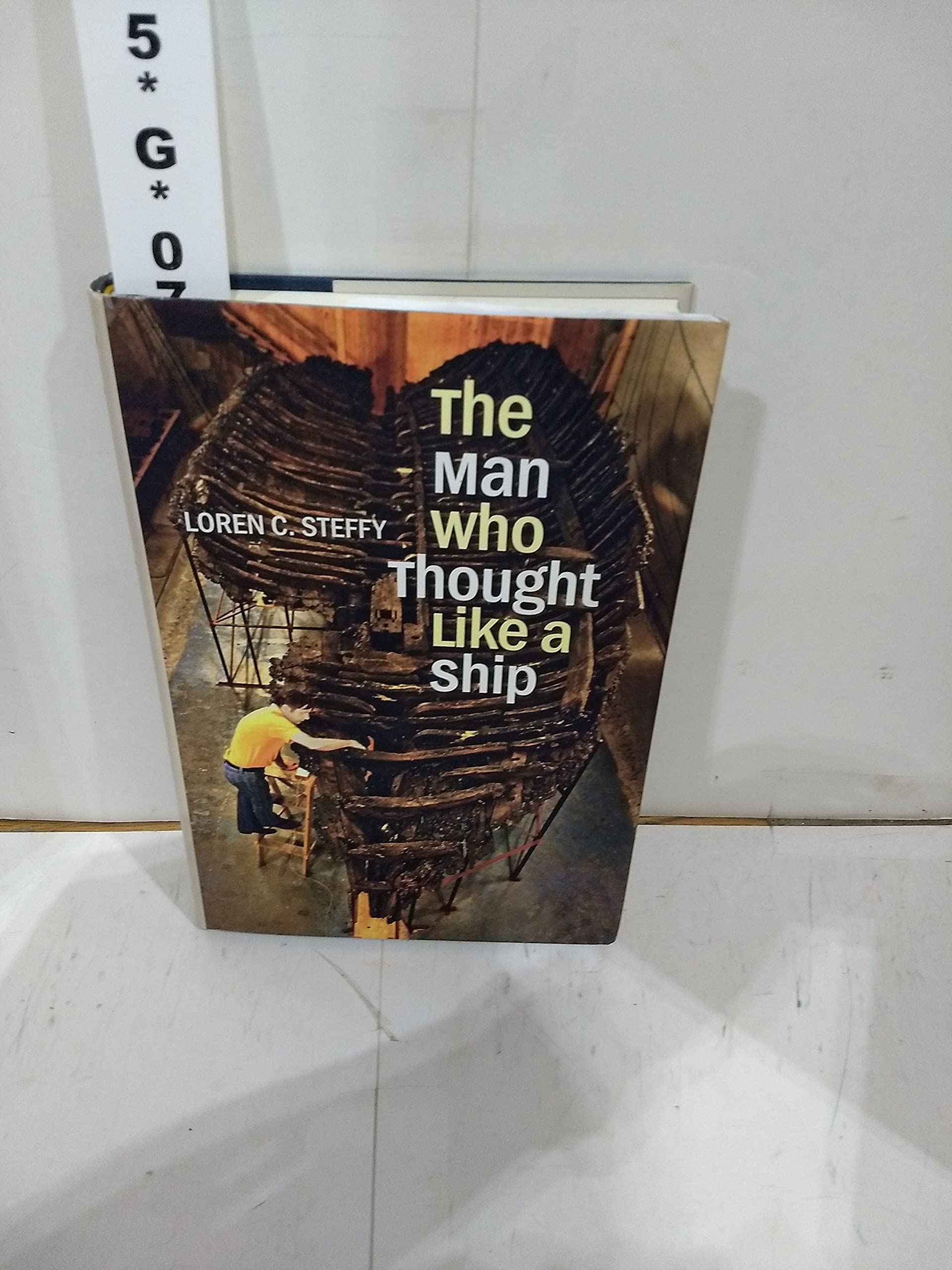
The Man Who Thought Like A Ship (Ed Rachal Foundation Nautical Archaeology Series),Used
Sold by Ergodebooks, an authorized reseller.
Returns accepted within 30 days | support@ergodebooks.com
Shipping Information
- Free Standard Shipping — United States only
- Processing Time: 3–5 business days
- Estimated Delivery: 6–10 business days after dispatch
- Double-boxed, fully insured & discreetly packaged
- Tracking number sent via email once dispatched
Returns & Refund
Returns accepted within 30 days of delivery.
Damaged or Defective Item
Free return shipping + replacement or full refund
Wrong Item Received
Free return shipping + replacement or full refund
Change of Mind
Return shipping at customer's expense · 25% restocking fee applies
Payment Option

J. Richard Dick Steffy stood inside the limestone hall of the Crusader castle in Cyprus and looked at the wood fragments arrayed before him. They were old beyond belief. For more than two millennia they had remained on the sea floor, eaten by worms and soaking up seawater until they had the consistency of wet cardboard. There were some 6,000 pieces in all, and Steffys job was to put them all back together in their original shape like some massive, ancient jigsaw puzzle.He had volunteered for the job even though he had no qualifications for it. For twentyfive years hed been an electrician in a small, landlocked town in Pennsylvania. He held no advanced degreeshis understanding of ships was entirely selftaught. Yet he would find himself half a world away from his home town, planning to reassemble a ship that last sailed during the reign of Alexander the Great, and he planned to do it using mathematical formulas and modeling techniques that hed developed in his basement as a hobby.The first person ever to reconstruct an ancient ship from its sunken fragments, Steffy said ships spoke to him. Steffy joined a team, including friend and fellow scholar George Bass, that laid a foundation for the field of nautical archaeology. Eventually moving to Texas A&M University, his lack of the usual academic credentials caused him to be initially viewed with skepticism by the universitys administration. However, his impressive record of publications and his skilled teaching eventually led to his being named a full professor. During the next thirty years of study, reconstruction, and modeling of submerged wrecks, Steffy would win a prestigious MacArthur Foundation genius grant and would train most of the preeminent scholars in the emerging field of nautical archaeology.Richard Steffys son Loren, an accomplished journalist, has mined family memories, archives at Texas A&M and elsewhere, his fathers papers, and interviews with former colleagues to craft not only a professional biography and adventure story of the highest caliber, but also the first history of a field that continues to harvest important new discoveries from the depths of the worlds oceans.
⚠️ WARNING (California Proposition 65):
This product may contain chemicals known to the State of California to cause cancer, birth defects, or other reproductive harm.
For more information, please visit www.P65Warnings.ca.gov.