
Title
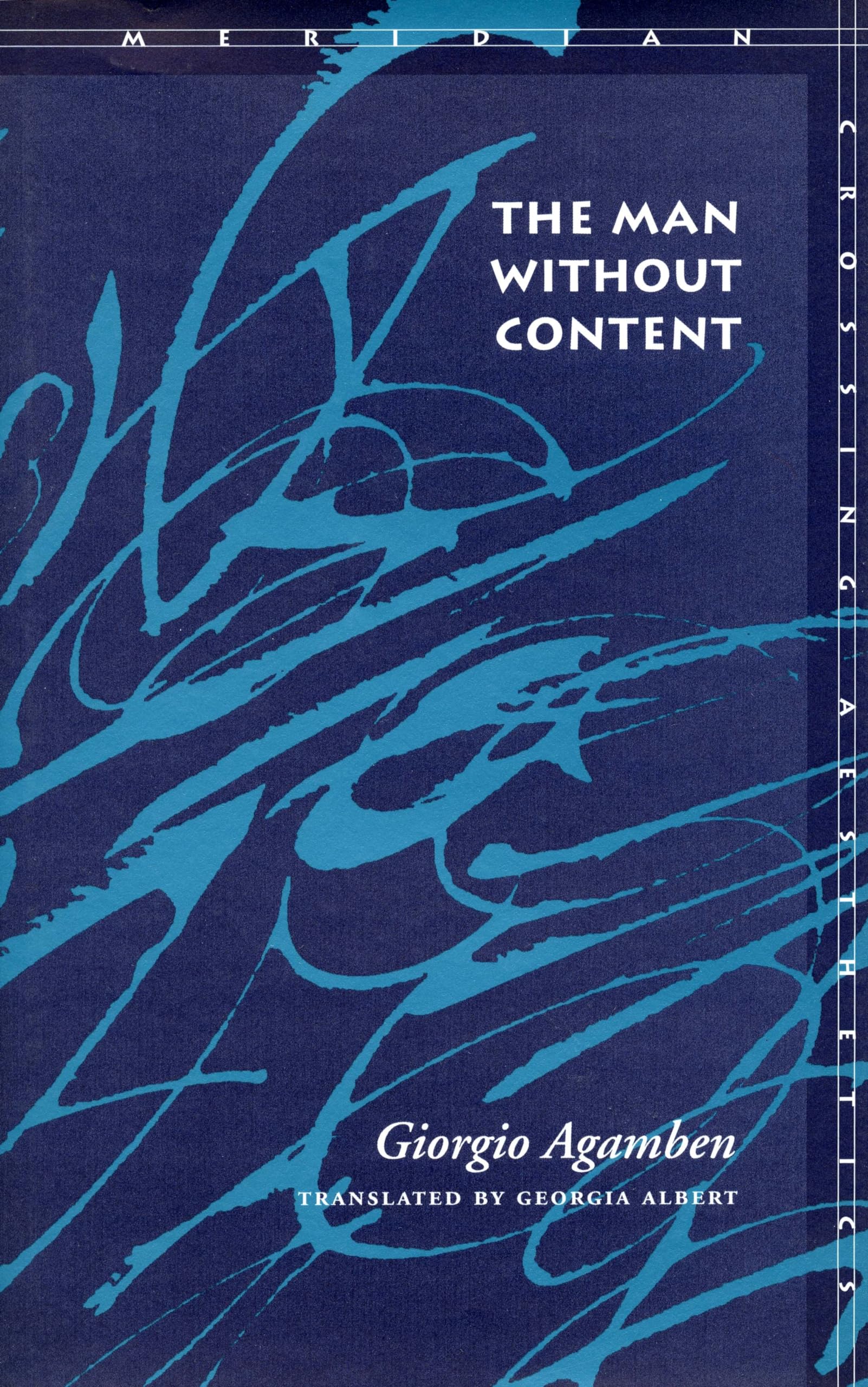
The Man Without Content,Used
Sold by Ergodebooks, an authorized reseller.
Returns accepted within 30 days | support@ergodebooks.com
Shipping Information
- Free Standard Shipping — United States only
- Processing Time: 3–5 business days
- Estimated Delivery: 6–10 business days after dispatch
- Double-boxed, fully insured & discreetly packaged
- Tracking number sent via email once dispatched
Returns & Refund
Returns accepted within 30 days of delivery.
Damaged or Defective Item
Free return shipping + replacement or full refund
Wrong Item Received
Free return shipping + replacement or full refund
Change of Mind
Return shipping at customer's expense · 25% restocking fee applies
Payment Option

In this book, one of Italy's most important and original contemporary philosophers considers the status of art in the modern era. He takes seriously Hegel's claim that art has exhausted its spiritual vocation, that it is no longer through art that Spirit principally comes to knowledge of itself. He argues, however, that Hegel by no means proclaimed the 'death of art' (as many still imagine) but proclaimed rather the indefinite continuation of art in what Hegel called a 'selfannulling' mode. With astonishing breadth and originality, the author probes the meaning, aesthetics, and historical consequences of that selfannulment. In essence, he argues that the birth of modern aesthetics is the result of a series of schismsbetween artist and spectator, genius and taste, and form and matter, for examplethat are manifestations of the deeper, selfnegating yet selfperpetuating movement of irony. Through this concept of selfannulment, the author offers an imaginative reinterpretation of the history of aesthetic theory from Kant to Heidegger, and he opens up original perspectives on such phenomena as the rise of the modern museum, the link between art and terror, the natural affinity between 'good taste' and its perversion, and kitsch as the inevitable destiny of art in the modern era. The final chapter offers a dazzling interpretation of Drer's Melancholia in the terms that the book has articulated as its own. The Man Without Content will naturally interest those who already prize Agamben's work, but it will also make his name relevant to a whole new audiencethose involved with art, art history, the history of aesthetics, and popular culture.
⚠️ WARNING (California Proposition 65):
This product may contain chemicals known to the State of California to cause cancer, birth defects, or other reproductive harm.
For more information, please visit www.P65Warnings.ca.gov.
- Q: What is the binding type of this book? A: The binding type of this book is paperback. This means it's flexible and typically lighter than hardcover books.
- Q: How many pages does 'The Man Without Content' have? A: This book has one hundred forty-eight pages. It provides an in-depth exploration of modern aesthetics and philosophy.
- Q: What are the dimensions of this book? A: The dimensions of this book are five inches in length, zero point thirty-seven inches in width, and eight inches in height. These measurements make it a convenient size for reading.
- Q: Who is the author of 'The Man Without Content'? A: The author of this book is Giorgio Agamben. He is a prominent contemporary philosopher known for his work in aesthetics and political theory.
- Q: In which category does this book fall? A: This book falls under the category of Aesthetics. It discusses the relationship between art, philosophy, and modernity.
- Q: What themes are explored in 'The Man Without Content'? A: The book explores themes such as the status of art in modern society, the concept of self-annulment, and the evolution of aesthetic theory. These themes provide a rich context for understanding contemporary art.
- Q: How should I care for this book? A: To care for this book, keep it in a dry, cool place and avoid direct sunlight. This will help preserve its condition over time.
- Q: Is it safe to read this book around children? A: Yes, it is safe to read this book around children. However, the content is more suitable for adults due to its philosophical themes.
- Q: Can I store this book on a shelf with other books? A: Yes, you can store this book on a shelf with other books. Its paperback design allows for easy placement among various sizes.
- Q: What if the book arrives damaged? A: If the book arrives damaged, you should contact the seller for a return or replacement. Most sellers have a return policy for damaged goods.
- Q: Is 'The Man Without Content' suitable for beginners in philosophy? A: Yes, this book is suitable for beginners, although it may require careful reading. Agamben's insights are accessible to those new to philosophical concepts.
- Q: How does this book compare to other works by Agamben? A: This book offers a unique perspective on aesthetics compared to other works by Agamben, focusing on the intersection of art and philosophy.
- Q: Does this book discuss the historical context of art? A: Yes, the book discusses the historical context of art, particularly the evolution of aesthetic theory from thinkers like Kant to Heidegger.
- Q: What is the main argument presented in 'The Man Without Content'? A: The main argument is that art continues to exist in a self-annulling mode, challenging the notion of the 'death of art' as proclaimed by Hegel.
- Q: What should I do if I have questions about the book's content? A: If you have questions about the book's content, consider reaching out to academic forums or reading guides that discuss Agamben's philosophies.