
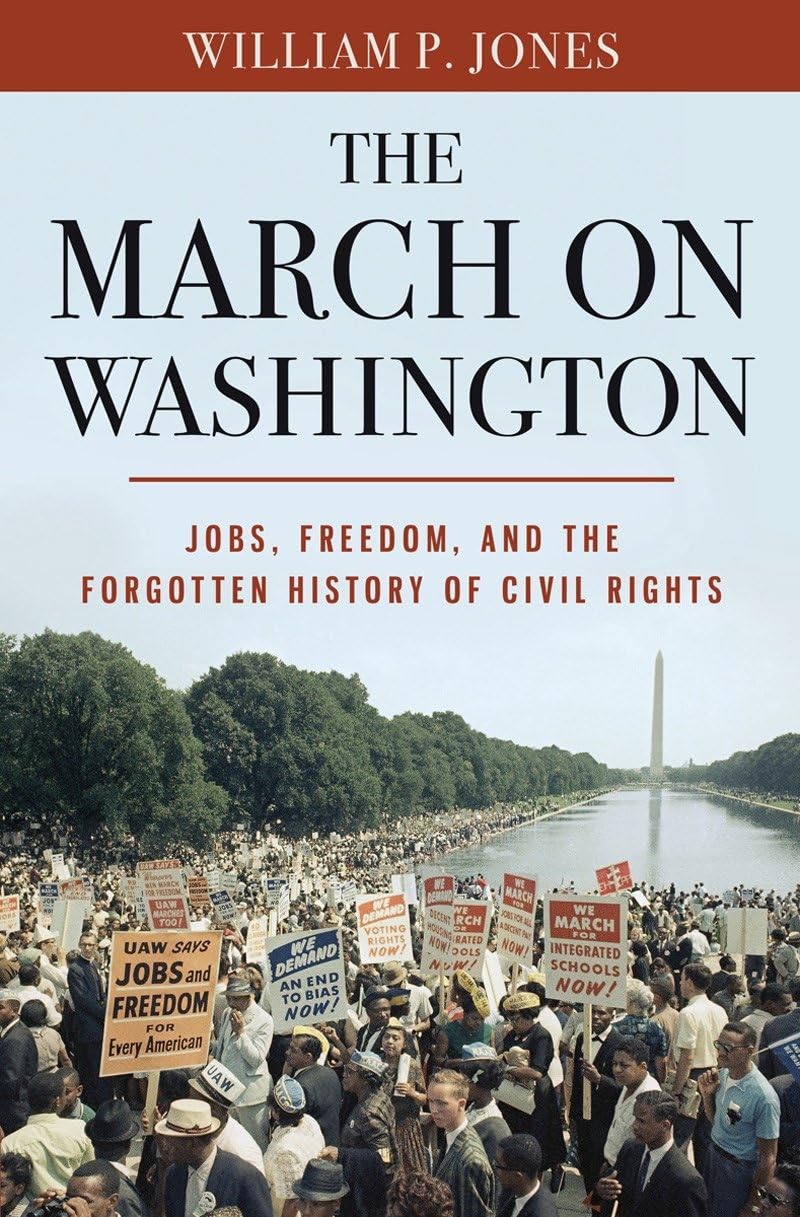
Title
The March on Washington: Jobs, Freedom, and the Forgotten History of Civil Rights,Used
Sold by Ergodebooks, an authorized reseller.
Returns accepted within 30 days | support@ergodebooks.com
Shipping Information
- Free Standard Shipping — United States only
- Processing Time: 3–5 business days
- Estimated Delivery: 6–10 business days after dispatch
- Double-boxed, fully insured & discreetly packaged
- Tracking number sent via email once dispatched
Returns & Refund
Returns accepted within 30 days of delivery.
Damaged or Defective Item
Free return shipping + replacement or full refund
Wrong Item Received
Free return shipping + replacement or full refund
Change of Mind
Return shipping at customer's expense · 25% restocking fee applies
Payment Option

A brilliant history that goes beyond the dazzling I Have a Dream speech to explore the real significance of the massive march and the movement it inspired. It was the final speech of a long day, August 28, 1963, when hundreds of thousands gathered on the Mall for the March on Washington for Jobs and Freedom. In a resounding cadence, Martin Luther King Jr. lifted the crowd when he told of his dream that all Americans would join together to realize the founding ideal of equality. The power of the speech created an enduring symbol of the march and the larger civil rights movement. Kings speech still inspires us fifty years later, but its very power has also narrowed our understanding of the march. In this insightful history, William P. Jones restores the march to its full significance.The opening speech of the day was delivered by the leader of the march, the great trade unionist A. Philip Randolph, who first called for a march on Washington in 1941 to press for equal opportunity in employment and the armed forces. To the crowd that stretched more than a mile before him, Randolph called for an end to segregation and a living wage for every American. Equal access to accommodations and services would mean little to people, white and black, who could not afford them. Randolphs egalitarian vision of economic and social citizenship is the strong thread running through the full history of the March on Washington Movement. It was a movement of sustained grassroots organizing, linked locally to womens groups, unions, and churches across the country. Joness fresh, compelling history delivers a new understanding of this emblematic event and the broader civil rights movement it propelled. 8 pages of photographs
⚠️ WARNING (California Proposition 65):
This product may contain chemicals known to the State of California to cause cancer, birth defects, or other reproductive harm.
For more information, please visit www.P65Warnings.ca.gov.