
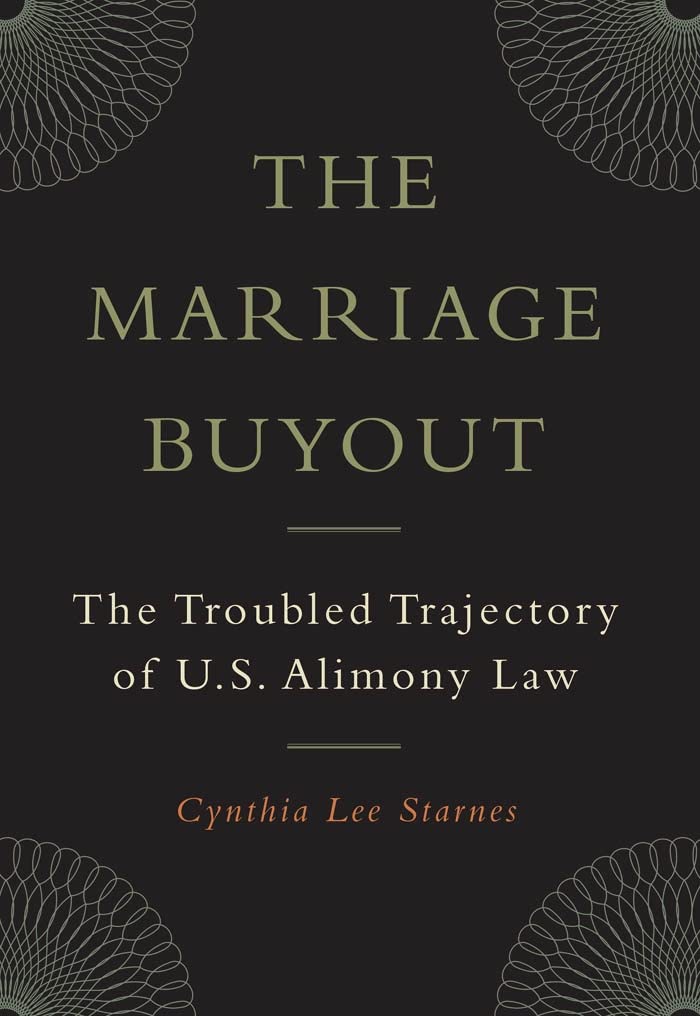
Title
The Marriage Buyout: The Troubled Trajectory Of U.S. Alimony Law (Families, Law, And Society, 4),Used
Sold by Ergodebooks, an authorized reseller.
Returns accepted within 30 days | support@ergodebooks.com
Shipping Information
- Free Standard Shipping — United States only
- Processing Time: 3–5 business days
- Estimated Delivery: 6–10 business days after dispatch
- Double-boxed, fully insured & discreetly packaged
- Tracking number sent via email once dispatched
Returns & Refund
Returns accepted within 30 days of delivery.
Damaged or Defective Item
Free return shipping + replacement or full refund
Wrong Item Received
Free return shipping + replacement or full refund
Change of Mind
Return shipping at customer's expense · 25% restocking fee applies
Payment Option

From divorce court to popular culture, alimonyis a dirty word. Unpopular and rarely ordered, the awards are frequentlyinconsistent and unpredictable. The institution itself is often viewed as anhistorical relic that harkens back to a gendered past in which women lacked theeconomic independence to free themselves from economic support by their spouses.In short, critics of alimony claim it has no place in contemporary visions ofmarriage as a partnership of equals. But as Cynthia Lee Starnes argues in TheMarriage Buyout, alimony is often the only practical tool for ensuring that divorce does not treattodays primary caregivers as if they were suckers. Her solution is toradically reconceptualize alimony as a marriage buyout.Starness buyouts draw on a partnership model of marriage that reinforcescommunal norms of marriage, providing a genderneutral alternative to alimonythat assumes equality in spousal contribution, responsibility, and right. Herquantification formulae support new default rules that make buyouts morecertain and predictable than their current alimony counterparts. Looking beyondalimony, Starnes outlines a new vision of marriages with children, describing acoparenting partnership between committed couples, and the conceptual basisfor income sharing between divorced parents of minor children. Ultimately,under a partnership model, the focus of alimony is on gain rather than loss andequality rather than power: a spouse with disparately low earnings isnt asucker or a victim dependent on a fixed alimony payment, but rather an equalstakeholder in marriage who is entitled at divorce to share any gains themarriage produced.
⚠️ WARNING (California Proposition 65):
This product may contain chemicals known to the State of California to cause cancer, birth defects, or other reproductive harm.
For more information, please visit www.P65Warnings.ca.gov.