If you have any questions, you are always welcome to contact us. We'll get back to you as soon as possible, withing 24 hours on weekdays.
Customer service
All questions about your order, return and delivery must be sent to our customer service team by e-mail at yourstore@yourdomain.com
Sale & Press
If you are interested in selling our products, need more information about our brand or wish to make a collaboration, please contact us at press@yourdomain.com
Help
If you have any questions, you are always welcome to contact us. We'll get back to you as soon as possible, withing 24 hours on weekdays.
Customer service
All questions about your order, return and delivery must be sent to our customer service team by e-mail at yourstore@yourdomain.com
Sale & Press
If you are interested in selling our products, need more information about our brand or wish to make a collaboration, please contact us at press@yourdomain.com
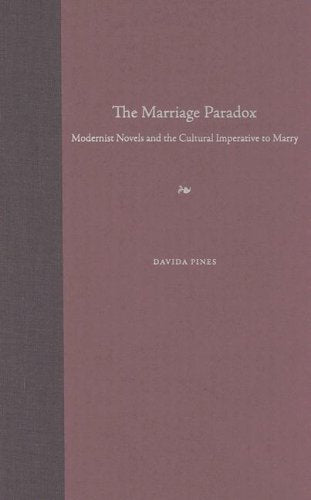
Departing from the tradition of reading literary modernism in terms of formal innovation, Pines study examines literary modernism through the lens of marriage. She considers the marriage plots of selected modernist novels by Henry James, Ford Madox Ford, D.H. Lawrence, Nella Larsen, and Virginia Woolf in relation to the social and legal restructuring of marriage occurring in the late nineteenth and early twentieth centuries in Britain and the U.S. In particular, she identifies and explores the strategies by which the modernist critique of marriage paradoxically reinforces the institution and the social imperative to marry. Despite a preoccupation with the changing nature of marriage, she argues, modern literature and culture do not imagine alternatives to marriage. By examining these novels in their social, legal, and historical contexts, Pines provides insights into how a critique of marriage can paradoxically contribute to a commitment to the institution. Ultimately, she argues, this critique undermines the definition of modernism as a radical disruption of social and cultural norms and raises questions about the persistence of marriage in AngloAmerican culture. In treating marriage as a social and cultural institution, Pines departs from previous feminist examinations of modernism that focus on gender roles or consider the modern marriage plot in less historical and more formalist terms. And, finally, by setting texts of High Modernism alongside texts from the Harlem Renaissance, her study argues for a more expansive definition of literary modernism.
⚠️ WARNING (California Proposition 65):
This product may contain chemicals known to the State of California to cause cancer,
birth defects, or other reproductive harm.
For MAP (Minimum Advertised Price) violations and Intellectual Property (IP) or Trademark concerns, please contact:
support@ergodebooks.com
⚠️ California Proposition 65 Warning: Some products sold on this website may expose you to chemicals known to the State of California to cause cancer, birth defects, or other reproductive harm. For more information, visit www.P65Warnings.ca.gov.