
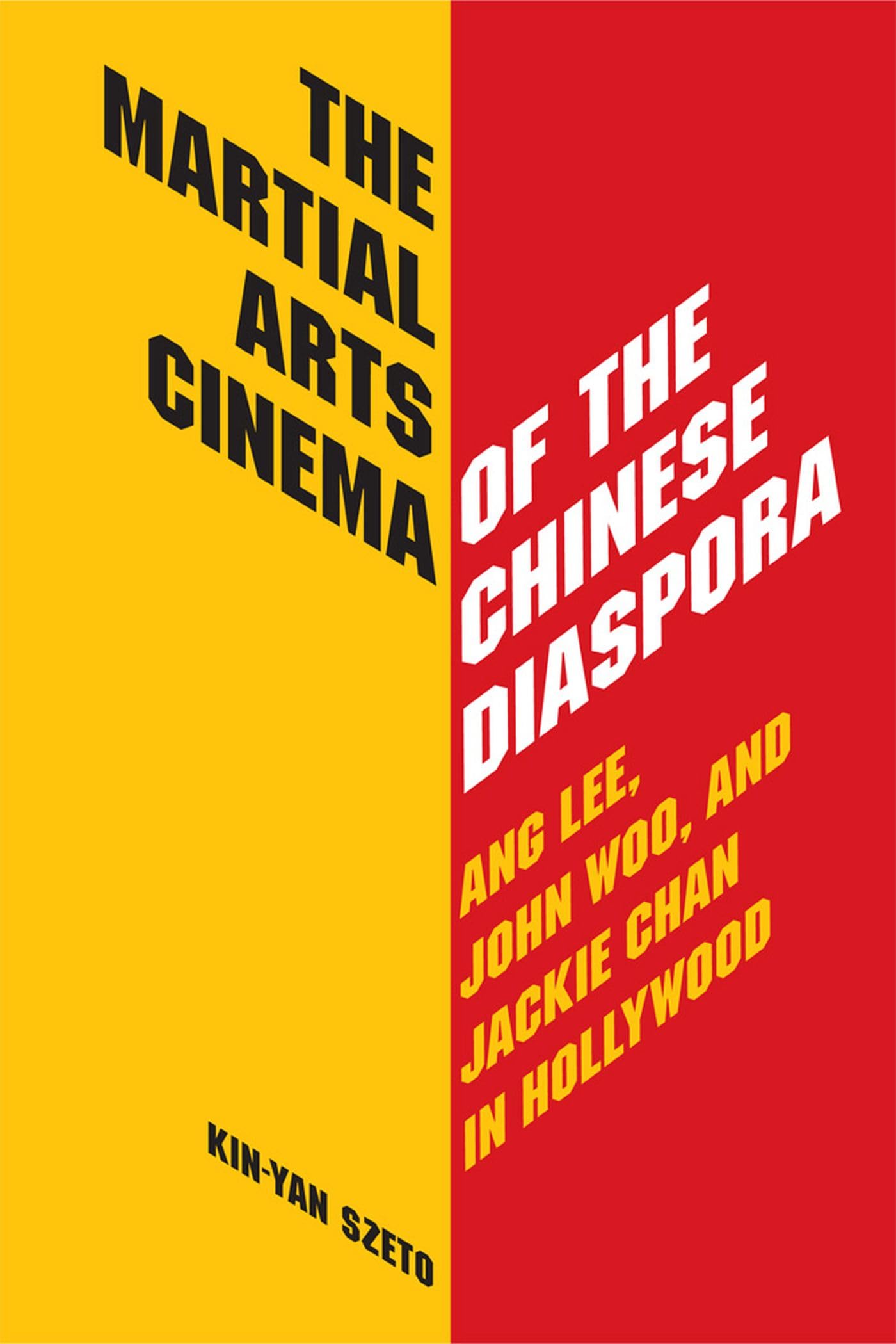
Title
The Martial Arts Cinema of the Chinese Diaspora: Ang Lee, John Woo, and Jackie Chan in Hollywood,Used
Sold by Ergodebooks, an authorized reseller.
Returns accepted within 30 days | support@ergodebooks.com
Shipping Information
- Free Standard Shipping — United States only
- Processing Time: 3–5 business days
- Estimated Delivery: 6–10 business days after dispatch
- Double-boxed, fully insured & discreetly packaged
- Tracking number sent via email once dispatched
Returns & Refund
Returns accepted within 30 days of delivery.
Damaged or Defective Item
Free return shipping + replacement or full refund
Wrong Item Received
Free return shipping + replacement or full refund
Change of Mind
Return shipping at customer's expense · 25% restocking fee applies
Payment Option

In The Martial Arts Cinema of the Chinese Diaspora, KinYan Szeto critically examines three of the most internationally famous martial arts film artists to arise out of the Chinese diaspora and travel far from their homelands to find commercial success in the world at large: Ang Lee, John Woo, and Jackie Chan. Positing the idea that these filmmakers' success is evidence of a 'cosmopolitical awareness' arising from their crosscultural ideological engagements and geopolitical displacements, Szeto demonstrates how this unique perspective allows these three filmmakers to develop and act in the transnational environment of media production, distribution, and consumption.Beginning with a historical retrospective on Chinese martial arts films as a diasporic film genre and the transnational styles and ideologies of the filmmakers themselves, Szeto uses case studies to explore in depth how the forces of colonialism, Chinese nationalism, and Western imperialism shaped the identities and work of Lee, Woo, and Chan. Addressed in the volume is the groundbreaking martial arts swordplay film that achieves global successAng Lee's Crouching Tiger, Hidden Dragon and its revelations about Hollywood representations of Asians, as well as concepts of male and female masculinity in the swordplay film tradition. Also investigated is the invigoration of contemporary gangster, thriller, and war films by John Woo, whose combination of artistic and historical contexts has contributed to his global success.Szeto then dissects Chan's mimetic representation of masculinity in his films, and the influences of his Chinese theater and martial arts training on his work. Szeto outlines the similarities and differences between the three artists' films, especially their treatments of gender, sexuality, and power. She concludes by analyzing their films as metaphors for their working conditions in the Chinese diaspora and Hollywood, and demonstrating how through their works, Lee, Woo, and Chan communicate not only with the rest of the world but also with each other.Far from a book simply about three filmmakers, The Martial Arts Cinema of the Chinese Diaspora investigates the transnational nature of films, the geopolitics of culture and race, and the depths of masculinity and power in movies. Szeto's interdisciplinary approach calls for nothing less than a paradigm shift in the study of Chinese diasporic filmmakers and the embodiment of cosmopolitical perspectives in the martial arts genre.
⚠️ WARNING (California Proposition 65):
This product may contain chemicals known to the State of California to cause cancer, birth defects, or other reproductive harm.
For more information, please visit www.P65Warnings.ca.gov.