If you have any questions, you are always welcome to contact us. We'll get back to you as soon as possible, withing 24 hours on weekdays.
Customer service
All questions about your order, return and delivery must be sent to our customer service team by e-mail at yourstore@yourdomain.com
Sale & Press
If you are interested in selling our products, need more information about our brand or wish to make a collaboration, please contact us at press@yourdomain.com
Help
If you have any questions, you are always welcome to contact us. We'll get back to you as soon as possible, withing 24 hours on weekdays.
Customer service
All questions about your order, return and delivery must be sent to our customer service team by e-mail at yourstore@yourdomain.com
Sale & Press
If you are interested in selling our products, need more information about our brand or wish to make a collaboration, please contact us at press@yourdomain.com
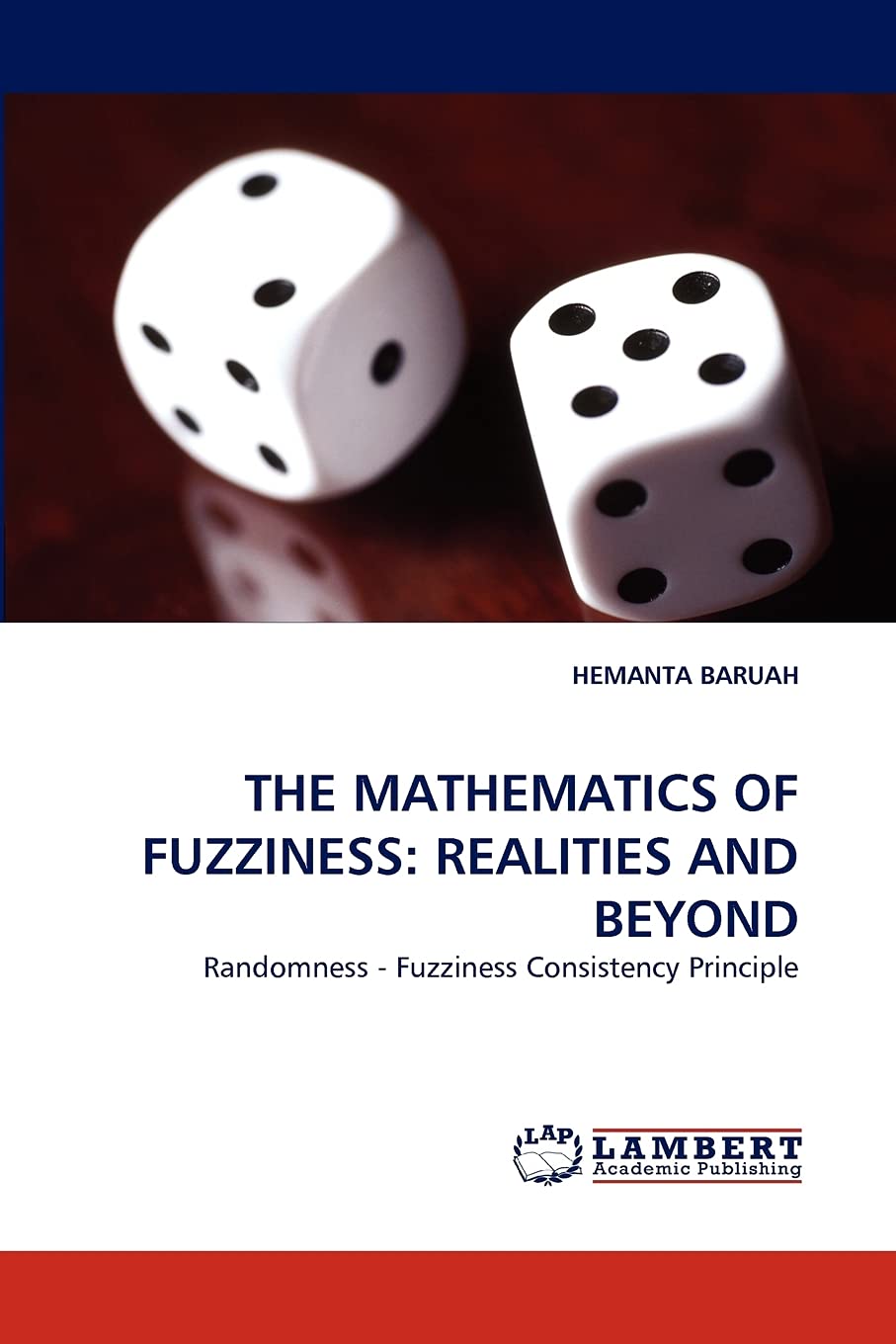
Imposing a probability law on an interval in which a normal fuzzy number has been defined, and then trying to find consistency between randomness and fuzziness is not logical. If we need to establish a probability law followed by a random variable defined in a given interval, there are mathematical formalisms in the theory of statistical inferences to do so. Instead, defining a normal fuzzy number around a point, and then using a conversion factor to deduce a probability density function from the fuzzy membership function is against statistical norms. Probability densities are not found in this way. In fact, the left reference function of a normal fuzzy number is a probability distribution function, and the right reference function is a complementary probability distribution function. Hence, we need two probability laws to define the membership function of a normal fuzzy number. That the membership function is expressible as a distribution function and a complementary distribution function on the left and on the right respectively of the value with unit membership should be the real randomness fuzziness consistency principle.
⚠️ WARNING (California Proposition 65):
This product may contain chemicals known to the State of California to cause cancer,
birth defects, or other reproductive harm.
For MAP (Minimum Advertised Price) violations and Intellectual Property (IP) or Trademark concerns, please contact:
support@ergodebooks.com
⚠️ California Proposition 65 Warning: Some products sold on this website may expose you to chemicals known to the State of California to cause cancer, birth defects, or other reproductive harm. For more information, visit www.P65Warnings.ca.gov.