If you have any questions, you are always welcome to contact us. We'll get back to you as soon as possible, withing 24 hours on weekdays.
Customer service
All questions about your order, return and delivery must be sent to our customer service team by e-mail at yourstore@yourdomain.com
Sale & Press
If you are interested in selling our products, need more information about our brand or wish to make a collaboration, please contact us at press@yourdomain.com
Help
If you have any questions, you are always welcome to contact us. We'll get back to you as soon as possible, withing 24 hours on weekdays.
Customer service
All questions about your order, return and delivery must be sent to our customer service team by e-mail at yourstore@yourdomain.com
Sale & Press
If you are interested in selling our products, need more information about our brand or wish to make a collaboration, please contact us at press@yourdomain.com
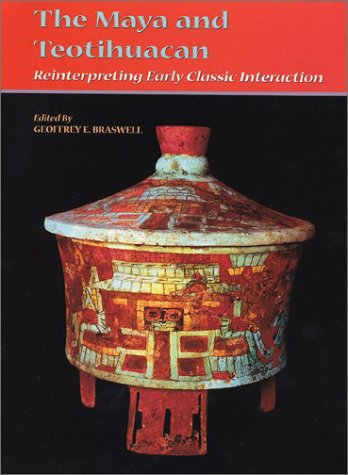
Since the 1930s, archaeologists have uncovered startling evidence of interaction between the Early Classic Maya and the great empire of Teotihuacan in Central Mexico. Yet the exact nature of the relationship between these two ancient Mesoamerican civilizations remains to be fully deciphered. Many scholars have assumed that Teotihuacan colonized the Maya region and dominated the political or economic systems of certain key centersperhaps even giving rise to statelevel political organizations. Others argue that Early Classic rulers merely traded with Teotihuacan and skillfully manipulated its imported exotic goods and symbol sets to increase their prestige.Moving beyond these traditional assumptions, the contributors to this volume present extensive new evidence from archaeology, iconography, and epigraphy to offer a more nuanced understanding of the interaction between the Early Classic Maya and Teotihuacan. Investigating a range of Maya sites, including Kaminaljuyu, Copn, Tikal, Altun Ha, and Oxkintok, they demonstrate that the influence of Teotihuacan on the Maya varied in nature and duration from site to site, requiring a range of models to explain the patterns of interaction. Moreover, they show that the interaction was bidirectional and discuss how the Maya in turn influenced Teotihuacan.
⚠️ WARNING (California Proposition 65):
This product may contain chemicals known to the State of California to cause cancer,
birth defects, or other reproductive harm.
For MAP (Minimum Advertised Price) violations and Intellectual Property (IP) or Trademark concerns, please contact:
support@ergodebooks.com
⚠️ California Proposition 65 Warning: Some products sold on this website may expose you to chemicals known to the State of California to cause cancer, birth defects, or other reproductive harm. For more information, visit www.P65Warnings.ca.gov.