
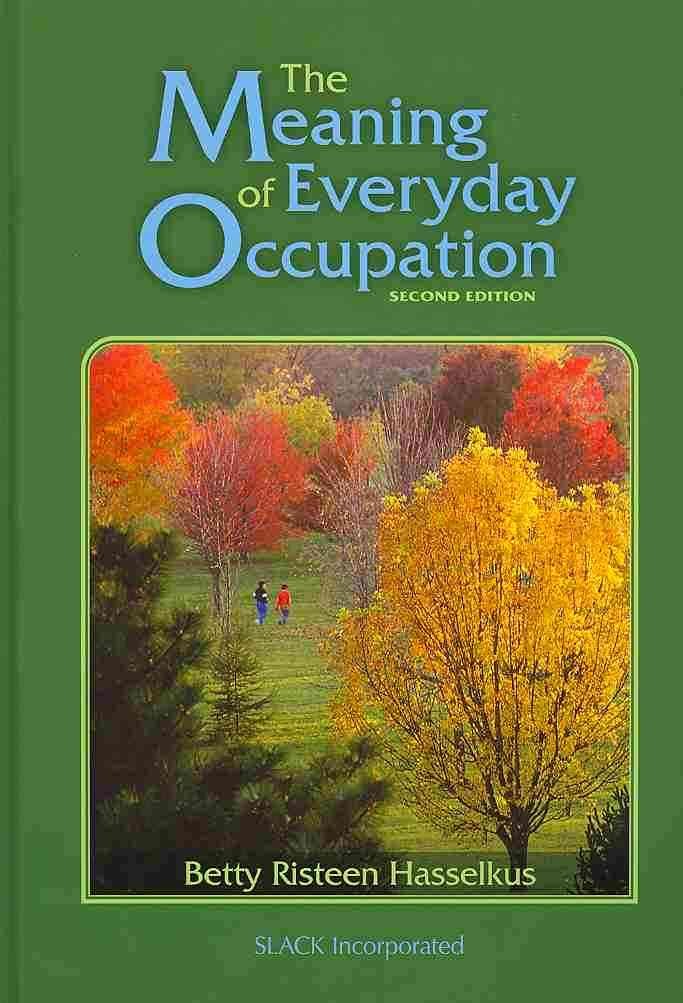
Title
The Meaning Of Everyday Occupation
Sold by Ergodebooks, an authorized reseller.
Returns accepted within 30 days | support@ergodebooks.com
Shipping Information
- Free Standard Shipping — United States only
- Processing Time: 3–5 business days
- Estimated Delivery: 6–10 business days after dispatch
- Double-boxed, fully insured & discreetly packaged
- Tracking number sent via email once dispatched
Returns & Refund
Returns accepted within 30 days of delivery.
Damaged or Defective Item
Free return shipping + replacement or full refund
Wrong Item Received
Free return shipping + replacement or full refund
Change of Mind
Return shipping at customer's expense · 25% restocking fee applies
Payment Option

The Meaning Of Everyday Occupation, Second Edition Is A Text Designed To Bring The Reader Closer To The World Of Occupation. This New Edition Probes More Deeply Into The Meanings Of Everyday Occupation And Offers Opportunities To The Reader For Personal Reflection About Daytoday Occupational Patterns.The Continuing Emphasis Of This Second Edition, By Awardwinning Author Betty Risteen Hasselkus, Phd, Is On Everyday Occupation As Experience. The Meaning Of Everyday Occupation Motivates Occupational Therapists To Think About How Occupation Is Experienced In Everyday Life, To Absorb The Complexity Of Meanings Imbedded In Daily Life, And To Value The Personal And Social Significance Of Everyday Occupation In Their Own And Their Clients Lives.Chapters Themes Include: Space And Placesources Of Meaning In Occupation Culture And Occupation Occupation As A Source Of Wellbeing And Development Occupation And Relationships Disability And Occupation Occupation As A Source Of Spirituality Creativity In Occupation As A Source Of Meaningthroughout The Second Edition, The Text Focuses On The Ways In Which Daily Occupation Contributes To Meaning In Our Lives, Providing A Sound Understanding Of The Daily Routines And Activities To Which We So Often Give Little Attention. Emerging Trends In Occupational Therapy Are Also Examined, Focusing On Strengthened Globalization, The Movement Toward Populations And Systems As Clients, And The Increasing Emphasis On Experiential Definitions Of Occupation In Education, Practice And Research.Instructors In Educational Settings Can Visit Www.Efacultylounge.Com For Newly Developed Material To Be Used For Teaching In The Classroom.The Meaning Of Everyday Occupation, Second Edition Is A Unique And Comprehensive Text For The Study Of Occupation And Its Implications For Effective Practice. Verbatim Narratives From Occupational Therapists In Practice And Excerpts From The Authors Life Are Integrated With Theories Of Occupation And Occupational Science Throughout The Book, Yielding A Coherent, Comprehensive And Readable Text On The Importance Of Occupation To The Quality Of Daily Life.
⚠️ WARNING (California Proposition 65):
This product may contain chemicals known to the State of California to cause cancer, birth defects, or other reproductive harm.
For more information, please visit www.P65Warnings.ca.gov.
- Q: What is the page count of this book? A: This book has two hundred sixteen pages. It provides a comprehensive exploration of everyday occupations and their significance.
- Q: What is the binding type of 'The Meaning of Everyday Occupation'? A: The book is available in hardcover binding. This makes it durable and suitable for frequent use in educational settings.
- Q: Who is the author of the book? A: The author is Betty Risteen Hasselkus, PhD. She is an award-winning author known for her contributions to occupational therapy.
- Q: What themes are covered in the book? A: The book covers themes such as culture, relationships, well-being, and spirituality in relation to daily occupations. These themes enhance the understanding of occupational therapy.
- Q: What is the size of the book? A: The book measures seven point zero one inches in length, zero point seven five inches in width, and ten inches in height. Its size is convenient for both reading and storage.
- Q: How do I use this book for educational purposes? A: Instructors can utilize this book as a teaching resource in occupational therapy courses. It encourages personal reflection and contextual understanding of everyday occupations.
- Q: Is this book suitable for beginners in occupational therapy? A: Yes, this book is suitable for beginners. It provides foundational knowledge on the meanings embedded in daily occupations.
- Q: Can I use this book for personal reflection? A: Yes, the book encourages personal reflection about day-to-day occupational patterns. Readers can gain insights into their own occupational experiences.
- Q: Is this book appropriate for advanced practitioners as well? A: Yes, advanced practitioners will find this book valuable. It delves into complex themes relevant to contemporary practice in occupational therapy.
- Q: How should I care for this book? A: To maintain the book's condition, store it in a dry, cool area. Avoid exposing it to excessive moisture or direct sunlight.
- Q: Can this book be easily cleaned? A: No, this hardcover book cannot be cleaned with water. Avoid spills and handle it with clean hands to preserve its condition.
- Q: What should I do if the book arrives damaged? A: If the book arrives damaged, contact the seller for a return or exchange. Most sellers have a customer service policy for defective items.
- Q: Is there a warranty for this book? A: No, books typically do not come with a warranty. However, you can check the return policy of the seller for any issues.
- Q: How can I find additional teaching materials related to this book? A: Instructors can visit www.efacultylounge.com for newly developed teaching materials. This resource complements the content of the book.
- Q: What makes this book unique in occupational therapy? A: This book uniquely integrates verbatim narratives from practitioners with theories of occupation. It provides a comprehensive view of the importance of daily occupations.
- Q: Does the book cover recent trends in occupational therapy? A: Yes, the book examines emerging trends such as globalization and experiential definitions of occupation. These topics are crucial for contemporary practice.