
Title
The Meaning Of The City (Jacques Ellul Legacy)
Sold by Ergodebooks, an authorized reseller.
Returns accepted within 30 days | support@ergodebooks.com
Shipping Information
- Free Standard Shipping — United States only
- Processing Time: 3–5 business days
- Estimated Delivery: 6–10 business days after dispatch
- Double-boxed, fully insured & discreetly packaged
- Tracking number sent via email once dispatched
Returns & Refund
Returns accepted within 30 days of delivery.
Damaged or Defective Item
Free return shipping + replacement or full refund
Wrong Item Received
Free return shipping + replacement or full refund
Change of Mind
Return shipping at customer's expense · 25% restocking fee applies
Payment Option

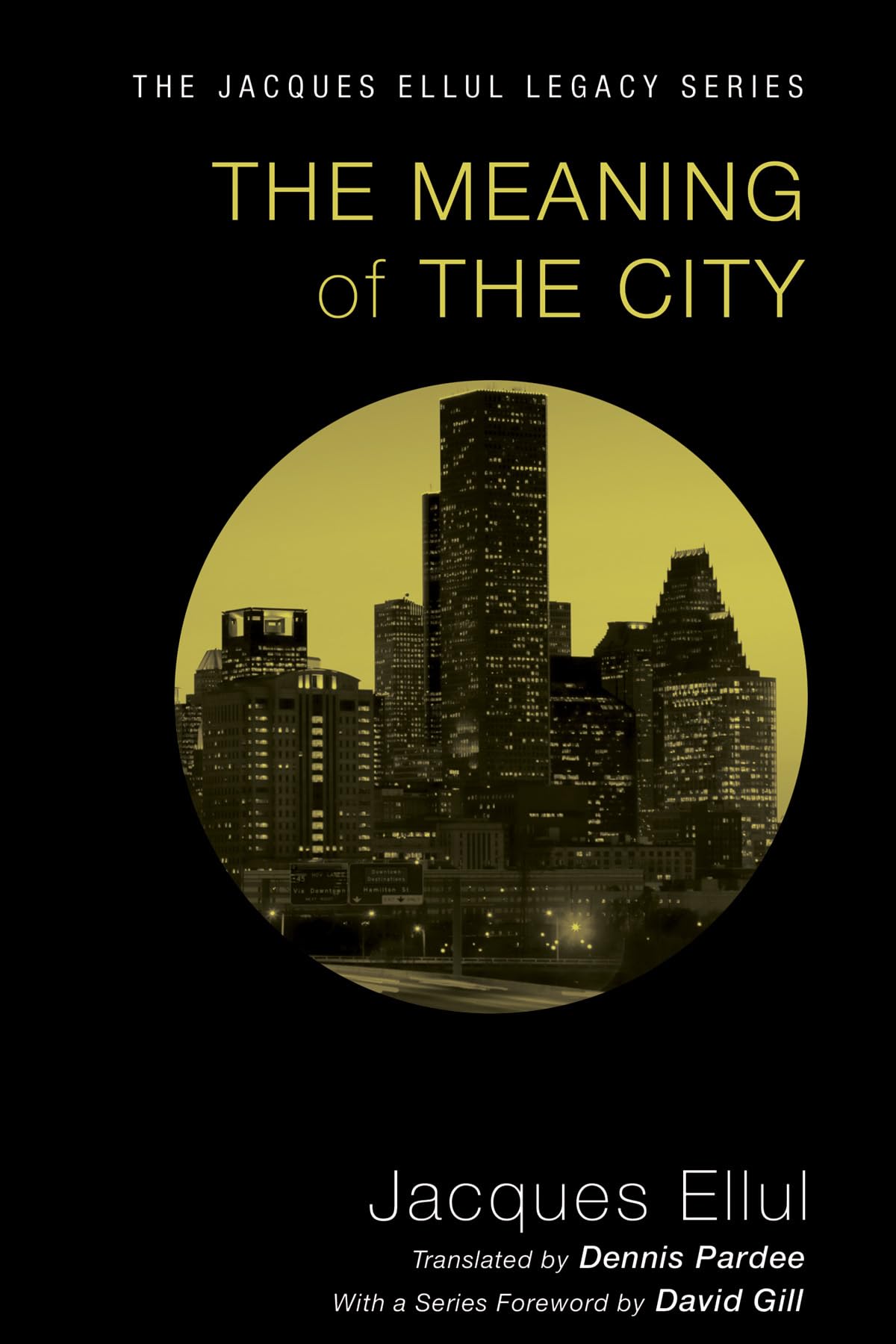
Jacques Ellul, A Former Member Of A Law Faculty At The University Of Bordeaux, Was Recognized As A Brilliant And Penetrating Commentator On The Relationship Between Theology And Sociology. In The Meaning Of The City He Presents What He Finds In The Biblea Sophisticated, Coherent Theology Of The City Fully Applicable To Today'S Urbanized Society. Ellul Believes That The City Symbolizes The Supreme Work Of Manand, As Such, Represents Man'S Ultimate Rejection Of God. Therefore It Is The City, Where Lies Man'S Rebellious Heart, That Must Be Reformed. The Author Stresses The Fact That The Bible Does Not Find Man'S Fulfillment In A Return To An Idyllic Eden, But Points Rather To A Life Of Communion With The Savior In The City Transfigured. The Meaning Of The City, Says John Wilkinson In His Introductory Essay To The Book, Is The Theological Counterpoint To Ellul'S Technological Society, A Work That Analyzed The Phenomenon Of The Autonomous And Totally Manipulative Postindustrial World. Ellul Takes Issue With Those Who Idealistically Plan New Urban Environments For Man, As Though Man Alone Can Negate The Inherent Diabolism Of The City. For Ellul, The History Of The City From The Times Of Cain And Nimrod Through To Babylon And Jerusalem Reveals A Tendency To Destroy The Human Being For The Sake Of Human Works. Nevertheless, Continuing The Theme Of The Tension Between Two Realities That Characterizes All His Works, Ellul Sees God As Electing The City As Itself An Instrument Of Grace For The Believer. William Stringfellow Describes The Meaning Of The City As A Book Of Startling Significance, Which Should Rank Beside Reinhold Niebuhr'S Moral Man And Immoral Society As A Work Of Truly Momentous Potential. Douglass D. Mcferran Adds That It Is A Book Worth Serious Consideration By Anyone Interested In The Relationship Between Religious Commitment And Secular Involvement. And John Wilkinson Sums It Up: There Are Very Few Convincingly Religious Analyses Of The Sociological Phenomena Of The Present Day. . . . Ellul'S Biblically Based Sociology Is Today Furnishing The Matter For A Large And Growing Group Of Social Protestants, Particularly In The United States.
⚠️ WARNING (California Proposition 65):
This product may contain chemicals known to the State of California to cause cancer, birth defects, or other reproductive harm.
For more information, please visit www.P65Warnings.ca.gov.
- Q: What is the page count of 'The Meaning of the City'? A: The book contains two hundred thirty-six pages. This length allows for a comprehensive exploration of Jacques Ellul's theological insights.
- Q: What are the dimensions of this book? A: The book measures five point five one inches in length, zero point five five inches in width, and eight point five inches in height. These dimensions make it a portable and easy-to-handle read.
- Q: What type of binding does 'The Meaning of the City' have? A: This book is available in paperback binding. This type of binding is lightweight and flexible, making it suitable for everyday use.
- Q: How should I read 'The Meaning of the City'? A: You can read this book at your own pace, but it is recommended for adults and those interested in theology and sociology. Its depth may require reflection and note-taking.
- Q: Is 'The Meaning of the City' suitable for beginners in theology? A: Yes, this book can be suitable for beginners. However, readers may benefit from some background in theological discussions to fully grasp Ellul's concepts.
- Q: What themes are explored in 'The Meaning of the City'? A: The book explores themes of urbanization, theology, and the relationship between humanity and God. Ellul provides a critical view of cities as reflections of human rebellion.
- Q: How do I care for this paperback book? A: To keep this book in good condition, store it in a cool, dry place and avoid exposing it to direct sunlight. Handle it gently to preserve the pages.
- Q: Can I return 'The Meaning of the City' if I'm not satisfied? A: Yes, you can return the book if you are not satisfied, following the retailer's return policy. It's advisable to keep the receipt for a smooth return process.
- Q: What do I do if 'The Meaning of the City' arrives damaged? A: If the book arrives damaged, contact the seller immediately to report the issue. Most retailers have procedures in place for exchanges or refunds.
- Q: Is 'The Meaning of the City' suitable for advanced theological studies? A: Yes, this book is suitable for advanced study. It offers deep insights that can contribute significantly to discussions in theological and sociological contexts.
- Q: How does Ellul compare cities to Eden in the book? A: Ellul argues that the Bible does not suggest a return to an idyllic Eden but rather emphasizes a life of communion with God in a transformed city. This perspective is central to his thesis.
- Q: What is the significance of 'The Meaning of the City' according to critics? A: Critics describe it as a work of startling significance, comparing it to Reinhold Niebuhr's writings. It is seen as crucial for understanding the sociological phenomena of today.
- Q: What is the author's background? A: Jacques Ellul was a prominent theologian and sociologist, previously a member of the Law Faculty at the University of Bordeaux. His expertise informs his analysis in this book.
- Q: What should I know about the publisher of this book? A: The book is published by Wipf & Stock Publishers, known for their focus on academic and theological works that contribute to scholarly discussions.
- Q: What audience is 'The Meaning of the City' intended for? A: This book is primarily aimed at readers interested in theology, sociology, and the critical examination of urban life. It appeals to both scholars and general readers.