
Title
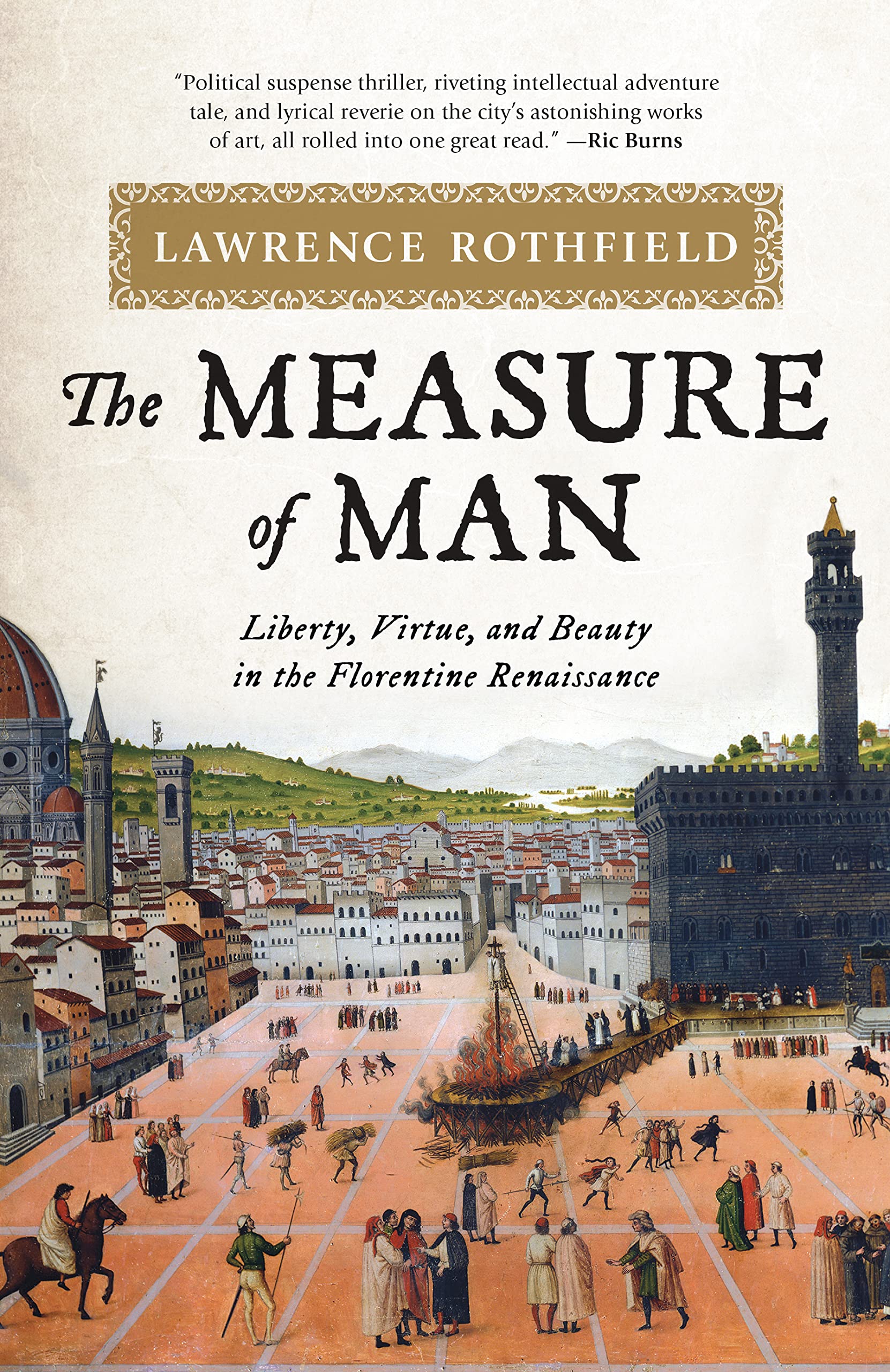
The Measure of Man: Liberty, Virtue, and Beauty in the Florentine Renaissance,Used
Sold by Ergodebooks, an authorized reseller.
Returns accepted within 30 days | support@ergodebooks.com
Shipping Information
- Free Standard Shipping — United States only
- Processing Time: 3–5 business days
- Estimated Delivery: 6–10 business days after dispatch
- Double-boxed, fully insured & discreetly packaged
- Tracking number sent via email once dispatched
Returns & Refund
Returns accepted within 30 days of delivery.
Damaged or Defective Item
Free return shipping + replacement or full refund
Wrong Item Received
Free return shipping + replacement or full refund
Change of Mind
Return shipping at customer's expense · 25% restocking fee applies
Payment Option

It was one of the most concentrated surges of creativity in the history of civilization. Between 1390 and 1537, Florence poured forth an astonishing stream of magnificent artworks. But Florentines did more during this brief period than create masterpieces. As citizens of a fractious republic threatened from below, without, and within, they also were driven to reimagine the political and ethical basis of their world, exploring the meaning and possibilities of liberty, virtue, and beauty.This vibrant era is brought to life in rich detail by noted historian Lawrence Rothfield in The Measure of Man. His highly readable account introduces readers to a city teeming with memorable individuals and audacious risktakers, capable of producing works of the most serene beauty and acts of the most shocking violence. Rothfields cast of characters includes book hunters and book burners, devout Christians and assassins, humble pharmacists and arrogant oligarchs, all caught up in a dramatic strugglea tragic arc running from the cultural heights of republican idealism in the early fifteenth century, through the aesthetic flowerings and civic vicissitudes of the age of the Medici and Savonarola, to the brooding meditations of Machiavelli and Michelangelo over the fate of the dying republic.
⚠️ WARNING (California Proposition 65):
This product may contain chemicals known to the State of California to cause cancer, birth defects, or other reproductive harm.
For more information, please visit www.P65Warnings.ca.gov.
- Q: What is the main theme of 'The Measure of Man'? A: The main theme of 'The Measure of Man' revolves around the exploration of liberty, virtue, and beauty during the Florentine Renaissance, highlighting the interplay of creativity and political struggles in Florence.
- Q: Who is the author of 'The Measure of Man'? A: The author of 'The Measure of Man: Liberty, Virtue, and Beauty in the Florentine Renaissance' is Lawrence Rothfield.
- Q: What is the publication date of this book? A: The book was published on March 17, 2021.
- Q: What type of binding does 'The Measure of Man' have? A: This book is available in hardcover binding.
- Q: How many pages does 'The Measure of Man' contain? A: The book contains 216 pages.
- Q: Is 'The Measure of Man' suitable for academic study? A: Yes, 'The Measure of Man' is suitable for academic study as it provides a detailed historical account of the Florentine Renaissance and explores significant cultural themes.
- Q: What kind of readers would enjoy this book? A: 'The Measure of Man' is ideal for readers interested in history, art, and the political dynamics of the Renaissance period, as well as those who appreciate detailed historical narratives.
- Q: Does 'The Measure of Man' include illustrations or images? A: The book primarily focuses on the narrative and does not emphasize illustrations or images, focusing instead on the historical context and analysis.
- Q: Can this book serve as a resource for understanding the Medici family's influence? A: 'The Measure of Man' provides insights into the Medici family's influence during the Renaissance, detailing their role in the cultural and political landscape of Florence.
- Q: What distinguishes 'The Measure of Man' from other historical accounts of the Renaissance? A: This book distinguishes itself through its focus on the intersection of art, politics, and ethics in Florence, offering a nuanced view of the societal challenges faced during the Renaissance.