
Title
The Memory Of Trade: Modernity'S Entanglements On An Eastern Indonesian Island,Used
Sold by Ergodebooks, an authorized reseller.
Returns accepted within 30 days | support@ergodebooks.com
Shipping Information
- Free Standard Shipping — United States only
- Processing Time: 3–5 business days
- Estimated Delivery: 6–10 business days after dispatch
- Double-boxed, fully insured & discreetly packaged
- Tracking number sent via email once dispatched
Returns & Refund
Returns accepted within 30 days of delivery.
Damaged or Defective Item
Free return shipping + replacement or full refund
Wrong Item Received
Free return shipping + replacement or full refund
Change of Mind
Return shipping at customer's expense · 25% restocking fee applies
Payment Option

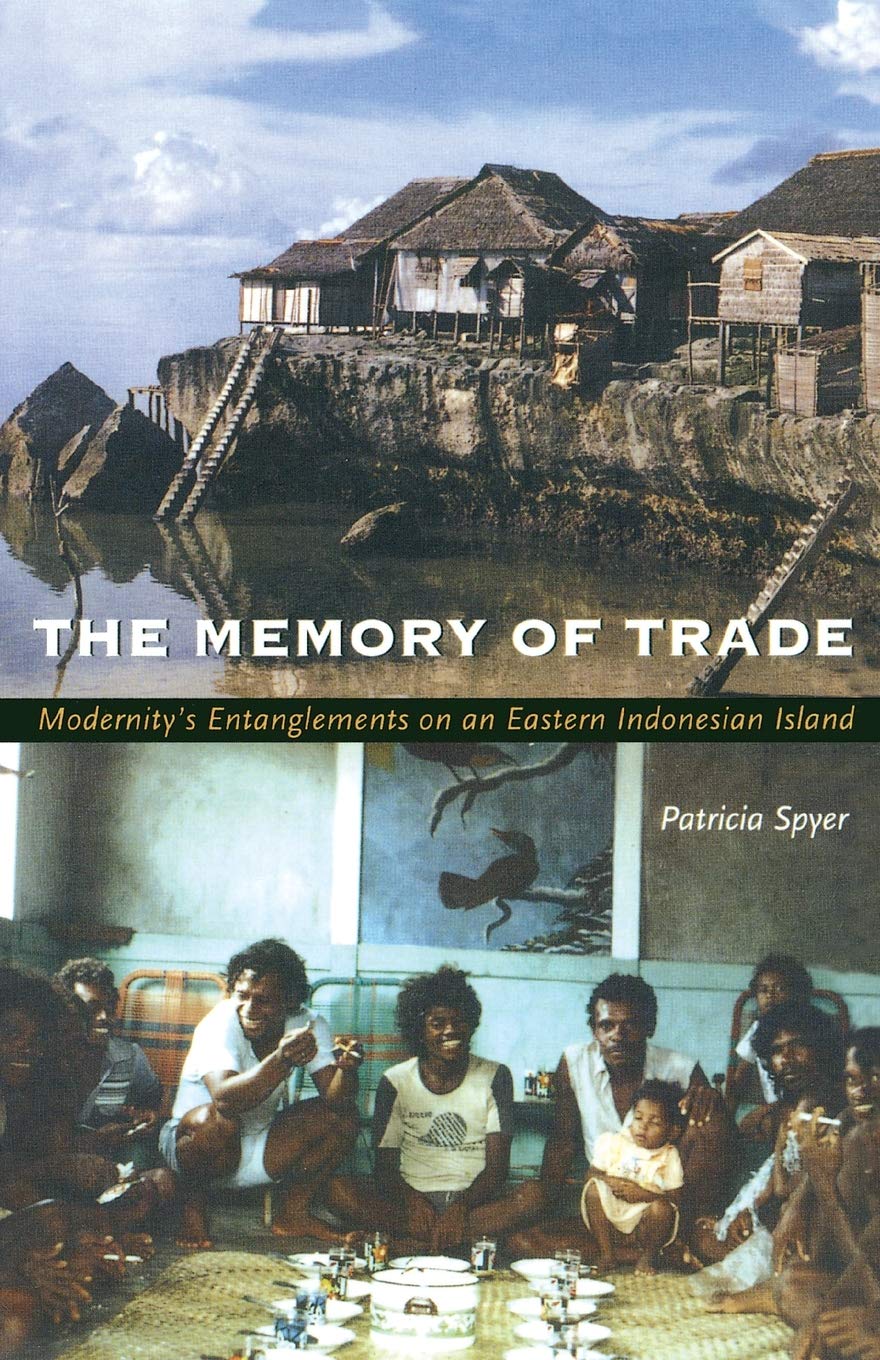
The Memory of Trade is an ethnographic study of the people of Aru, an archipelago in eastern Indonesia. Central to Patricia Spyers study is the fraught identification of Aruese people with two imaginary elsewheresthe Aru and the Malayand the fissured construction of community that has ensued from centuries of active international trade and more recent encroachments of modernity.Drawing on more than two years of archival and ethnographic research, Spyer examines the dynamics of contact with the Dutch and Europeans, Suhartos postcolonial regime, and with the competing religions of Islam,Protestantism, and Catholicism in the context of the recent conversion of pagan Aruese. While arguing that Aru identity and community are defined largely in terms of absence, longing, memory, and desire, she also incorporates presentday realitiessuch as the ecological destruction wrought by the Aru trade in such luxury goods as pearls and shark finswithout overlooking the mystique and ritual surrounding these activities. Imprinted on the one hand by the archipelagos long engagement with extended networks of commerce and communication and, on the other, by modernitys characteristic repressions and displacements, Aruese make and manage their lives somewhat precariously within what they often seem to construe as a dangerously expandingif still enticingworld. By documenting not only the particular expectations and strategies Aruese have developed in dealing with this larger world but also the price they pay for participation therein, The Memory of Trade speaks to problems commonly faced elsewhere in the frontier spaces of modern nationstates.Balancing particularly astute analysis with classic ethnography, The Memory of Trade will appeal not only to anthropologists and historians but also to students and specialists of Southeast Asia, modernity, and globalization.
⚠️ WARNING (California Proposition 65):
This product may contain chemicals known to the State of California to cause cancer, birth defects, or other reproductive harm.
For more information, please visit www.P65Warnings.ca.gov.